
Wolverhampton barber challenges council's closure order

Refusal was based on anticipation rather than measurement, says barber
The owner of a barber shop which opened without planning permission has lodged an appeal after being threatened with enforcement action by the council.
Kabul Singh, who runs Fresh Look barber in Dudley Road, Wolverhampton, was ordered to close by council planners in June.
But Mr Singh has appealed against the decision, and will be submitting evidence arguing that his business has been trading for the past three years, with negligible impact on its neighbours.
The building, in the Blakenhall area of the city, had previously been occupied by a letting agent, which Mr Singh had argued fell into the same planning category.
But a condition had been imposed when permission for the letting agent was granted, specifically prohibiting any use other than property letting.
Mr Singh sought to have the condition removed, but his application was denied.
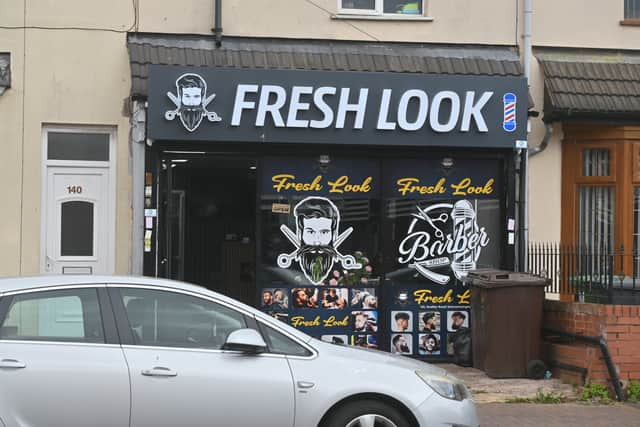

The council said that if the barber shop was not closed and equipment removed, it would ’take formal planning enforcement action in order to protect the interests of the amenity of the area’.
He has now lodged an appeal with the Government’s planning inspectorate.
Council officers had said the change would result in more noise, comings and goings and longer hours that would cause longer periods of disturbance.
“Furthermore, the use of a barber shop would generate a significant increase in vehicle trips when compared to the approved use for property lettings, and a significant increase in car parking demand at a location that is already very heavily subscribed with on-street parking,” an officer’s report added.
But Ranjit Sahota, acting on behalf of Mr Singh, said the council’s refusal was ‘based on prediction, not measurement’.
He said: “The council refused permission on the basis of anticipated noise, customer movements, parking demand and highway-safety impacts.”
But Mr Sahota said the authority had failed to carry out a noise assessment, had taken no acoustic measurements, and had not carried out a traffic count or parking occupancy survey.
He said there was no quantifiable figures on the number of customers using the shop, or the proportion of them walking in or using public transport.
“It has provided no measured comparison between the former lettings agency and the existing barber shop,” said Mr Sahota.
“The highway authority stated that the barber shop ‘could see dozens of customers every single day’ and concluded that it would generate a ‘significant’ increase in vehicle trips.
“Yet no customer survey, parking survey or transport calculation accompanied that conclusion.”
He said the council’s response appeared to infer vehicle demand principally from the existence of three barber chairs.
“The council’s decision notice similarly describes increases in vehicle trips and parking demand as ‘significant’, without disclosing the baseline figures, methodology or threshold by which that significance was assessed.”
Mr Sahota said the council consulted three neighbouring properties, but only one formal objection was received during the application process.
He said since the refusal, the shop had assembled substantial independent evidence from those living, working and trading closest to the premises, which reported no material noise nuisance, no significant disturbance, no anti-social behaviour and no unacceptable highway danger or parking problems attributable to the business.
“They describe the business as professionally operated, respectful of its neighbours and beneficial to the local shopping area.”
Mr Sahota said the business typically served up to 10 customers a day Monday to Thursday, rising to 25 on Fridays and Saturdays, and up to 12 on Sundays, with each appointment lasting approximately half an hour.
He said these customers were staggered throughout the day, with many walking or using public transport.
“The shop has operated for approximately three years. The appellant’s central case is therefore that the inspector does not need to speculate about what might happen, the actual effects of the business can be assessed from sustained operational experience and the evidence of those most directly affected.”
Comment Guidelines
Iconic Media encourages reader discussion on our stories. User feedback, insights and back-and-forth exchanges add a rich layer of context to reporting. Please review our Community Guidelines before commenting.