
When hundreds of thousands flocked to the bright lights of Walsall
News that the lights display could be returning will bring back memories for the thousands of people who flocked to the town’s arboretum

The weather may have been cold, and it often rained, but back in its heyday the queues would snake down Walsall’s Lichfield Road to see the Walsall Illuminations.
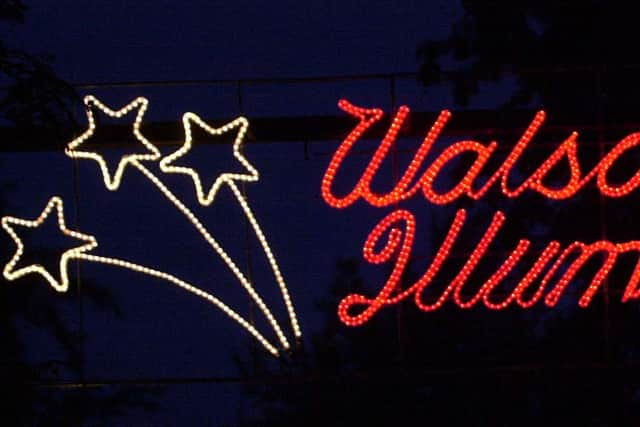

The London broadsheets may have sneered - “a place that boasts a Museum of Leather must have immunity from ridicule” scoffed a writer for the Independent - but in the 1970s and ‘80s, hundreds of thousands of people would head for Walsall Arboretum to view the eye-popping illuminated representations of windmills, fairy-tale castles and even the Blackpool Tower packed into the 35-acre park.
News that Walsall Council is looking to reintroduce the event, 18 years after it was held for the last time, will doubtless bring back feelings of nostalgia for those who recall the illuminations in their prime.
At their height “the Lights”, as they were usually known, attracted 377,000 visitors, about 22 times the average attendance at Molineux. In the days when Halloween was marked by little more than a few paintings on the Tony Hart show, the Walsall Illuminations came a close second to Guy Fawkes’ Night as the big event of the autumn for youngsters in the West Midlands.
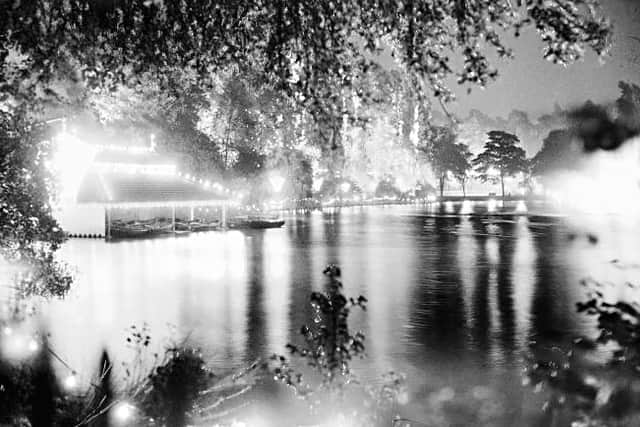
The history of the event can be traced back to 1875, the year after the park opened to the public, with a display of candles in coloured glass jars suspended from trees around the central green. By 1892 fairy lights were added, allowing people to enjoy the floral displays at night, but by the end of the century the tradition was on the wane.
In 1904 the public stocks and whipping post were moved to the arboretum, turning it into an all-year-round entertainment venue, and the public interest faded.
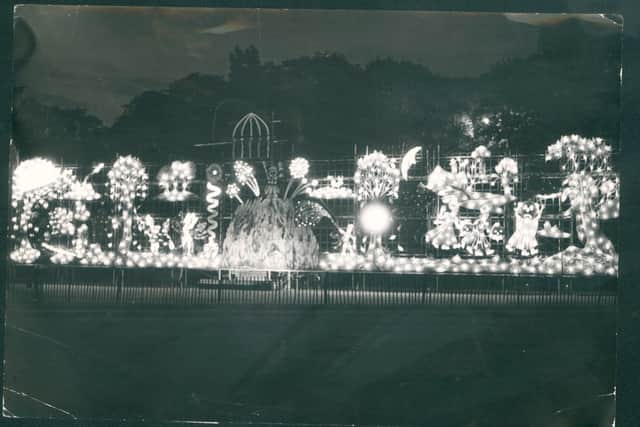
Then, on September 15, 1951, as part of the town’s contribution to the Festival of Britain, it was decided to decorate the park’s trees with 3,000 coloured lights, along with floodlighting to the flower beds.
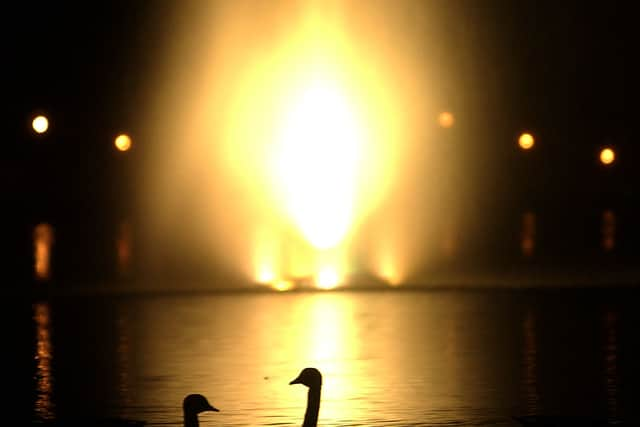
Walsall Fire Brigade also got in on the act, pumping eight jets of water 25ft into the air at hourly intervals from a raft on the Hatherton Lake, and there was also an illuminated waterfall. Three miles of cable were said to have been used to power all the bulbs.
The event exceeded all expectations, attracting 200,000 visitors in just one week, and it was decided to repeat the event the following year.
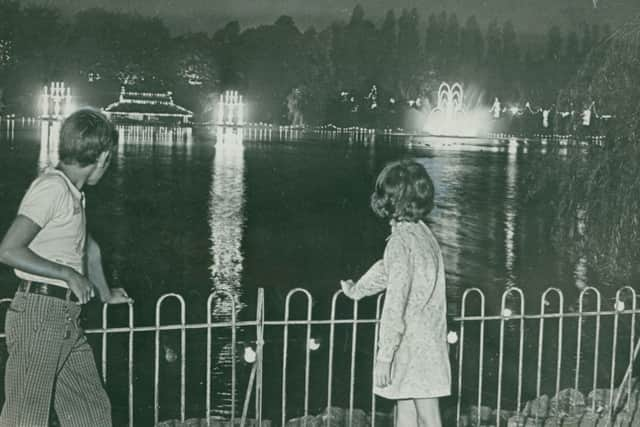
Coronation year in 1953 was marked by a bumper event, and by that time the illuminations had become firmly entrenched in the town’s calendar. The park, with its floral displays and shimmering lake, proved the ideal venue and the crowds continued to flock.
The problem, of course, was how to build on that momentum, and keep people coming back year after year. The answer was to start buying up the cast-off displays from Blackpool’s own illuminations, which was how Blackpool Tower ended up 100 miles from the coast.
The 1955 display featured a depiction of Gulliver in Lilliput, and for many years the centrepiece was a giant pirate ship which dominated the lake, accompanied by separate flashing light boards of pirates supposedly attacking the ship.
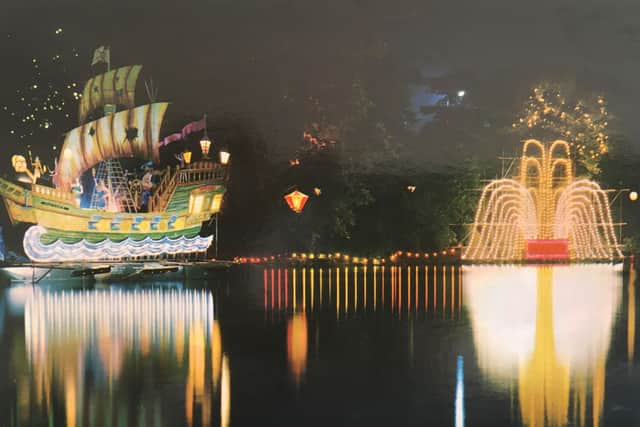
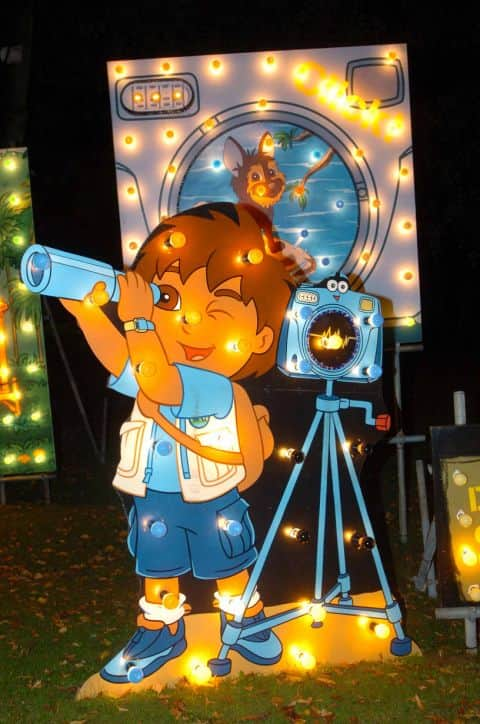
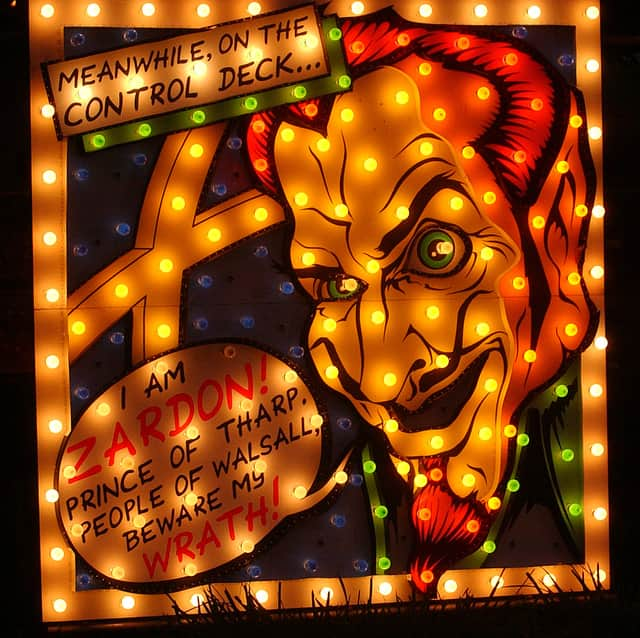
As the crowds grew, so did the displays, and teams of artists began adding dinosaurs, robots, and contemporary television characters over the years. The initial 3,000 lights expanded to 60,000, and the three miles of cable to closer to 50.
Attendances continued to grow, peaking at 377,000 in 1989, but by the turn of the millennium the novelty was starting to wear thin. Visitor numbers gradually declined, dropping to about 160,000 by 2004 and 157,000 in 2006.
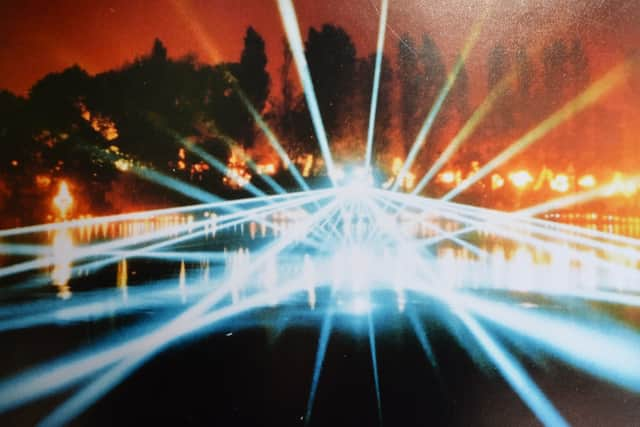
Hi-tech laser shows were introduced in an attempt to bring the event into the 21st century, but they did little to arrest the decline. A team of consultants was brought in, and for a make-or-break revamp of the event for 2007, they recommended extending it to run of six weeks.
The thinking may have seemed logical enough. By holding the event from October through to December, the displays would take in the Hindu festival of Diwali, Halloween and the start of the Christmas season, taking advantage of a growing number of revellers.
The problem was, it also put the arboretum in head-on competition with hundreds of other events, including the council's own bonfire night displays. It wasn't helped by the credit crunch, which the month before had seen the first run on a British bank for 150 years, and economic confidence was not exactly at a high.
The revamp proved disastrous, seeing visitor numbers plunge to just 120,000, and running up losses of £200,000.
The council admitted it had made a mistake taking the “bold” advice from consultants.
The revamp was abandoned for 2008, reverting back to its traditional five-week slot from late September to early November, but by this time the credit crunch had metamorphosed into a full-blown recession, and attendances slumped to an all-time low of 111,000.
Cabinet member for leisure, Councillor Louise Harrison, pointed out that weekly attendances were actually up 9.6 per cent compared to the disastrous 2007 event, but still lost the council £120,000.
"It's clear the credit crunch and the onset of the recession have had a major impact on what we spend money on and the illuminations have not escaped that," Councillor Harrison admitted.
"The event opened to headlines of the worst economic turbulence for 70 years with banks crashing and fears for job losses. There is no doubt this has had an effect."
Councillor Harrison initially put on a brave face, and said the council would introduce a host of mystery measures to revive the flagging event for 2009. But the losses were proving too much, and it was later decided to suspend the event for a year.
In January 2010 the authority secured a £4.7 million lottery grant towards a £7.6 million revamp of the park, but the work meant there would be little prospect of holding the illuminations in either 2010 or 2011. After a three-year absence, it was ultimately decided that the event had run its course, and it was effectively replaced by a bonfire night celebration in the park.
In December 2013, the council decided to sell 200 lightboards as souvenirs, for £50 a time, with pirates, robots and a giant dinosaur among the displays on offer.
Comment Guidelines
Iconic Media encourages reader discussion on our stories. User feedback, insights and back-and-forth exchanges add a rich layer of context to reporting. Please review our Community Guidelines before commenting.