
West Midlands elections 2026: Four takeaways from the day Reform swept into Black Country corridors of power
There were shocks and big scalps across the Black Country.
So the dust has settled on a momentous day in West Midlands politics. Reform UK has seized control of two Black Country councils and become the second-largest party on two more, also making gains in Staffordshire.
But what did we learn on the day Reform swept into the Black Country’s corridors of power?
1. Reform did even better than many expected
Most people expected Reform would do well out of this week’s elections - but the party’s dominance in parts of the Black Country and Staffordshire has surpassed even some of its more bullish local operators’ expectations.
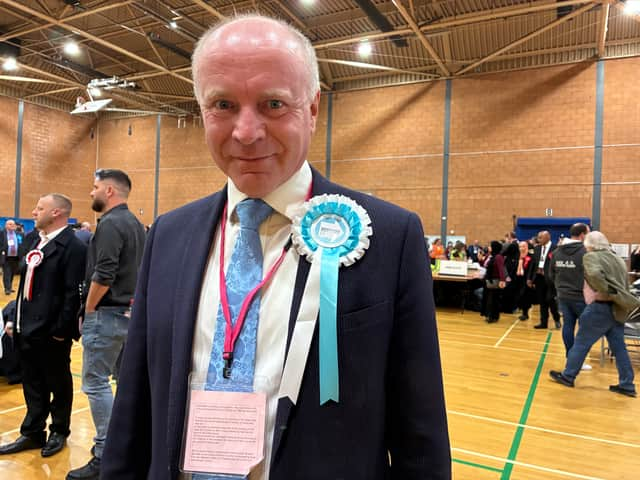
In Dudley, where results declared in the early hours of Friday (May 8) gave the first signs Reform was going to have a very good day, the party won 22 seats out of the 25 up for grabs. Dudley’s Reform chairman Marco Longhi said he was “absolutely elated”.
“I was coming in thinking if we get 15 out of the available 25 I would be a very happy man - 22 is amazing.”

Labour dropped from 23 to 15 seats while the Conservatives lost six but remained the largest group on the council with 27 seats. That came on the back of unusually high voter turnouts too: it surpassed 50 per cent in Kingswinford North and Wall Heath, up from 39.37 in 2024.
But bigger shocks were to follow on Friday afternoon when results started coming in from the rest of the Black Country and Cannock Chase.
In Wolverhampton Reform won 12 of 21 seats available to become the largest opposition group on the city council, taking scalps from the ruling Labour Party and the Conservatives.
The latter might be grateful for the 10 seats they still hold in Wolverhampton, having been completely wiped out in Sandwell in perhaps the most seismic of the Reform results. The Tories were left with no seats while Labour was pushed into second place in one of its traditional strongholds - Sandwell had been held by Labour for 51 of the past 52 years.
By the time the dust settled in Sandwell, rampant Reform had 41 seats and an outright majority while Labour members were left licking their wounds with 28 seats. The council’s next meeting will look very different from the last.
In Walsall Reform dumped out the Conservatives in just as emphatic fashion, securing 40 of 60 seats and toppling former leader Mike Bird.
Elaine Williams, chair of the Walsall and Bloxwich Reform branch and now councillor in the Short Heath ward, said: “We had an idea we were going to take control but I think this is better than we expected.
“I’d like to thank everybody who voted for Reform but also to those who didn’t vote for us; we are here for all residents of Walsall.”

The scale of Labour and Tory losses across the country have intensified pressure on Keir Starmer’s Government, despite attempts from Number 10 to manage expectations, and raised the pitch of questions about the future of the Conservative Party. Reform supporters will hope it helps paves the way to even greater success in the next general election.
2. Nobody’s seat is safe
In Walsall, veteran council leader Mike Bird, who has been in charge of the council six times and has spent 17 of the last 34 years as leader, was dethroned in his own back yard by Reform - though his Conservative colleague Adrian Andrew was elected in the same Pheasey Park Farm ward.
Mr Bird’s political career is many times older than Reform and plenty of its representatives, having first been elected as a councillor in 1980 and as leader of the council in 1992.
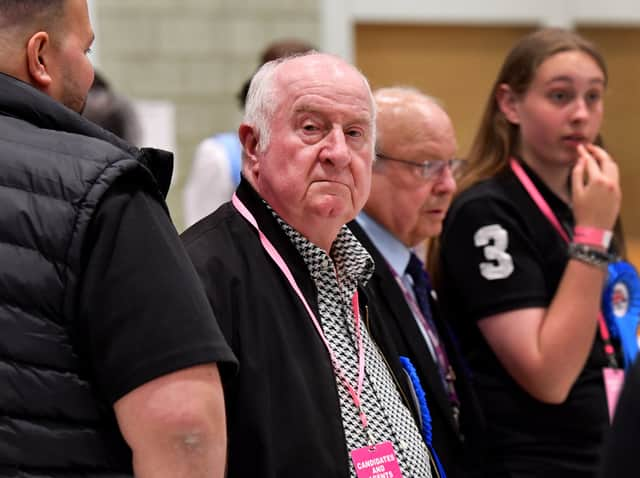
A late recount confirmed he had been pipped by Reform’s Christopher Hickey by just seven votes in the dramatic denouement to a day of Reform successes in the Black Country, one of the final results declared at the last authority to finish counting.
A member of Wolverhampton’s Labour cabinet, Chris Burden, lost his seat in Fallings Park to Stuart Goldsmith of Reform, while the city’s mayor Craig Collingswood narrowly held onto his Park seat - fending off the Green Party’s Mohammed Naseem by 43 votes after a recount.
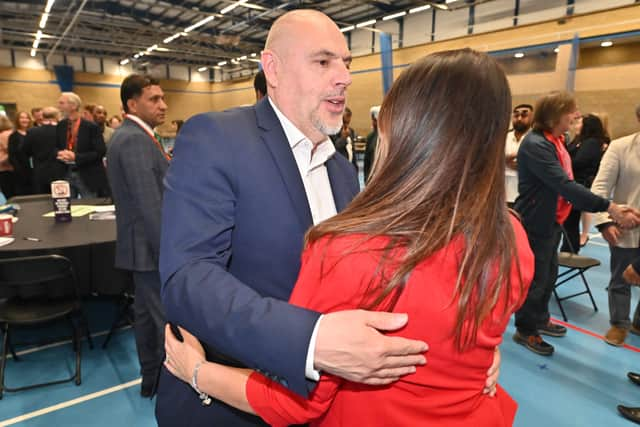
Labour leader of Sandwell Council Kerrie Carmichael lost her Blackheath seat, also to Reform.
She told the Express & Star she was disappointed having “worked really hard to turn this council around, with my team”.
“I hope [Reform] don’t mess it up.”
She said people had used the election to voice their disquiet with the Government.
“Some of the polls said Labour would be obliterated in Sandwell, but that has not happened. I’m pleased for the ones who are still there.”
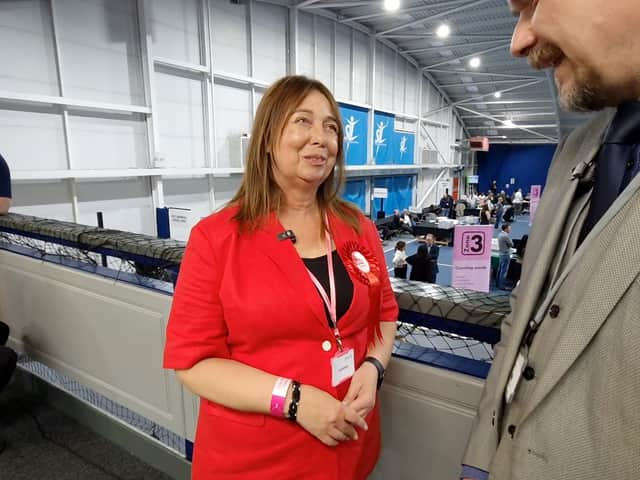
The changing of the guard was in one sense most dramatic in Cannock Chase, where Reform celebrated a clean sweep of 13 seats and Labour’s leader Steve Thornley, deputy Garry Samuels and cabinet members David Williams and Sue Thornley were all ousted.
Mr Thornley, who succeeded Tony Johnson as council leader last year, said he had intended to retire this year, adding: “It’s a stressful job and taking on responsibility of a council is hard work if you do it properly.
“The general mood of the party is deflated. There is a national trend taking place, which is sadly ignoring the good work of the councillors within this chamber, and that’s all the councillors that have worked to achieve the best for Cannock.”
Plenty of senior Labour and Conservative politicians across the West Midlands will be breathing a sigh of relief today, having seen some of their peers ditched so unceremoniously.
3. Reform looks more and more like a reliable route back to power for ex-Tories
One of the notable features of the Reform wave is the number of familiar faces now taking up seats across the Black Country. Marco Longhi, now Reform’s head honcho in Dudley, served as a Conservative MP for Dudley North and trade envoy to Brazil in Boris Johnson’s Government before losing his seat to Labour in 2024.
He defected to Reform last year, and it would be hard to argue his decision hasn’t been vindicated now.
Sedgley councillor Shaun Keasey, a former Conservative member who quit the party in 2023 to become an independent before joining Reform the following year, likewise celebrated a resounding success on Friday with 55.7 per cent of the vote.
On what he felt appealed to voters about Reform, he said: “We’re different, we say what we think, we say what we believe and we go out there and talk to people and get things done.”
Meanwhile in Sandwell another former Conservative has roared back in turquoise: Ray Nock, who represented the Tories as a councillor before losing his seat in 2012, will now become the Reform leader of Sandwell Council to complete a remarkable comeback.
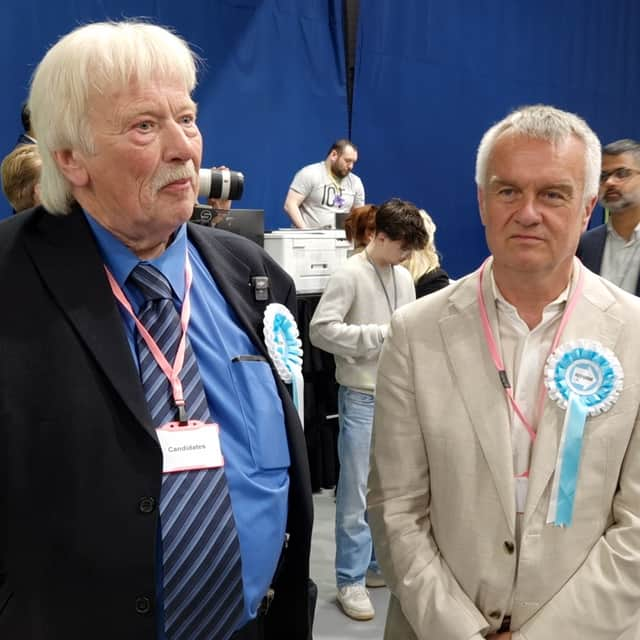
“I have been working so hard for the past three years to put all this together, so it’s now a proud moment,” he told the Express & Star on Friday.
Before this week Cannock Chase Council had two Reform members, both of them ex-Tories - but now Paul Jones and Richard Craddock have been joined by 12 new colleagues after the party’s clean sweep there.
And over at Newcastle-under-Lyme Borough Council in North Staffordshire, outspoken former Conservative MP Jonathan Gullis is celebrating winning a seat for Reform having defected to the party last year.
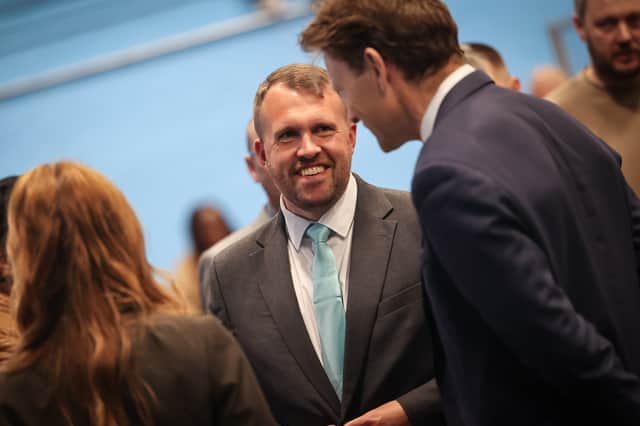
All of these wins for former Tories come in the context of demoralising blows for Conservatives who have stayed inside the tent, chief among them the fall of Mike Bird in Walsall, and high-profile defections at national level from the likes of Wolverhampton’s own Robert Jenrick and former Home Secretary Suella Braverman, who both joined Reform in January.
Any Conservative politicians observing this week’s results could be forgiven for asking some uncomfortable questions about the future of Kemi Badenoch’s project.
4. The anti-establishment party now needs to prove it can lead responsibly
Reform leader Nigel Farage has so far been successful pitching the party as an anti-establishment, insurgent movement - but now that party is in charge of two complex Black Country boroughs in Sandwell and Walsall which govern more than half a million people between them.
That will require a different skillset and a different attitude to the one that has carried the party this far. Reform bosses will be keen to avoid a repeat of controversies that have dogged the party at Staffordshire County Council, where it has been in charge for a year now.
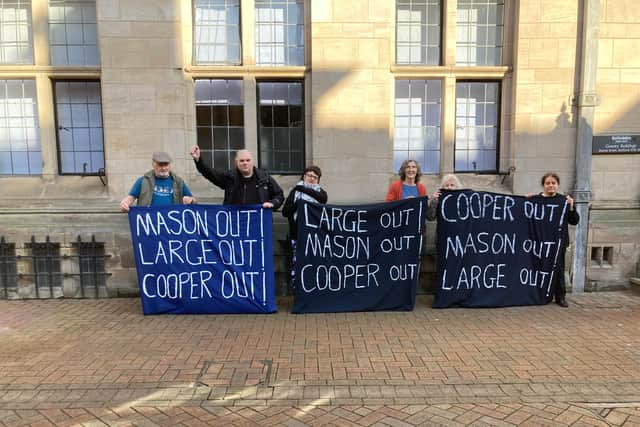
In December council leader Ian Cooper stood down amid racism allegations linked to social media activity, before his successor Chris Large, who was subject to an inquiry into racist posts that he denied writing, also exited.
Security has been beefed up at Stafford’s County Buildings meeting place in recent months following a noisy protest inside the council chamber in December. Protestors brought proceedings to a halt, calling for Reform councillors who were accused of making racist comments online – including Councillor Cooper – to resign, and since then some of the protesters have been banned from entering County Buildings, while members of the public who wish to watch meetings have to use a separate entrance to get inside, and surrender their bags and coats on entry.
In March this year another Staffordshire Reform councillor, Lynn Dean, was suspended by the party after allegations that racist online comments were posted by her.
The party has said it took urgent action when it was made aware of offensive posts and pointed to what it said was the councillors’ “non-disclosure” of social media accounts. One can imagine the vetting process for the new councillors elected in the Black Country this week was especially rigorous.
Reform is also now the second-biggest party and main opposition in Wolverhampton and Dudley, having leapfrogged the Tories and Labour respectively. That comes with its own responsibilities and expectations: the duty to scrutinise takes on an extra dimension in the context of the maulings Reform has just handed out across our region.
Comment Guidelines
Iconic Media encourages reader discussion on our stories. User feedback, insights and back-and-forth exchanges add a rich layer of context to reporting. Please review our Community Guidelines before commenting.