
Walsall mum whose son died after 'one in a million' cancer came back urges young people to check symptoms
A Walsall mum whose son tragically died after being diagnosed with cancer as a teenager is raising awareness of the signs and symptoms of cancer in the young.
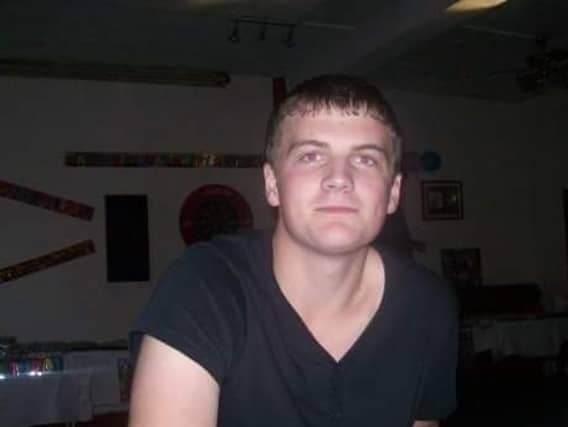

Amanda Potts's son, Ashleigh, began experiencing flu-like symptoms in 2009 and started to become sick in the mornings.
Doctors broke the tragic news to the family 10 months later that the 19-year-old had a "one in a million" brain tumour.
While Ashleigh Potts recovered from his brain tumour, at the age of 26 he started feeling unwell again and was told the cancer had metastasized and was in his spine.
Ashleigh was told he had two weeks to live, during which time he married his partner, and died at home with his wife and family at his side.
Five years after her son's death, Amanda is now sharing her story as part of a Teenage Cancer Trust charity initiative to urge young people to be aware of the symptoms of cancer.
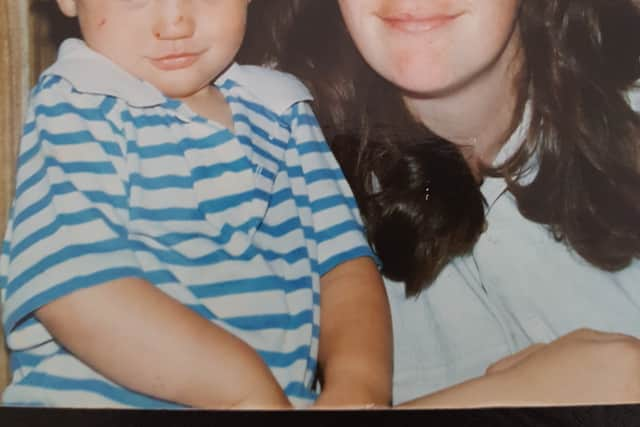
Amanda said: “Ashleigh was always the life and soul of the party, he was funny and had lots of friends, loved socialising, and was into his football.
“But in October 2009 he had flu-like symptoms and even when he got over those, he felt full of cold and really tired. He was finishing school and starting work, so it was put down to the changes in his life.
“By May 2010, he was still getting a cold repeatedly and would work all week but be too tired to go out at the weekend.
"We went to an emergency doctor who thought it might be the start of ME. Another thought he had an ulcer.
“He started being sick in the mornings and we had a running joke that it was morning sickness. The doctor referred him to a gastroenterologist.
"Ash had a CT scan and an MRI scan in August 2010 and a few days later our local hospital called us to tell us to come in, then we got a call from Queen Elizabeth Hospital ten minutes later to say he needed to be there within the next half an hour. Alarm bells started ringing for me.”
At that appointment, Ashleigh was devastated to be told that he had a tumour the size of a golf ball on his cerebellum and be diagnosed with a one in a million Medulloblastoma.
He was supported through chemotherapy and radiotherapy by the Teenage Cancer Trust team at the charity’s unit at Queen Elizabeth Hospital in Birmingham, which is especially designed for young people and has a recreation area, relatives room, and kitchen and is staffed by specially trained nurses and youth workers.
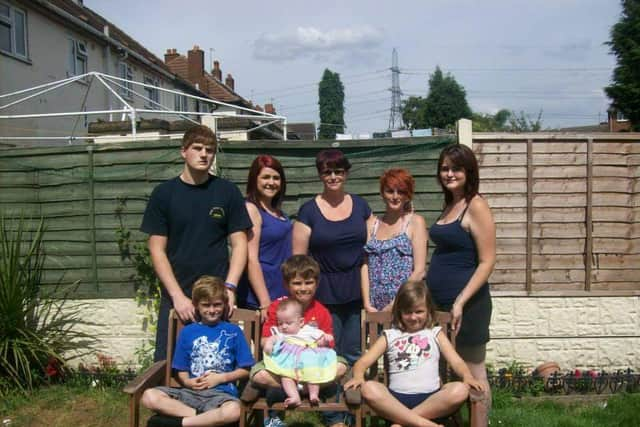
Amanda said: “Teenage Cancer Trust was absolutely amazing. Ash is one of seven children and the staff at Teenage Cancer Trust supported the whole family.
"When Ash was first diagnosed, his youngest brother, Joshua, was only three, and the staff made sure that when we visited Ash the whole family was included.
"They had guitars on the walls, and they’d come down and we were all entertained. They made sure that the hospital environment was not scary. The Youth Support Coordinator was great with all of them."
The treatment was successful, and Ashleigh went back to living his life, with regular scans to check all was well.
However, when he was 26 a scan found nodules and he once again started to feel unwell.
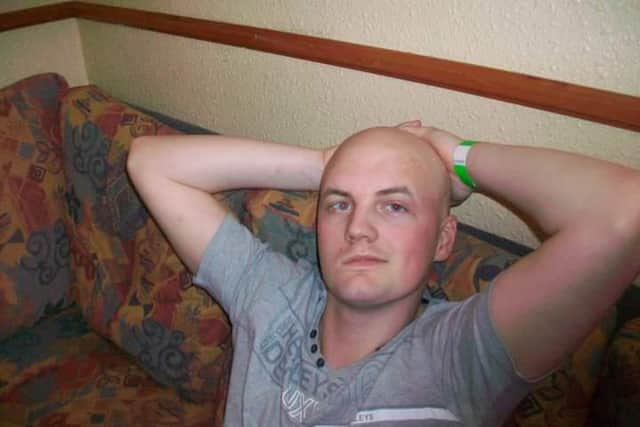
Amanda said: “They weren’t too worried at the time, and he was given Ibuprofen and told to rest from his job at Ikea. He started having reoccurring water work problems he couldn’t empty his bladder.
“The next scan showed that it had metastasized and was in his spine. This time round he wasn’t as lucky as he had the group 4 strain and was told there was nothing that could be done for him.
“Ash was told that he only had two weeks to live, and it was two weeks. He got married to his girlfriend Sam within that time. He died in his home with Sam and family around him.
“He knew he was dying, and he spoke openly about what he’d like and what he wanted to happen afterwards.
"He told us to go with what we wanted for the funeral, but he said to make it cheap and cheerful – he wanted us to save our money.
"I do sometimes think: ‘Should we have done this or that at the funeral’. But because he had spoken to us about it, I feel reassured that he would have been happy and that helps me.
"I could have been worrying about that for years to come if we hadn’t talked about it. He had a funeral and a cremation. It was beautiful and there were around 400 people there.”

Last month was a very difficult month for Amanda as it marked the fifth anniversary of Ashleigh’s death, and a month in which he would have celebrated his 32nd birthday.
But Amanda and her family are determined to help others by raising awareness of signs and symptoms of cancer in young people, urging those with any concerns to seek medical advice - and to be persistent if their concerns are at first dismissed.
Earlier this year research from Teenage Cancer Trust revealed that less than half of 18 to 24-year-olds can correctly identify any of the five main signs and symptoms of cancer in young people.
Awareness of all five warning signs – lumps bumps and swellings, unexplained tiredness, mole changes, pain and significant weight change - was low across all age groups surveyed, with 55 per cent of UK adults unable to recognise all five, rising to 82 per cent amongst 18 to 24-year-olds.
Persistent vomiting or feeling sick, especially when not accompanied by diarrhoea or a high temperature can be one of the key symptoms of a brain tumour.
Amanda said: “When you hear about people having brain tumours, they almost always present with the same symptoms such as headaches, seizures and sickness.
“Ash didn’t have any of those, except for headaches and sickness just before he was diagnosed. The sickness was because the cerebral fluid had built up and his stomach couldn’t deal with it.
"He’d felt unwell with colds and fatigue for around nine months by that point and if we hadn’t been persistent with the doctors the tumour might not have been found.
“I would encourage all young people to get themselves checked out if they have persistent illnesses, or if they aren’t feeling right. Ash had been feeling poorly for coming up to a year and no-one had been doing anything about it.”
Amanda and her family have also been fundraising for Teenage Cancer Trust.
Amanda said: “When Ash was re-diagnosed, he was just outside of Teenage Cancer Trust’s age range, but they remembered us and asked if there was anything they could do.
"Because of the amazing care he had there the first-time round, we asked for people to donate money to the Teenage Cancer Trust unit when he passed away.
“When he’d been at the unit, he said they could do with having an Xbox for the young people, so we wanted to raise money for things like that.
“The year after he died, we wanted to raise money for Teenage Cancer Trust again. Because Ash liked going out, we organised a pub crawl and went round all the different pubs that he liked and raised money that way.
“I also do a lot of the online fundraising events that Teenage Cancer Trust run, like the squat challenge. I work in a school, so I get everyone involved.”
Visit teenagecancertrust.org to find out more about the symptoms of cancer in young people or to support Teenage Cancer Trust.
Comment Guidelines
Iconic Media encourages reader discussion on our stories. User feedback, insights and back-and-forth exchanges add a rich layer of context to reporting. Please review our Community Guidelines before commenting.