
Over 2,000 people turned away from Black Country polling stations over voter ID issues
More than 2,000 people were turned away from polling stations at local elections in the Black Country because they didn't produce acceptable ID.
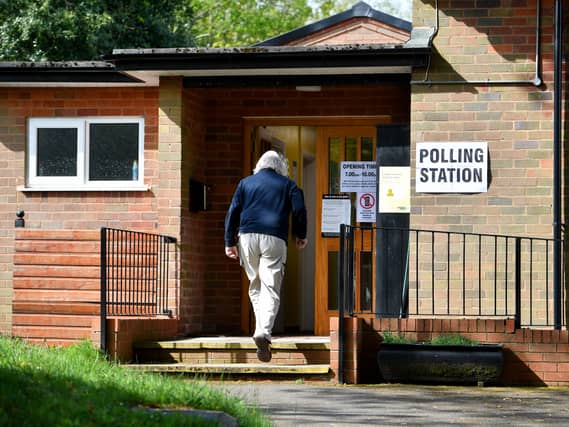

But the majority of them later returned to cast a vote, meaning just 884 were unable to vote under the new rules. The figure represents around 0.6 per cent of the total number of votes cast at ballot boxes across the four boroughs.
This month's local elections were the first in England where voters were required to produce photo ID in a bid to clamp down on electoral fraud.
Critics, including a number of Labour politicians in the Black Country, said the move had contributed to lower than usual turnouts.
Across the four boroughs, 2,302 people were initially sent away from polling stations for failing to produce ID.
In Sandwell 1,135 people were turned away from polling stations after they did not produce acceptable ID – one of the highest figures in the country.
However, 795 returned with acceptable ID and were able to cast a vote, leaving 340 unable to vote. The figure equates to 0.92 per cent of the 36,889 who were issued with ballot papers.
Sandwell Council's chief executive Shokat Lal, returning officer at the elections, said prior to polling day around 1,300 residents had applied for a Voter Authority Certificate because they did not have any accepted photo ID.
He said the figure was one of the highest nationwide and shows there was a "high level of awareness" of the new requirements.
"Most people were aware they needed accepted photo ID and anyone who didn’t was encouraged to return later with their ID so they could vote," he said.
"The 340 people who came to vote at a polling station in Sandwell but did not provide an acceptable form of photo ID is the equivalent of fewer than three people per polling station.
"It is still very early days for analysis and comparisons in relation to voter ID. We continue to work closely with the Electoral Commission and Department for Levelling Up, Housing and Communities to monitor the implementation of voter ID across the country, to help inform the planning for future elections."
A total of 767 people were turned away in Walsall, with 473 of them returning to cast a vote. This means 'non-returners' accounted for 0.6 per cent of the total of the total votes cast.
The Wolverhampton Council elections saw 168 people turned away due to ID issues. A total of 113 of them returned to cast a vote. The 55 people who were unable to vote equates to 0.19 per cent of the total votes cast.
In Dudley 37 people returned and cast their votes out of 232 who were turned away.
Across the four boroughs 62 per cent of those who were turned away from polling stations due to ID issues were issued with a ballot paper after returning.
Experts say it is early days as far as analysis of the impact of voter ID due to local authorities taking different approaches to recording data.
At many councils, where a polling station had a member of staff positioned at the entrance advising on Voter ID, any voters turned away at that point were not recorded.
Turnouts were down across the board, with just 22.9 per cent of the electorate casting a vote in Sandwell, down from 26.12 per cent in the 2022 local elections.
Sandwell councillor Jackie Taylor, who represents Greets Green and Lyng for Labour, was one of a number of politicians to raise concerns over the new ID rules.
She said: "The Government needs to know our democracy does not need voter suppression."
Sarah Coombes, potential Labour parliamentary candidate for West Bromwich, said it was clear that voter ID was about "partisan politics and suppressing turnout" and had "nothing to do with protecting our democracy".
Comment Guidelines
Iconic Media encourages reader discussion on our stories. User feedback, insights and back-and-forth exchanges add a rich layer of context to reporting. Please review our Community Guidelines before commenting.