
Walsall FC's ramshackle ground was a field of dreams
Ramshackle, rusty, and not necessarily rainproof, for generations Fellows Park was the proud home of Walsall FC.
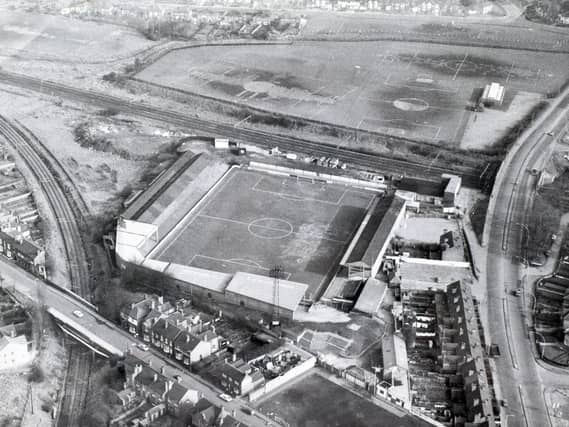

Oh, and three-sided too. Up into the 1960s one end was not of a stand or terraces, but taken up by Orgills laundry.
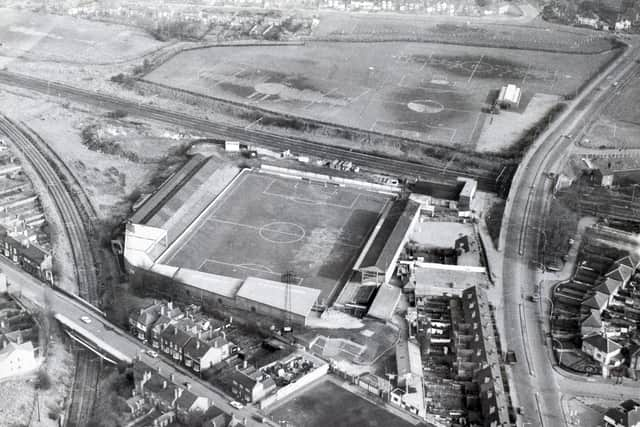
Walsall was to be one of the clubs which led the way in leaving its traditional home and moving into a gleaming modern stadium.
But here's the thing. For all its faults, there are fans who remembered Fellows Park who were distinctly underwhelmed by its 1990s replacement, the Bescot Stadium.
There were illustrious and glorious times at Fellows Park, perhaps none more so than a famous victory against mighty Arsenal in the FA Cup Third Round on January 14, 1933, which stunned the football world and became part of Walsall folklore.
Walsall 2, Arsenal 0, since you ask. The club raised admission prices for the glamour tie from one shilling to two shillings with the result that a lot of fans stayed away. There were just over 11,000 in the ground which could have taken double that.
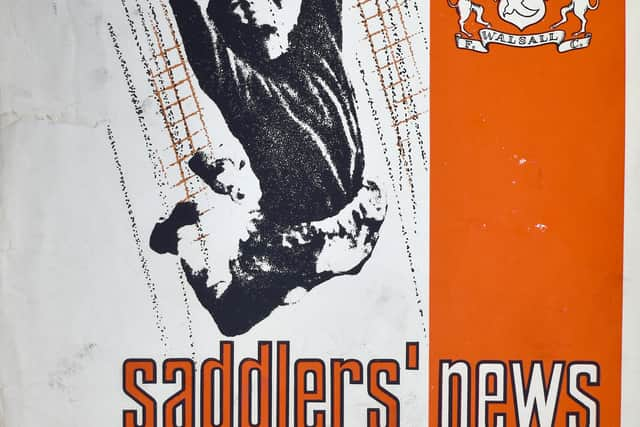
There were not so good times too. The shortcomings of The Saddlers' home were starkly underlined by a near tragic accident which saw 24 fans injured during a match against Liverpool in the second leg of the semi final of the Milk Cup on Tuesday, February 14, 1984.
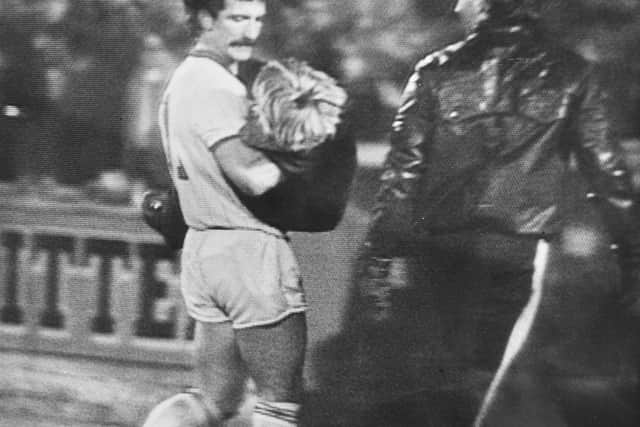
It happened when Ronnie Whelan scored Liverpool's second goal and away fans packed on the terracing behind the Walsall goal surged forward, causing a brick wall to give way, with supporters falling forward onto the pitch.
Liverpool skipper Graeme Souness was memorably pictured carrying one fan from the pitch with a leg injury.
A curious feature of the incident was that the casualty list included about 10 home fans in the Hillary Street end at the opposite side of the ground. Walsall supporters apparently thought Liverpool fans were staging a pitch invasion, and began to push forward, leading to a crush and people falling like dominoes.
The Saddlers were already holding talks about a possible move from Fellows Park and the collapse added to the urgency of finding a new home. In retrospect it was a terrible warning about the safety deficiencies of football grounds of the day.
Liverpool won 2-0 on the night before a crowd of 19,951, and 4-2 on aggregate.
There had of course been improvements to Fellows Park over the years, some of which were somewhat idiosyncratic.
On the side of the ground opposite the main stand, on what was called the Popular Side or, more descriptively, the Cow Shed, a roof kept the rain from those at the back of the terraces. At some point the rain cover was extended, not by building a replacement roof, but by erecting an additional roof closer to the pitch.
The extra ironwork mean those standing at the back now had a much worse view and, should it rain, it was bad luck for any fans standing below the big gap between the two roofs.
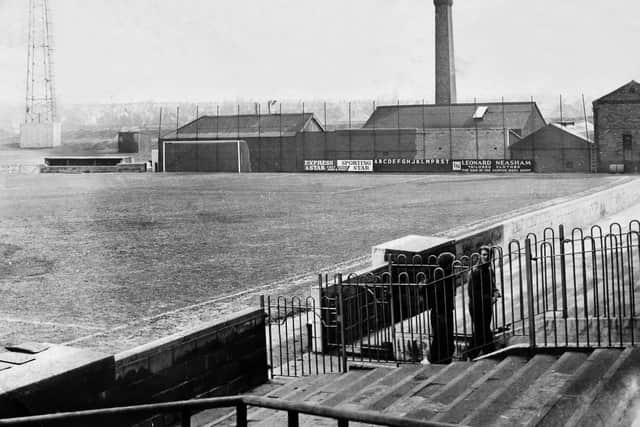
The demolition of the laundry with its two distinctive chimneys in 1965 at last made space for spectators to stand behind the goal at what was now called the Railway End.
During the 1966 close season the Hillary Street End got a new stand which cost £7,000, which quickly ran into trouble with the council. A strange five foot step in its roof was not what had been agreed.
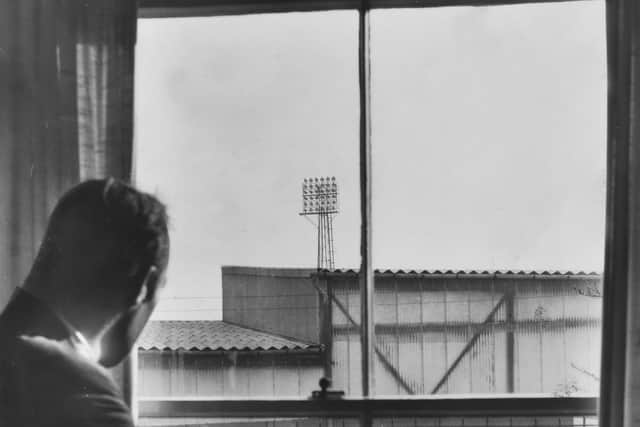
Residents complained about that, and about the loss of natural daylight. But Sidney Elwell, a presser at the Hillary Street clothing factory of F E Towe Ltd, thought the residents' real bone of contention was that the new stand robbed them of their free grandstand view of matches from their bedroom windows.
According to the club the step in the roof had been designed to marry up with the height of the existing covered areas.
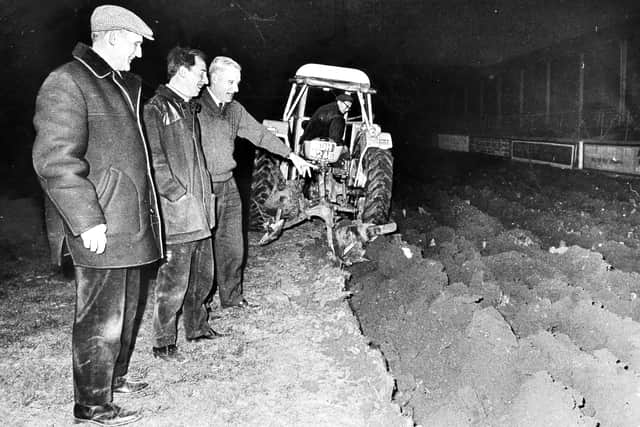
There's a memories site on the internet on which contributor Tom Lines writes: "Scores of clubs have moved grounds in the decades since Bescot was built, but because of the controversy surrounding the move, Walsall supporters have a more complex relationship with their current and former grounds than most.
"Of course, straightforward nostalgia plays its part when recalling Fellows Park. How else to explain fond recollections of the shower of rust that fell from the roof of the Hillary Street End when the corrugated iron walls were pounded by enthusiastic ‘Street Enders’? Or the almost comically squalid open-air toilets behind the stands?
"It may have been ugly, uncomfortable and downright dangerous in its dotage, but Fellows Park was much more than just a relic of another footballing age. It was ours."
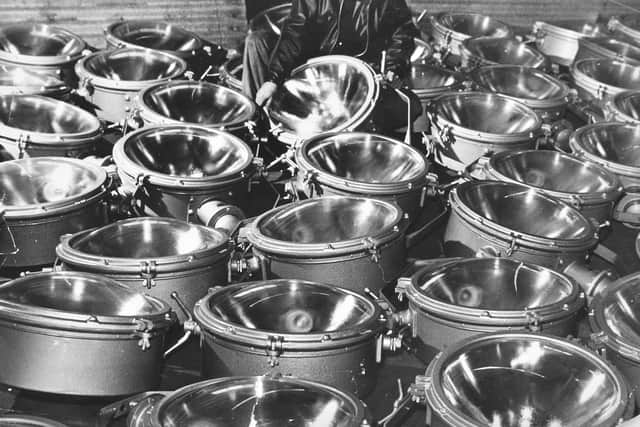
When the time came to move on, thousands of Walsall fans signalled the end of a footballing era accompanied by cheerleaders and a jazz band as the curtain fell on 87 years and 1,577 games at Fellows Park.
The final league game played there was against Rotherham, on May 1, 1990, and was a 1-1 draw.
After the final whistle great names from the past formed a circle with members of the team to sing Auld Lang Syne and You'll Never Walk Alone.
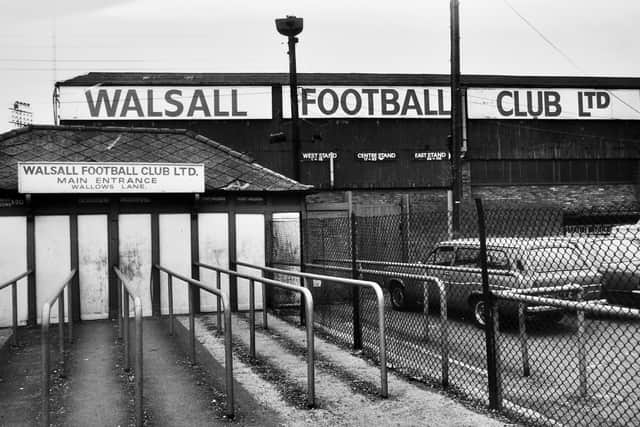
Fellows Park had been sold to make way for a Morrison's supermarket. The Saddlers switched to a former sewage works at Bescot, and the modern £3 million stadium beside the M6 hosted its first league clash against Torquay on August 25, 1990.
It's known now as the Poundland Bescot Stadium and a new chapter dawned when Walsall announced in December last year that it had become owner of the stadium, having rented it for over 30 years.
Even as Fellows Park awaited demolition, drama there continued. In October 1990 the old supporters' club building was destroyed by a suspicious blaze, and then on December 11 that year a section of the corrugated roof and a girder on the old Highgate stand – the name appears to have been given through a 1987 sponsorship deal with Highgate Brewery – having been weakened by heavy snow, was brought down by high winds.
Naturally the Star has charted the good and less good times at Fellows Park down the years, so let's take a dip into our picture archive to bring back memories for older Walsall fans, and maybe give a glimpse into the club's heritage for the younger ones for whom those days are increasingly distant history.
Comment Guidelines
Iconic Media encourages reader discussion on our stories. User feedback, insights and back-and-forth exchanges add a rich layer of context to reporting. Please review our Community Guidelines before commenting.