
VE Day 70 years on: Ex-soldiers share their memories
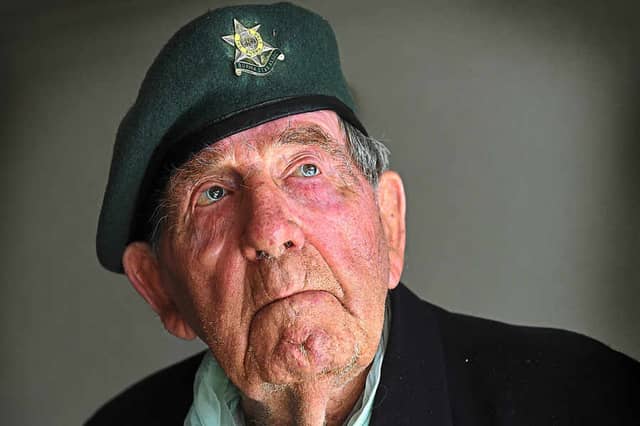

While thousands of people partied in the streets across Britain to celebrate six years of conflict coming to an end, for many soldiers on the frontline the experience of VE Day was rather different.
A sense of euphoria swept the nation, with impromptu events popping up in communities throughout the West Midlands after the Government announced Victory in Europe.
But for Private George Hill, of Coseley, it was just the beginning of the next stage of his time in the army.
He had served for two years in the First Battalion Northamptonshire Regiment in Burma. and was still stationed there when the historic announcement was first made on May 8, 1945.
There was no quick return home for the 20-year-old, however, and instead he spent another two months in Burma before then being sent to Singapore for two years, where he was given the grim job of looking after war criminals before they were executed.
The days after May 8 will live long in Mr Hill's memory, though, as it dawned on him that at last, the end of the Second World War in Europe had come.
In particular, emotional letters he received from his mother and future wife gave vivid accounts of the joyous celebrations, ranging from small street parties to huge gatherings in London.
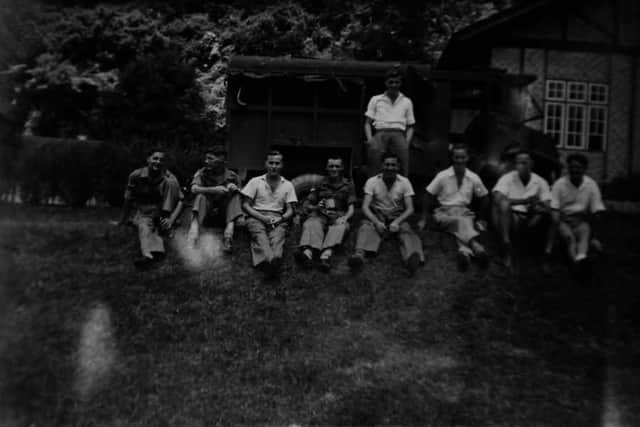
Mr Hill, who now lives in Codsall, did not return from action until October 1947, but he went on to marry Tilly, who died in 2011 after 64 years of marriage.
Her letter to him explained how thousands of people had descended on the capital as they looked forward to a new era and brighter future.
He said: "We were still in Burma when VE Day actually happened and that would continue until August 15, so at first we didn't know too much about what had happened.
"We were told by our superiors that the Nazis had surrendered, and we were all delighted.
"But it was a strange feeling in a way because then our jobs just carried on and we got on with it.
"I think looking back we were a bit of a forgotten army in Burma, but we were only too pleased to see the war end in Europe. I don't think people wanted to
think about the fact that there were still men like us out at places like that. They probably presumed it wouldn't be long before it was all over for us too."
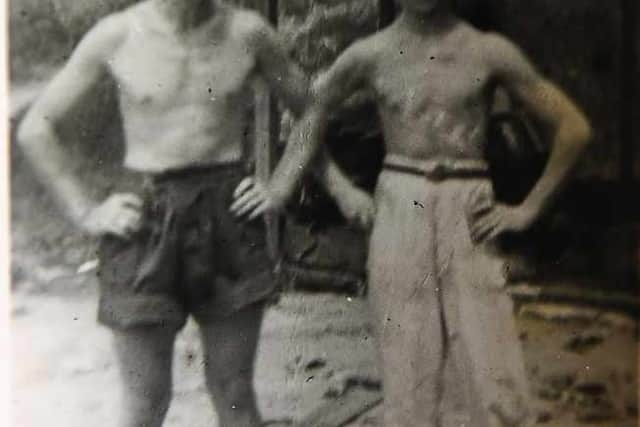
Mr Hill looks back on his time in the army fondly but admits it was 'frightening' when he was first signed up.
And as the years have passed and fellow war veterans have died, Mr Hill has realised just how important it is to mark anniversaries like VE Day.
He said: "I went into the army as a teenager but I came out as a man. In a way VE Day was just the start of the next chapter for me because I ended up in the Far East. We were at a loose end for a bit, if I'm honest, and we didn't know where we were going next.
"They originally ordered us to go to China but then that changed to Singapore, where the Japanese were beginning to surrender.
"We ended up at Changi jail, where the war criminals were being hanged at 6am and 6pm each day."
Though his time there has since returned to him in flashbacks, at the time he accepted it as part of his job.
But it demonstrates the stark contrast in experiences between the cheering crowds at home and the troops on the frontline on VE Day and in the ensuing months.
Joe Davies, a driver in the Royal Army Service Corps in Arnhem, said there was a noticeable sense of relief among his colleagues – but insists there were no celebrations. He was among a group that had already started heading across to Hamburg when the announcement was made.
Mr Davies, of Tettenhall, was part of the September 1944 campaign in Arnhem, also known as Operation Market Garden. He was in the ground forces who were supposed to meet up with the airborne troops as they tried to take control of the bridge across the River Rhine.
The following May, he found himself overlooking the River Elbe in Germany having just been told that the war in Europe was over. He said: "We were tidying up and recovering vehicles – I don't think there was much celebration at all. It might seem strange but there isn't a particular memory that sticks out from VE Day, and I think it was like that for a lot of men.
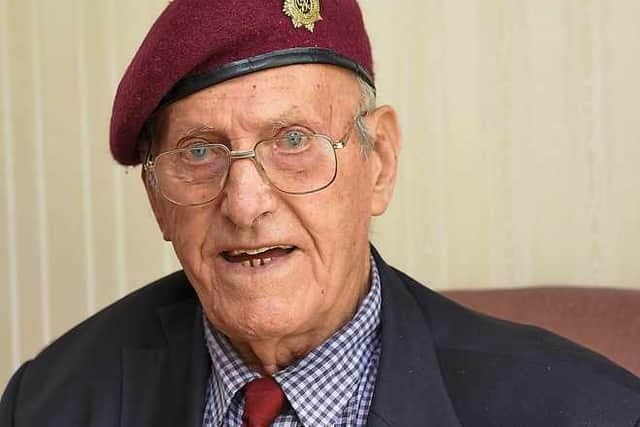
"We were a little bit overwhelmed about it coming to an end and wondering what would happen in the future."
Mr Davies returned to England within two weeks and was originally expected to join the forces in the Far East, until Hiroshima was targeted by an atomic bomb in August. So instead he ended up in Palestine, until he left in August 1946 to join the police force. Mr Davies, who went on to become a police superintendent, joined the 6th Airborne Division for the end of the war. "They were offering an extra two shillings a day, you couldn't turn that down."
Mr Davies said that although VE Day is a crucial date in history, many men were still caught up in conflict for months afterwards.
"We knew there were lots of celebrations going on back home but it wasn't until everything came to an end in Japan in August that we knew it had all really ended," he said.