
Two senior West Midlands Police officers 'should have faced disciplinary action' over Hillsborough cover-up claim
Two senior West Midlands Police officers should have faced gross misconduct proceedings over their conduct following the Hillsborough disaster, a report has said.


Mervyn Jones, who was assistant chief constable of West Midlands Police at the time, and then-detective chief superintendent Michael Foster, led the now discredited investigation into the disaster which led to the deaths of 97 football fans.
Subscribe to Express & Star Plus now for just £1 a month for 12 months for exclusive content and an ad-free website. Visit expressandstar.com/subscribe for our Black Friday offer
A new report, by the Independent Office for Police Conduct, revealed that they were referred to the Crown Prosecution Service for their failings, but the threshold for prosecution was not found to have been met
But the IOPC report said both former officers would have had a case to answer for gross misconduct after failing to conduct a rigorous investigation because they were 'biased towards the force and against the supporters'.
West Midlands Police was instructed to carry out a criminal investigation into South Yorkshire Police following the crush at the FA Cup semi final on April 15, 1989.
Mr Jones led the criminal inquiry, which the IOPC described as “extremely and inexplicably limited”.
In 2013 he provided the IOPC with 14 policy notebooks he had kept at the time but had not previously provided. When investigators restored police databases, it emerged Mr Jones had requested some of the electronic policy files related to the investigation should be deleted from the system.
Before doing so, he requested printed copies were made. Searches of police premises were made and a warrant was obtained to search Mr Jones’s home but the files were not recovered, the IOPC said.
The watchdog said Mr Jones would have had a case to answer for gross misconduct for discreditable conduct in relation to the deletion of the files, falsehood or prevarication regarding the retention of the policy books and neglect of duty. It also found he would have had a case to answer for failing to investigate South Yorkshire Police effectively and for not intervening in the force’s account amendment process.
Mr Foster, then a detective chief superintendent, was the most senior detective for the criminal investigation, which the IOPC identified a series of failings with.
The watchdog found the file the force submitted to the director for public prosecutions' did not accurately reflect the totality of the underlying evidence' and in a section of analysis from Mr Foster he included repeated references to the behaviour of supporters and how much alcohol had been consumed.
The IOPC referred Mr Foster, and his superior, Mr Jones, to the CPS for a decision on whether they should be charged with misconduct in a public office and perverting the course of justice but the CPS found the threshold for prosecution had not been met.
The report said: “The IOPC was of the view that the fixed mindset with which both ACC Jones and Det Chief Supt Foster approached the criminal investigation meant that consciously or unconsciously, they failed to conduct a rigorous investigation because they were biased towards the force and against the supporters.”
West Midlands Police said it noted the report.
It added: "The deaths of 97 people following the Hillsborough stadium disaster was a tragedy and our thoughts remain with the families and friends of the victims who must live everyday day with the loss of their loved ones."
The IOPC found that 12 police officers in total would have faced gross misconduct proceedings for 'fundamental failures' on the day and 'concerted efforts' to blame fans in the aftermath.
The report, published this afternoon (Tuesday), also upheld or found cases to answer for misconduct in 92 complaints about police actions – but the law at the time means no officers will face disciplinary proceedings because they had all retired before investigations began.
Nicola Brook, a solicitor at Broudie Jackson Canter acting for several bereaved families, said it was a “bitter injustice” that no-one would be held to account.
She said: “This outcome may vindicate the bereaved families and survivors who have fought for decades to expose the truth – but it delivers no justice.
“Instead, it exposes a system that has allowed officers to simply walk away, retiring without scrutiny, sanction or consequence for failing to meet the standards the public has every right to expect.
“Yes, the law has now changed so this loophole cannot be used in future. But for those affected by this case, that is no consolation.
“They are left with yet another bitter injustice: the truth finally acknowledged, but accountability denied.”
Among those who would have had cases to answer for gross misconduct if they were still serving were South Yorkshire Police’s then-chief constable Peter Wright and match commander David Duckenfield, as well as Sir Norman Bettison, who went on to become chief constable of Merseyside Police.
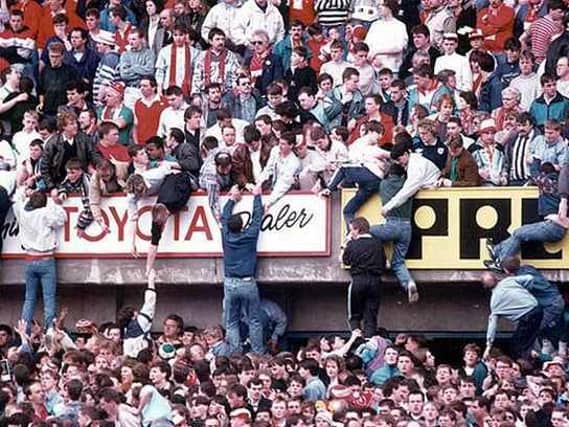
Ninety-seven Liverpool supporters died at the FA Cup semi-final on April 15 1989, when police opened an exit gate to the ground to alleviate crowding outside and failed to direct supporters away from the tunnel leading to the central pens where the crush happened.
The IOPC and Operation Resolve investigations into the tragedy and its aftermath were launched in 2012, following the Hillsborough Independent Panel report.
IOPC deputy director general Kathie Cashell said the victims, their families and survivors had been “repeatedly let down”.
“First by the deep complacency of South Yorkshire Police in its preparation for the match, followed by its fundamental failure to grip the disaster as it unfolded, and then through the force’s concerted efforts to deflect the blame onto the Liverpool supporters, which caused enormous distress to bereaved families and survivors for nearly four decades,” she said.
“They were let down again by the inexplicably narrow investigation into the disaster conducted by West Midlands Police, which was a missed opportunity to bring these failings to light much sooner.”
Mr Duckenfield, 81, a chief superintendent on the day, was cleared of gross negligence manslaughter by a jury in 2019.
The IOPC report said he 'froze in the crisis' and found he had a case to answer for gross misconduct in respect of 10 allegations, including for failing to respond and telling FA officials, in what he later acknowledged was a lie, fans had forced their way in.
The report noted that allegations fans were to blame for the disaster were 'wholly refuted' at new inquests into the deaths, which in 2016 concluded fans had been unlawfully killed.
Other officers who would have faced cases for gross misconduct related to their actions on the day were Mr Duckenfield’s second-in-command Bernard Murray and his superior, assistant chief constable Walter Jackson, who was also noted to have failed in the planning of the match, as well as officers on duty in the Leppings Lane end Roger Marshall, a superintendent, then-inspector Harry White and John Morgan, a sergeant.
Mounted police constable David Scott would have faced a case of gross misconduct for his account that his horse suffered cigarette burns from Liverpool fans – an incident which evidence indicated did not take place, the IOPC said.
South Yorkshire Police chief Mr Wright, who died in 2011, was found to be “insensitive” by investigators looking at allegations he attempted to promote a false narrative and would have had a case to answer for seeking to deflect blame.
Sir Norman, who was a chief inspector at the time, would have had a case to answer in relation to allegations that he was deliberately dishonest about his involvement in the disaster when applying for the chief constable job at Merseyside and misled the public in press statements, the IOPC said.
The retired chief, who also led West Yorkshire Police, was charged with misconduct in a public office as part of the investigation, but the case was dropped in 2018.
The IOPC found retired detective chief inspector Alan Foster would have had a gross misconduct case to answer for allegations he pressured officers who resisted amendments to their statements.
Alan Foster, along with former chief superintendent Donald Denton and force solicitor Peter Metcalf, was charged with doing acts tending and intended to pervert the course of justice but halfway through their trial, in 2021, a judge ruled there was no case to answer.
The only person to be convicted as a result of the probes is former Sheffield Wednesday club secretary Graham Mackrell, who was fined £6,500 and ordered to pay £5,000 costs after he was found guilty of failing to ensure the health and safety of fans arriving at the ground.