
True Crimes: Was Jack the Ripper a sawdust salesman from Stourbridge?
In the second of our True Crimes features on Jack the Ripper, we examine whether the notorious serial killer was from Stourbridge

Not sure if he was dealing with a drunk or a madman, Lieutenant James Parr asked him to explain his claim.
"'I'm him all right', Bury replied, handing him a set of keys. "And if you go along to my house in Princes Street, you'll find the body of a woman packed up in a box and cut up".
Indeed there was. But 137 years on, the question still remains: Was Jack the Ripper a sawdust seller from Stourbridge?
Bill Beadle, who has written a book on the subject, certainly believes there is a strong case.
"Had the Jack the Ripper murders taken place in 1988 and not 1888, then our response to them would have been markedly different," he says.
"No-one in 1988 would have doubted that the perpetrator was a sexual serial killer carrying out his own perverted agenda. Since 1888 we have learnt much about this type of killer, their damaged childhoods, misfit adulthoods and psychopathic alienation from the human race."
Exactly the type of background which William Bury came from.
William Henry Bury was born in Hill Street, Stourbridge, on 25 May 1859.
The youngest of three children, he was just three months old when his father Henry, who worked for a local fishmonger called Joscelyne, was killed in an accident in Halesowen on April 10, 1860. While on a hillside, he fell beneath the wheels of his fish cart and was killed when the horse bolted and pulled the cart over his body.
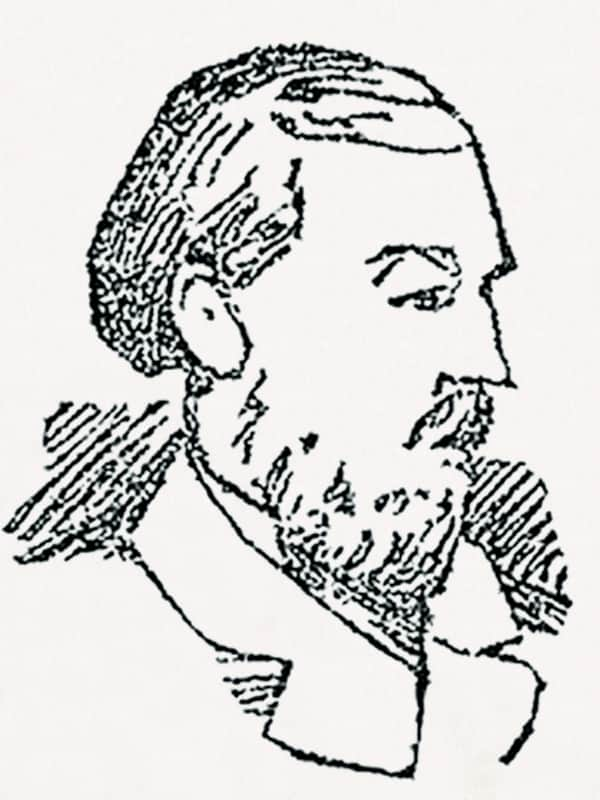

William's mother Mary Jane, possibly already suffering with postnatal depression, was committed to the Worcester County Pauper and Lunatic Asylum the following month, and would remain there until her death at the age of 33 in March 1864. There is some dispute about his upbringing, but it is thought he initially went to live with his uncle Edward Henley in Dudley, before later being taken in by a female family friend who took pity on the children and provided them with a solid education. In 1871 he was enrolled at the Bluecoat Charity School in Stourbridge. When he was 16, with the help of his guardian, he found work at a factors clerk in a local warehouse in Horsley Fields, Wolverhampton.
The job didn't last long, he was forced to leave after failing to repay a loan. He was then briefly employed at the Osborne lock works in Lord Street, Wolverhampton, but was sacked for theft. He appears to have spent the following years as a drifter, scraping a living as a street hawker around the Midlands and Yorkshire, at one point selling pencils and key rings in Snow Hill, Birmingham.
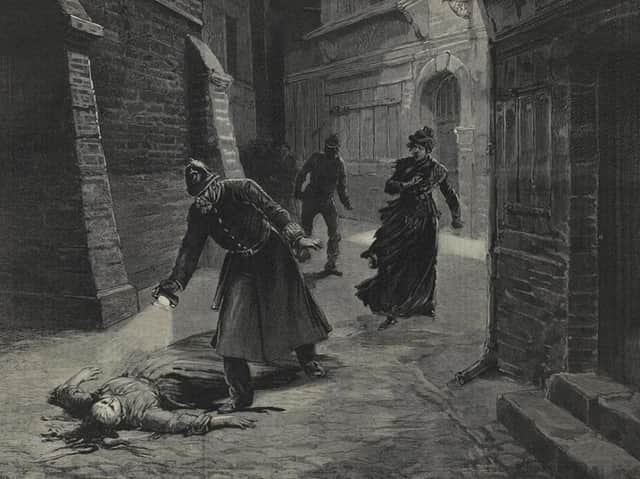
The identity of Jack the Ripper remains a mystery...was he from Stourbridge?
"The childhood fashioned the adult," says Beadle. "The William Bury whom we encounter in Wolverhampton was a thief, liar and a fantasist prone to sudden squalls of destructive rage. These are the hallmarks of the development of a psychopathic personality."
In autumn 1887, at the age of 28, Bury decided to begin a new life in London, and got a job as a sawdust collector in the East End. His boss was a man called James Martin who also kept a brothel at 80, Quickett Street, in Bromley-by-Bow, and Bury was invited to move into the Martin home.
By this time, Bury had already developed a taste for extreme violence. In February that year, he attacked 38-year-old Annie Millwood, slashing her legs and abdomen with a knife, causing horrific injuries. On March 28 he attacked elderly seamstress Ada Wilson, stabbing her in the throat twice following a robbery. Amazingly, they both survived.
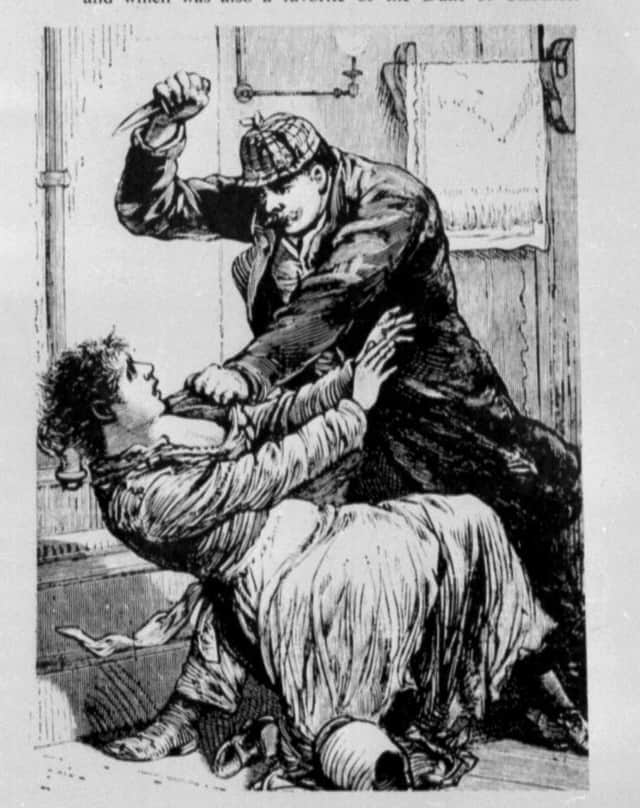
He became friendly with barmaid and prostitute Ellen Elliott.
Ellen was well known and respected among family and friends as a quite inoffensive woman, who had seemed very happy until she married Bury. She was described as a neatly dressed woman, fair haired, slim and of genteel appearance.
She had been left a legacy of bank and railway shares from an aunt, to the value of £300, worth about £35,000 today. Ellen invested the money wisely, purchasing shares in the Union Bank of London. Within a month of their meeting, the couple were married at Bromley Parrish Church on Easter Monday, April 2, 1888. Within four months of the wedding, Mary Nicholls - the first confirmed Ripper murder - was found dead.
The newlyweds settled in Bow, and took up lodgings with Elizabeth Haynes at 3, Swaton Road. On April 7, just five days after they were married, Haynes, hearing Ellen screaming, rushed to her aid to find Bury kneeling on her attempting to cut her throat with a table knife which he was holding in his left hand.
Around this time Ellen confided to the Martins that her husband often stayed out until the early hours, sometimes disappearing for days at at time, with no explanation of where he was or what he had been doing. He would often return drunk, and take his temper out on his wife.
James Martin witnessed, on at least two occasions, Bury attacking Ellen in public, and she would often be seen displaying the facial marks resulting from a beating. Ellen also told the Martins that her husband slept with a pen-knife under his pillow, and that he had infected her with a venereal disease, and feared that one day he would kill her.
Around this time Bury was sacked from his job after stealing from James Martin. With the help of Ellen's inheritance he bought a pony and cart, and became a self-employed sawdust merchant, collecting the dust from sawmills, and selling it to pubs in the East End and restaurants in the City.
At least that was the plan. The reality was that he would often turn up to a pub to sell sawdust, stay for a beer, then for another, and end up drinking the bar dry without making any money. In August the Burys left Swaton Road, briefly living in Blackthorne Street, Bow, before taking up lodgings with builder and bricklayer William Smith in nearby Spanby Road, where there was a stable for his pony and cart.
At 4.15am on December 20, 1888, Sgt Robert Golding and Pc Thomas Costello discovered the body or Catherine 'Rose' Mylett in Clarke's Yard off Poplar High Street, a 20 minute walk from Bury's home. Whether Bury committed the murder is a matter for debate, but by this time his behaviour had becoming increasingly erratic, probably not helped by the syphilis he had contracted from prostitute. And by January 1899 - shortly after the last confirmed Ripper murder - he decided to move as far away from London as possible.
Bury told Ellen's sister he had found manufacturing work in Dundee, paying him £2 a week, and Ellen £1.
But he told his landlord Smith a different story, saying they were going to live in Australia, but became evasive when asked which dock he would be sailing from. Bury asked Smith to build him a strong trunk to transport his belongings, with very precise measurements, which puzzled the builder given that the couple's only possessions appeared to be their clothes - although he noticed that Smith always appeared to have plenty of money and jewellery. Smith later told police that Bury had been acting 'rather strange in his manner'.
On January 19 1889 the Bury's travelled to Dundee on the London packet steamer Cambria from London docks. The couple paid for a second-class cabin and stayed on board overnight. During the crossing the other passengers noticed that while the couple seemed to be on good terms with one another, they were guarded in talking about their past. Bury seemed particularly anxious about the large heavy whitewashed case he had taken on board.
The couple took the London Packet Steamer to Dundee, where they moved into a basement flat beneath a shop.
On arrival in Dundee, the couple found accommodation at 43 Union Street with a Mrs Robinson, who was charging 40d a week. They moved after one week, complaining the rent was too high, although it has also been suggested that the elderly Mrs Robinson was afraid of Bury, and found him 'rather odd'. He was said to have a tendency to walk very quietly, and often startled people with his sudden, silent approach.
The Burys moved into a cold, dirty two-roomed flat at 113 Princes Street, in the basement of a squalid four-storey house. It was at this address, seven days later, that Bury murdered his wife.
Neighbours at Princes Street, generally considered one of Dundee's more salubrious neighbourhoods, rarely saw the couple, though when they did, they were often the worse for drink.
Noticing that her new neighbours had come from Whitechapel, shopkeeper Marjory Smith asked them about the Ripper, and their response was somewhat telling. William Bury remained silent, but Ellen told her: "Jack the Ripper is quiet now". She was also said to have told other neighbours that the Ripper was taking a rest.
That said, Ellen only occasionally ventured out a to draw water from the communal pump, with William Bury responsible for doing the shopping. It is said that the couple lived in the flat as squatters, after Bury obtained the key by posing as a prospective tenant.
On February 4, Bury went to Janet Martin's provisions store to buy a length of rope, she never asked what he planned to use it for. Ellen was never seen alive again.
Bury is said to have spent the rest of that day in the public gallery of the Sheriff Court, listening attentively to the proceedings, returning to the court again three days later. He visited drinking buddy David Walker, who lent him a newspaper that featured a woman's suicide by hanging. Walker asked Bury to look up any news of Jack the Ripper, prompting Bury to throw down the newspaper in a state of fright.
About this time he also asked neighbour Marjory Smith if he could borrow a chopper. Unable to help, she joked, "You're not Jack the Ripper are you?", to which he replied, "I do not know so much about that".
On February 10 William Bury walked into Dundee's central police station in Bell Street to report his wife's death. Officers went round to Bury's flat, which they found to be bare of possessions, the only items in the two rooms were a small bed piled high with clothing, and a large white-washed packing case. Opening the box, they revealed a leg and foot. They summoned doctors Templeman and Stalker, who further discovered the naked and mutilated body of Ellen Bury, who had been strangled and her abdomen had been ripped open with a wound was so severe that 12 inches of intestines were protruding through her stomach.
Police also found chalk graffiti on the back door saying 'Jack Ripper is at the back of this door', and also on the stairwell saying 'Jack Ripper is in this seller (sic)'.
Bury was arrested on suspicion of murdering his wife, by either strangulation or stabbing, and was said to have reacted calmly. He was found to be in possession of Ellen's bank book, a watch and some jewellery.
Detectives arrived from Scotland Yard in London to interview Bury in connection with the Whitechapel murders. They ascertained that Bury regularly carried a knife, and that he was absent from his lodgings on the nights that both Annie Chapman and Mary Kelly were murdered, and that his manner the following day was 'suggestive of a madman'.
Despite his reported confession, he later denied the offence, telling officers that on Monday, February 4, he and his wife had been out having a good time, so good a time, that they could not remember going to bed.
The following morning he said he woke to find his wife dead on the floor, having been strangled with a cord. Having no recollection of whether he had committed the crime or not, and afraid he would be accused of being Jack the Ripper, he was 'suddenly seized with a mad impulse', and he picked up a large sharp and finely ground knife, which happened to be lying conveniently near by, and plunged it into her abdomen, and then decided to conceal the body in the trunk.
A post mortem revealed that Ellen Bury had been dead for several days, and that she could not have strangled herself as Bury was now claiming. Her body was formally identified by her sister, Margaret Coney, who travelled from London, and was also taken to the prison to identify Bury, much to his surprise.
Bury, despite his initial confession, pleaded not guilty to his wife's murder and genuinely believed he had a chance of a reprieve.
His solicitor asked for a second post mortem, which concluded that Ellen had committed suicide. Police called in Dr Henry Littlejohn to perform a third post mortem, which found that Ellen had been murdered, though he was unable to ascertain if the mutilations had taken place after death.
Bury stood trial on March 28, before judge Lord Young.
The trial lasted about 13 hours, during which the court heard that Bury had worked little over the past year, and constantly demanded money from his wife, using violence when she refused.
Neighbour David Duncan told how, on the night of the murder, he heard three loud screams come from the direction of Bury's flat. Little was said in Bury's defence, though his lawyer Dill McKechnie did question Ellen's morals.
Under the rules of evidence, Bury was not permitted to speak in his own defence. The jury returned a verdict of guilty, saying, 'We strongly recommend him to mercy'.
Dundee had a long-held reputation of opposition to the death penalty, but Lord Young was nevertheless surprised by their recommendation, and asked for the jury's reasons.
The jury replied that it viewed the medical evidence as conflicting. Lord Young refused to accept such a verdict and instructed the jury to retire once more, and that it could not find him guilty unless it was certain of the evidence. They soon returned, with a unanimous verdict of guilty, with no recommendation for mercy.
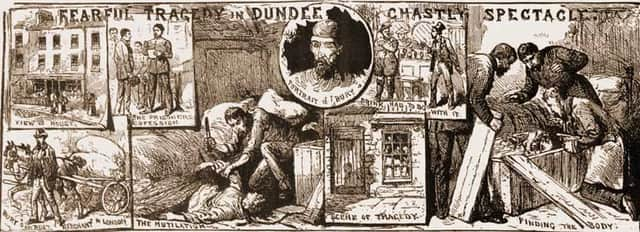
Bury was said to have remained calm and slept soundly each night throughout the trial. The Dundee Advertiser described him as 'Brainless and heartless'.
On the morning of his execution, Bury had a breakfast of bread and butter, poached eggs and tea, and had a final smoke.
The magistrates then entered his cell, identified Bury as the convict, who responded by thanking everyone present for their kindness.
He said to the warder: "This is my last morning on earth, I freely forgive all who have given false evidence against me at my trial, as I hope God will forgive me."
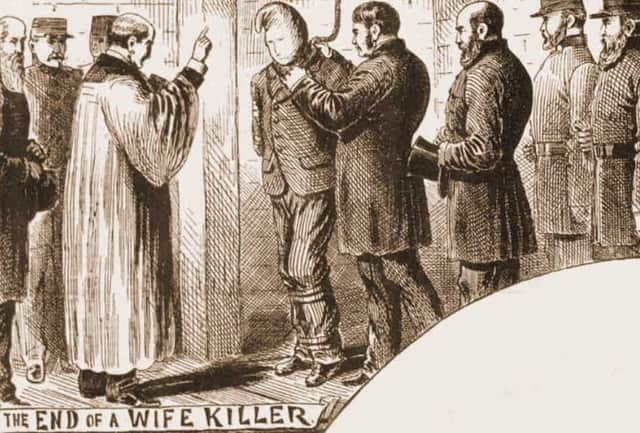
He calmly walked to the scaffold, and was immaculately dressed in a smart twill shooting coat, waistcoat and dark trousers, with a white linen collar and blue tie. It was said he looked more like he was dressed for a wedding.
He was hanged on April 24, 1889 at 8am at Dundee jail. A crowd of 5,000 stood outside waiting for the raising of the black flag, and his body was buried within the grounds of the prison. He was the last man to be hanged in Dundee.
Just before his execution, hangman, James Berry, tried to obtain a confession for the Whitechapel murders.
Bury turned to the hangman and replied coldly: "I suppose you think you are clever to hang me, but because you are going to hang me you are not going to get anything out of me'.
Hangman Berry always remained convinced that he was Jack the Ripper. He said the detectives sent from London to investigate Bury's movements asked Berry for his opinion, to which he replied, "I think it is him right enough," to which one of them replied, "And we agree with you. We know all about his movements in the past, and we are quite satisfied that you have hanged Jack the Ripper, there will be no more Whitechapel crimes."
Berry later recollected his first sighting of Bury, "I confess that a strange feeling took possession of me, he was a peculiar looking man and undoubtedly he had the air of the uncanny about him, he was slightly over five feet in height with a haunted look in his eyes, there was a mysterious something about him which repelled me."
Was William Bury Jack the Ripper? At 5ft 3 tall and just under 10 stone, he fits the some of the eyewitness descriptions, having sharp features, a dark complexion, a fair moustache and a full beard. He also murdered his wife in a manner similar to the Ripper murders, strangulation followed by mutilation of the abdomen.
Crime author Beadle says: "Bury fits the profile of Jack the Ripper in virtually every detail, including venereal disease, heavy drinking, fear and hatred of women and clinical paranoia.
"He invariably carried knives around with him and slept with one under his pillow. Bury's life pattern was one which investigators today would recognise as being consistent with that of a sexually motivated killer."
Beadle says it was Bury's troubled and turbulent youth which shaped the man into a killer.
"The childhood fashioned the adult," he says. "The William Bury whom we encounter in Wolverhampton was a thief, liar and a fantasist prone to sudden squalls of destructive rage. These are the hallmarks of the development of a psychopathic personality."
Beadle notes that none of the Whitechapel victims were murdered on a Sunday evening or a Monday morning, and that, according to one of Bury’s landlords, William Smith, Sunday was the only day of the week when Bury did not drink.
"The police also discovered Bury had been a horsemeat butcher, cutting the meat up for cats' food," says Beadle.
"Although not a necessity, possession of the sort of anatomical knowledge a man might gain from cutting up animals is certainly not a disadvantage in the Ripper stakes."
According to crime writer Christopher Morley, the timing of a visit to Wolverhampton would go a long way to establishing the truth either way. It is known that Bury and Ellen visited the town in July or August, 1888, presumably to see relatives, but it is not known when they left, or how long they stayed for. Martha Tabram, a possible Ripper victim, was murdered on August 7, and Mary Nichols, who was almost certainly one, was murdered on August 31.
Was the trip a flight of panic after Martha's murder, or does it give him a cast-iron alibi?
If the dates of the trip could be established, it would go a long way to determining whether William Bury was just another perverted sadistic murderer - or possibly the most notorious serial killer in British history.