
True Crime: How a good-time girl from Wolverhampton became Jack the Ripper victim
Boarding house manager eerily predicted the murder of Wolverhampton Jack the Ripper victim

On September 27, 1888, Kate Eddowes handed her last tuppence to the superintendent of Mile End boarding house in East London, in exchange for lodgings for the night.
A former regular guest, the superintendent noted that she had been absent for some weeks, and wondered where she had been. Kate replied that she had been hop-picking, and due to a disappointing harvest, had almost run out of money.
But, ever the optimist, she added that she would soon be coming into a windfall.
“I have come back to earn the reward offered for the apprehension of the Whitechapel murderer. I think I know him,” she said.
The superintendent, who had doubtless heard countless similar stories before, quipped: “Mind he doesn’t murder you too”.
“Oh, no fear of that,” she replied.
Two days later, Catherine 'Kate' Eddowes had become the latest victim of the serial killer who became known as Jack the Ripper.
*****
Sent to the workhouse after being orphaned at 14, Wolverhampton-born Kate did not have an easy life. But for all of her 46 years she was known for her cheerful, upbeat demeanour, a 'very jolly woman, always singing'.
On a cold morning in January, 1866, she had to endure the trauma of watching her cousin, Christopher Robinson, being hanged in Stafford, having been convicted of the murder of his girlfriend Harriet Seagar.
Once the execution was complete, Kate turned to the 4,000-strong crowd who had turned out to watch, and started selling copies of a ditty which had been written to mark the macabre spectacle.
Sales were so good that her boyfriend, who had probably written the rather tasteless ballad, was able to treat her to a coach trip back to Wolverhampton, and bought her a flowered hat in Bilston.
That was Kate all over. No matter what the hardship life threw at her, she always had a smile on her face and an upbeat demeanour.
A tough start in life
]Catherine Eddowes was born in Graiseley Green, Wolverhampton, on April 14, 1842, the sixth of 12 children born to tinplate George Eddowes and his wife, Catherine, a cook at the Peacock Inn, on the junction of Dudley Street and Snow Hill.
The year after her birth, the family moved to the Bermondsey area of London, and Kate was educated at St. John's Charity School in Potter's Field. Catherine Snr died in November 1855, at the age of 42. By 1857, Kate's father had also died, leaving her an orphan at the age of 15, and along with three of the other children she was admitted to Bermondsey workhouse. All four children were allowed to attend the local industrial school to learn a trade, and with the help of her elder sister Emma, and an aunt, she secured a job as a tinplate stamper at Old Hall Works back in Wolverhampton.
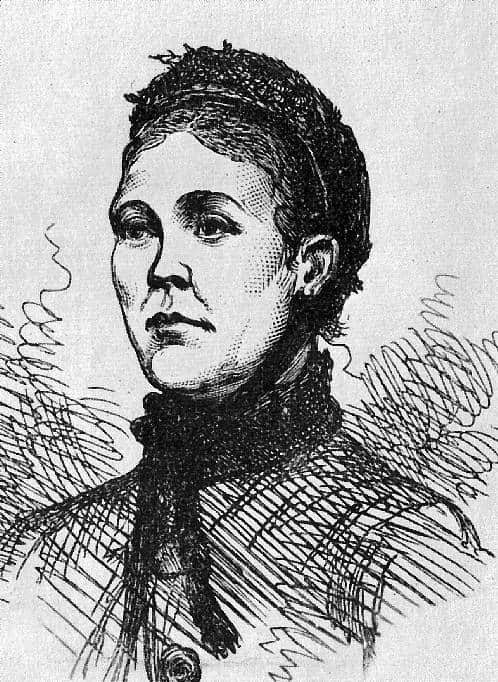

She went to live with her aunt in Bilston Street, continuing her education at Dowgate Charity School. This new-found stability didn't last long. Within a few months she was sacked, possibly for stealing, and her aunt was distinctly unimpressed. She went to live with her uncle Thomas, a shoemaker in Birmingham, and worked for four months as a tray polisher, but returned to Wolverhampton to live with her grandfather, who got her work as tinplate stamper. After another nine months in her new job, she moved again to Birmingham.
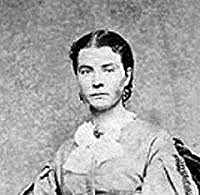
Sometime during her time in Birmingham, about 1861 or 1862, she met Thomas Conway, a former soldier with the 18th Royal Irish Regiment, who was in receipt of a small army pension. It seemed an unlikely match: Kate was outgoing and headstrong, who enjoyed a drink and had a fiery temper; Conway was a stern teetotaller with health problems. Nevertheless, Kate had the initials T C crudely tattooed on her forearm, and began using the name Kate Conway, although there is no suggestion they actually married. They had a daughter Catherine Ann, known as Annie, in 1863, and a son Thomas Lawrence in 1867.
The couple moved to London in 1868, giving birth to a second son George, in August 1873, and Frederick in February 1877, but Kate's drinking was starting to become a problem. In August, 1877, she appeared before a court in Lambeth, where she was jailed for 14 days for being drunk and disorderly, with her infant son Frederick serving the time in Wandsworth jail with her. A year later, on August 17, 1878, she was sentenced at Southwark to seven days in Wandsworth Prison for being ‘drunk in a thoroughfare’. She was 37 years old, her occupation given as a laundress, and she was described as having a scar forehead from a blow and cut to the right eyelid, and was also missing two front teeth from her upper jaw.”
How she received the injuries is not known, but all was not well in her relationship with Conway. Friends described Kate as 'intelligent and scholarly, but possessed of a fierce temper', and it was inevitable that her drinking, fiery temperament, combined with Conway's stern abstinence, would create fireworks. It is thought the relationship descended into violence, with Kate occasionally seen with black eyes and bruising.
Sometime in 1880, Kate left Conway, moving out of their digs in Chelsea for the East End of London. Their daughter Annie blamed Kate's drinking, but Kate's older sister Elizabeth Fisher said the break-up was caused by Conway's violent abuse.
She went to live at Cooney's common lodging-house at the notorious Flower and Dean Street in Spitalfields, where she met John Kelly, an Irish jobbing market porter, who frequently worked for a fruit seller called Lander, and she took the name Kate Kelly.
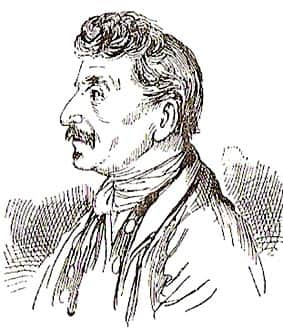
The couple moved from one lodging to another, and when times were particularly hard Kate would stay at an infamous squat in Dorset Street, reputedly the most dangerous street in London. She usually earned money by performing domestic work such as cleaning and sewing in the nearby Brick Lane, although she is also said to have occasionally resorted to prostitution to cover her rent. This is contradicted by Frederick Wilkinson, deputy manager of Cooney's lodging house, who described Kate as 'not often in drink and was a very jolly woman, often singing'. He said she was generally in the lodging house by 10pm, and wasn’t in the habit of walking the streets. Kelly himself claimed no knowledge of any involvement in prostitution. He says that she sometimes drank to excess, but it wasn’t a habit.
By the mid 1880s, she and Kelly would travel to Kent every summer to earn money in the hop-picking fields of Hunton, and in 1888 Kate purchased a jacket from a pawnshop and Kelly bought a pair of boots from a shop in Maidstone. They became friends with vagrant Emily Birrell and her common-law husband, the four of them sleeping in the same barn. It was not a good harvest, and Kate and Kelly ended up walking back to London, arriving on September 27. The next day ,the couple were down to their last sixpence, Kelly spending four pence to spend the night at Cooney's, and and Kate using the remaining tuppence for a night at the Mile End Casual Ward. The ward, part of the workhouse system, provided the most basic accommodation for the 'casual poor', often vagrants: beds often had no mattress, and food was usually bread and thin gruel, although they could earn their stay by performing hard labour, such as breaking stones or chopping wood.
It was here that she told the superintendent she knew who Jack the Ripper was.
Murders in a dark place
In the 1880s Whitechapel was not a place for the faint-hearted, a lawless den of iniquity characterised by extreme poverty, vagrancy, drunkenness and endemic prostitution. The area around Flower and Dean Street was considered 'perhaps the foulest and most dangerous street in the whole metropolis', although Dorset Street gave it a run for its money as 'the worst street in London'. The area was characterised by no fewer than 233 common lodging-houses offering temporary accommodation to 8,500 people with no permanent home. A plank bed for the night cost a princely 4d, but those who were really down on their luck could rent a space on the 'rope beds' that were suspended across the dormitaries for just 2d.
Just the sort of place that would provide a steady stream of vulnerable, impoverished women to satisfy the perverted desires of a twisted serial killer.
During the early hours of April 3, 1888, the day after Easter Monday, 45-year-old prostitute Emma Smith was assaulted and robbed at the junction of Osborn Street and Brick Lane. She survived the attack and managed to walk back to her lodging house at 18 George Street, Spitalfields, where she told the deputy keeper, Mary Russell, that she had been attacked by two or three men, one of them a teenager. Russell took her to the London Hospital, which revealed a serious sexual assault, and she died the following morning.
Det Con Walter Dew later wrote that he believed Smith to be the first victim of Jack the Ripper, but his colleagues were not convinced, thinking it more likely to be the work of a criminal gang.
On August 7, again on the Tuesday following a bank holiday, the body of prostitute Martha Tabram was discovered at George Yard Buildings, shortly before 5am. It is believed the murder had taken place about 2.30am, and she had been stabbed 39 times in the neck, torso and genitals with a short blade. An identity parade of soldiers from the Tower of London and Wellington Barracks was held, but failed to identify a suspect.
At 3.45am on August 31, cart driver Charles Cross was passing through Buck's Row, a back street of Whitechapel, when he discovered a body in front of the gates to a stable. Mary Ann Nichols was found with her throat slit twice from left to right and her abdomen was mutilated by a deep, jagged wound. There were several shallower incisions across the abdomen, and three or four similar cuts on the right side were caused by the same knife used violently and downwards.
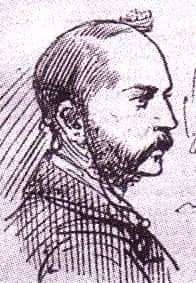
Press reports linked Nichols' death to the two previous murders. Some suggested the killing might have been perpetrated by a gang, others that a single killer was responsible. Suspicions of a serial killer at large in London led to three detective inspectors - Frederick Abberline, Henry Moore and Walter Andrews - being drafted in from Scotland Yard.
At her inquest, Coroner Baxter dismissed the possibility that her murder was connected with those of Smith and Tabram, as the lethal weapons were different in those cases, and neither of the earlier cases involved a slash to the throat.
However, by the time Nichols inquest had concluded, another woman had been murdered, on which Baxter observed: "The similarity of the injuries in the two cases is considerable."
The mutilated body of Annie Chapman was discovered at about 6am on September 8, near a doorway in the back yard of 29, Hanbury Street, Spitalfields, Annie had left her lodgings at 2am on the day she was murdered, with the intention of getting money from a client to pay her rent. Her throat was cut from left to right, and her body had been brutally disembowelled.
Pathologist George Bagster Phillips said the way Annie's body had been mutilated suggested that the murderer must have had surgical skills, but this was dismissed by other experts. It was also suggested that some of the organs may have been removed by light-fingered mortuary staff, who sold the organs as surgical specimens.
Elizabeth Long said she had seen Annie talking to a man at about 5.30am close to where her body was found. She described him as over 40, a little taller than Annie, of dark complexion and of foreign, 'shabby-genteel' appearance. He was wearing a brown deerstalker hat and a dark overcoat. Another witness, carpenter Albert Cadosch, said he had entered a neighbouring yard at about the same time, and heard voices in the yard followed by the sound of something or someone falling against the fence.
Notorious criminal John Pizer, known as 'Leather Apron' was arrested on September 10. Pizer had a reputation for harassing prostitutes, but he has solid alibis for the murders of both of the latest murders, and was released without charge.
By this time, London was gripped by growing hysteria. A mob attacked the Commercial Road police station, after rumours circulated that the killer was in custody. Samuel Montagu, MP for Whitechapel, offered a £100 reward. Rumours that the attacks were Jewish ritual killings led to a wave of antisemitism, while the Whitechapel Vigilance Committee offered a reward for the apprehension of the killer - against the wishes of the police, who feared it would attract opportunistic timewasters - and employed two private detectives to carry out a separate investigation.
On September 27, the Central News Agency received a letter signed 'Jack the Ripper', confessing to the murders.
Two murders in an hour - Kate's brutal demise
The day after their return to Whitechapel, Catherine Eddowes met up with John Kelly at Cooney's common lodging house on Flower and Dean Street, where Kelly had spent the evening. They ate breakfast before purchasing some tea and sugar, and then agreed to split their last sixpence between them. Kelly took 4d to pay for another night in Cooney's, with the remaining 2d enough to pay for another night at the Mile End casual ward.
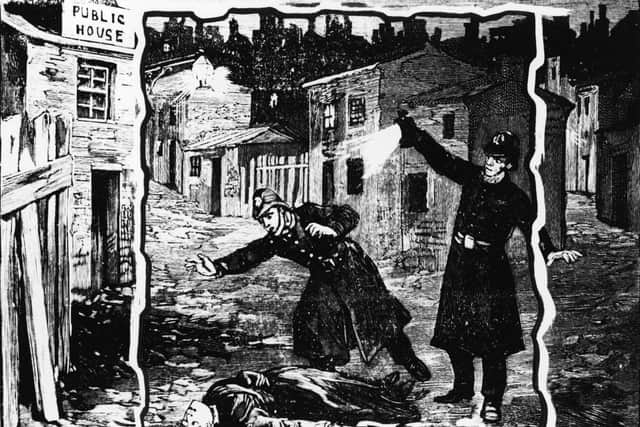
With their last sixpence spent, Kate met with Kelly early in the afternoon of September 29, 1888, and told him she planned to travel to Bermondsey to borrow money from her daughter Annie, who was now married to a gun-maker from Southwark. The two parted company in Houndstitch at about 2pm, with Kate telling Kelly she expected to be back about 2pm. In the meantime, Kelly took his boots to the pawnbrokers to raise the funds for a night's board, and walked shoeless back to Cooney's where he took a bed just after 8pm, remaining there throughout the night.
About 8.30pm that night, Pc Louis Robinson noticed a commotion outside 29, Aldgate High Street, where he found Kate drunk on the pavement. With the assistance of Pc George Simmons, she was carried to Bishopsgate police station. When asked her name at the custody desk, she replied 'nothing', and within 20 minutes she had fallen asleep in a cell. At 1am, she was deemed sober enough for release. She gave her name and address to Pc George Hutt as Mary Ann Kelly, of 6, Fashion Street.
Hutt pushed open the door to the passage and told Kate: "This way Missus." As she walked along the passage to the outer door, she asked him what time it was. "Too late for you to get anymore drink," replied Hutt.
"I shall get a damned fine hiding when I get home," she told an unsympathetic Hutt, who replied: "And serve you right."
"Goodnight, old cock" said Kate, as she left the station.
The shortest route back to her lodgings would have been to turn right. But instead she turned left, in general direction of Aldgate, and three men who had just left the Imperial Club in Duke Street saw her in Church Passage, at 1.35am.
Ten minutes later, her mutilated body was found by Pc Edward Watkins at the south-west corner of Mitre Square, in the Square Mile. She had been killed by a slash to the throat from left to right with a sharp, pointed knife at least six inches long. Her face and abdomen were mutilated, and her intestines were drawn out over the right shoulder with a detached length between her torso and left arm. Her left kidney and most of her uterus were removed.
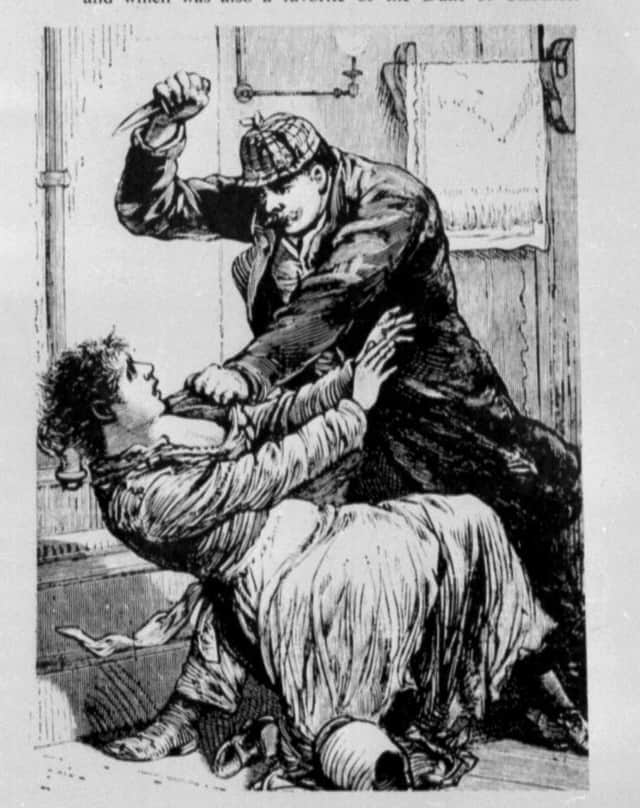
An inquest opened on October 4, and pathologist Dr Frederick Brown told coroner Samuel Langham that the killer must have had 'considerable knowledge of the position of the organs', and from the position of the wounds on the body he could tell that the murderer had knelt to the right of the body, and worked alone. However Dr George Sequeira, the first doctor at the scene, said he did not believe the killer had specialist skills, and his view was shared by city medical officer William Sedgwick Saunders, who was also present at the autopsy.
At that time, Mitre Square was an enclosed square, in the shadow of three imposing warehouse buildings. Three uninhabited houses and a shop backed onto its south west corner, while two further houses, one of which was occupied by policeman Richard Pearse, nestled between the warehouses. At 1.30am, Pc Watkins had passed the south-east corner of the square on a beat that brought him through Mitre Square every 12-14 minutes. He left the square and turned right towards Aldgate.
He had his lantern on and fixed to his belt. He was later emphatic that the square had been quite deserted and that no-one could have been hiding in the square without him seeing them.
Joseph Lawende, one of the men who had seen her 10 minutes before her body was found, said he had seen her, dressed in a black bonnet and jacket, talking with a man of medium build with a fair moustache at the entrance to Church Passage, which led south-west from Duke Street and into Mitre Square. The only one of the witnesses to give a clear description, he said she was facing the man, with one hand on his chest, although not in a manner to suggest she was resisting him. He described the man as about 30, 5ft 7in tall, and wearing a loose-fitting 'pepper and salt colour' loose jacket, grey peaked cloth cap and a 'reddish' scarf.
Lawende, who walked past without looking back, said the man looked like a sailor. Another witness, Joseph Levy, said the pair looked to be 'up to no good', and hurriedly walked away.
Just 35 minutes earlier, about half a mile to the east of Mitre Square, the body of prostitute Elizabeth 'Liz' Stride was discovered at about 1am in Dutfield's Yard, inside the gateway of 40, Berner Street, Whitechapel. She was lying in a pool of blood with her throat cut from left to right. She had been killed just minutes before, and her body was otherwise unmutilated. Some say that suggests a different killer, but others believe the murderer may have been disturbed, possibly by Louis Diemschutz, the man who discovered the body.
Several witnesses described seeing Liz with a man who may have been her killer, although all but two differed. However Chief Insp Swanson noted that one of the descriptions was a close match to Lawende's description of the man he saw with Kate.
Both the Metropolitan Police and Home Secretary Henry Matthews came under mounting criticism as the killer continued to elude them.
On October 1, Central News Agency received a postcard, again signed Jack the Ripper, claiming responsibility for the murders of both Kate and Liz, which he described as a 'double event'.
Kate's kidney?
On October 16 George Lusk, of the Whitechapel Vigilance Committee, had a rather nasty surprise when he opened his mail. A letter, addressed as being 'from Hell', and taunted Lusk about his failure to apprehend the killer - and was accompanied by a small box, containing half a human kidney preserved in alcohol. The letter claimed the writer had cut the kidney from the body of Catherine Eddowes, and that he had fried and ate the missing half. Opinions are divided on whether either the kidney or the letter were genuine.
By the end of October, the police had interviewed more than 2,000 people, investigated more than 300 suspects, and detained 80.
The spree continues
The killing spree resumed on November 9, when prostitute Mary Kelly was murdered in the single room where she lived at behind the notorious Dorset Street, in Spitalfields. Annie Chapman had lived in Dorset Street, and Kate Eddowes was also reported to have squatted there. Mary's severely mutilated body was discovered shortly after 10.45am lying on the bed. Mary's murder was the most savage, probably because the murderer had more time to commit his atrocities in a private room rather than in the street. Her state of undress and folded clothes suggested she may have undressed herself, indicating that the killer was either known to her or a client.
On November 10 police surgeon Thomas Bond wrote to Robert Anderson, head of London CID, detailing the similarities between the five murders of Nichols, Chapman, Stride, Eddowes and Kelly, saying they were 'no doubt committed by the same hand'. The Cabinet promised to pardon to any accomplice who came forward with information that led to the conviction of the actual murderer.
On December 20, 1888, a patrolling constable found the strangled body of 26-year-old prostitute Rose Mylett in Clarke's Yard, off Poplar High Street. Born Catherine Milett, and also known as Drunken Lizzie Davis and Fair Alice Downey, she had lodged at 18 George Street, as had Emma Smith.
Four doctors who examined Rose's body thought she had been murdered, but Anderson was convinced she had accidentally hanged herself on the collar of her dress while drunk. At Anderson's request, police surgeon Bond also examined the body, and agreed with Anderson. Commissioner James Monro also suspected it was a suicide or accident, given there were no signs of a struggle. Coroner Wynne Baxter told the inquest jury 'there is no evidence to show that death was the result of violence', but the jury nevertheless returned a verdict of 'wilful murder' and the case was added to the Whitechapel file.
After an interval of almost eight months, there was another murder. Alice McKenzie, who may have been a prostitute, was murdered at about 12.40 am on July 17, 1889, in Castle Alley, Whitechapel. Like most of the previous murders, her left carotid artery was severed from left to right and there were wounds on her abdomen. Her wounds were not as deep as in previous murders, and a shorter blade was used. Commissioner Monro and pathologist Bond, believed this to be a Ripper murder, though another pathologists, Phillips, and Robert Anderson disagreed, as did Inspector Abberline.] There was now a growing suspicion that other killers were mimicking the Ripper's methods, to divert suspicion.
On September 10, 1889, at 5.15am on 5 am on Tuesday 10 September 1889, a the torso of a woman in her 30s was found under a railway arch in Pinchin Street, Whitechapel. Extensive bruising suggested the victim had been severely beaten shortly before her death, which was likely to have been about 24 hours before the discovery. The abdomen was extensively mutilated in a manner similar to the Ripper, and dismembered sections of the body are believed to have been transported to the railway arch, but were never found. Neither the victim nor the culprit were ever identified. Newspapers initially speculated that the body might be that of Lydia Hart, who had disappeared, but this was disproved when she was found recovering in hospital after 'a bit of a spree'. It was also claimed that the torso belonged to missing girl Emily Barker, but it was clear that the torso was too tall and old to be her.
Monro left his post as Commissioner following a disagreement with Home Secretary Henry Matthews over police pensions, and was replaced by Sir Edward Bradford on June 21, 1890.
The final murder in the Whitechapel file was took place on Friday, February 13, 1891, when Pc Ernest Thompson discovered badly injured prostitute Frances Coles beneath a railway arch in between Chamber Street and Royal Mint Street at 2.15am. Thompson said he heard retreating footsteps in the distance. He summoned help, but Frances died before medical help could arrive. The bodily mutilations were less severe than in previous murders, leading some to suggest that Thompson disturbed her attacker.
James Sadler, who had been seen with Frances earlier, was arrested by the police and charged with her murder, but was released on March 3 due to lack of evidence.
*Tomorrow: Was Jack the Ripper from Stourbridge?