
Titanic explorer visits West Midland factory where captain's megaphone was made

Man who discovered Titanic megaphone visits the Birmingham factory that made it
The explorer who recovered the megaphone believed to have been used by Titanic captain Edward Smith dropped in to the West Midland factory that made it..
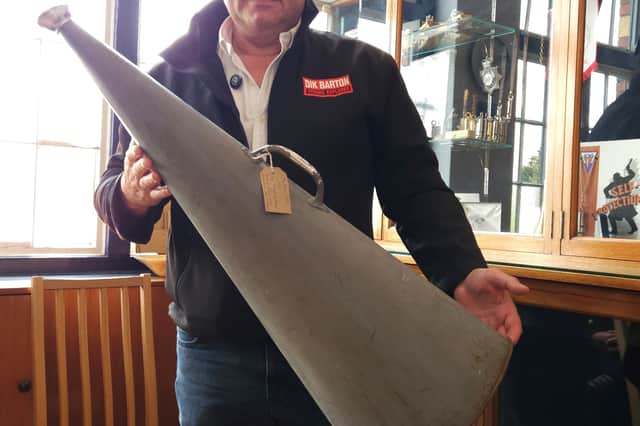
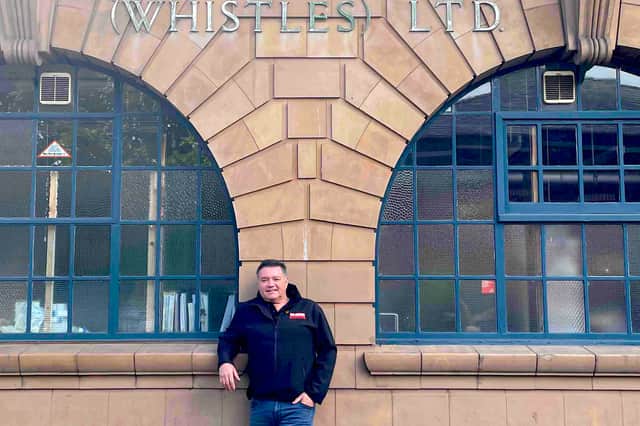
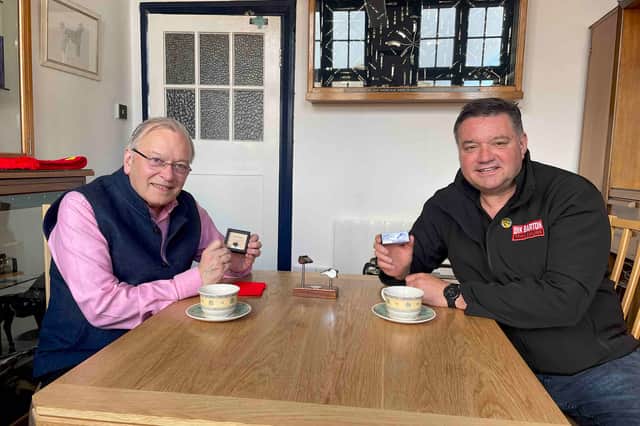
Dik Barton, who in 1993 became the first Briton to dive into the ill-fated shop, visited Birmingham’s historic Acme Whistles works to see where the megaphone had been made.
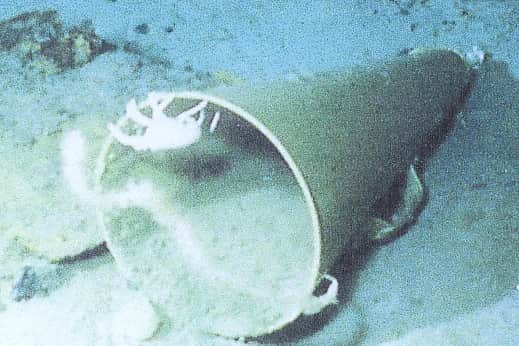
The company, based at Barr Street in the Jewellery quarter, had long known that one of its original ACME Stentor megaphones was recovered from the Titanic debris field during a deep-sea expedition in 1993.
But managing director Simon Topman said it still came as a major surprise to meet the diver who recovered the artefact more than three decades ago.

Barton was in Birmingham for the Titanic Exhibition at the NEC when he read about the company’s connection to the White Star Line. In April Mr Topman revealed how he discovered that his company supplied 30 whistles for the Titanic after watching Kate Winslet blowing one during the famous film.
Barton said: “When I discovered Acme had recently uncovered its wider Titanic connection, I realised the full significance of the megaphone and knew I had to get in touch with the team and visit the factory.
“During our 1993 expedition to the Titanic wreck site, we recovered one of the original Acme Stentor megaphones and brought it back to the surface.
“Found resting upright or partially embedded in the ocean silt, the artifact was retrieved using the robotic manipulator arms of a deep-sea submersible. When it sat on the seabed, it appeared entirely intact. However, because it was constructed of aluminium, a century of deep-sea electrolytic corrosion had severely compromised its structural integrity, as aluminium oxidises very quicky.”
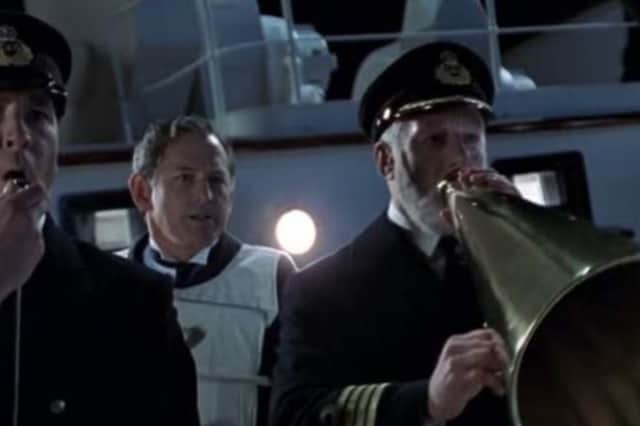
Historians frequently point to this specific megaphone as the one Captain Smith likely held when trying to call light or under-filled lifeboats back to the ship's gangway doors to take on more passengers, including the infamous No. 6 which left less than half full.
Barton said: “The recovery of the megaphones from the RMS Titanic is one of the most compelling chapters in the preservation of the ship's operational history.
“These were the literal "voices" used by Captain Edward J Smith and his officers to project commands across the decks and out to the lowering lifeboats during the final hours of April 14–15, 1912.
“For me to stand inside the very factory where it was made more than a century ago is something quite remarkable after finding it at the wreck.”
The Acme Stentor megaphone was a key communication device used aboard the Titanic, helping officers amplify commands to crew and passengers, particularly during emergencies and lifeboat evacuations. Manufactured in the early 1900s, the large aluminium-bodied, nickel-finished megaphones were designed to project voices across crowded decks and harsh sea conditions.
Some are believed to have been positioned near the bridge and lifeboat stations to assist officers coordinating the evacuation of the doomed ship. Only two megaphones are known to have been recovered from the Titanic expedition, one in 1987 and another during Barton’s 1993 mission.
Acme’s wider Titanic connection was first uncovered when Mr Topman recognised the company’s whistle in the 1997 film Titanic and later traced historic ledgers confirming it supplied 30 whistles to the White Star Line before the ship’s maiden voyage in 1912.
He said: “The megaphone is too large to comfortably hold for long periods by hand, so it was likely mounted on the bridge and used for communication with crew on deck.
“It’s not hard to imagine it being used by Captain Smith, or one of his officers, to pass on instructions while the lifeboats were being loaded.
“As the years passed after the sinking, the company’s knowledge of the megaphone, and the fact that we had supplied it, was lost.
“Eventually, discussions with Titanic expert and author Andrew Lound revealed that Acme had supplied two megaphones each to both the Titanic and her sister ship Olympic.
“One of them had even been photographed on the ocean floor beside the wreck of the ship. Meeting Dik and hearing first-hand about the expedition brought a completely new dimension to the story, and it was an honour to have him down to our Birmingham factory- truly a fully circle moment.”
Founded in 1870, Acme Whistles moved into its Barr Street factory in 1909 and still operates from the same premises today, continuing to use traditional machinery and original tooling passed down through generations.
Ben McFarlane, head of sales and marketing at Acme said: “To have another artefact made in this building recovered from the Titanic wreck, and then meet the person who found it, makes the connection feel very special.
“We’re still in the same building as when both the original whistles and megaphones supplied for the Titanic were made, and we’re still using some of the same machinery, which is something quite incredible for Birmingham and its heritage as the City of a 1,000 Trades.”
Comment Guidelines
Iconic Media encourages reader discussion on our stories. User feedback, insights and back-and-forth exchanges add a rich layer of context to reporting. Please review our Community Guidelines before commenting.