
'This story keeps having to be told': Beverley Knight on Sylvia's enduring relevance ahead of Birmingham show

Beverley Knight said the role continues to challenge her
Since first taking on the role of Emmeline Pankhurst in Sylvia in 2018, Beverley Knight has won Oliver Awards and received recognition for her powerful performance as the leader of the suffragette movement.
It’s a role that the Queen of British Soul will take on again on the stage of the Birmingham Hippodrome over five days, from Tuesday to Saturday (October 6 to 10) as the show takes on a national tour.
For the Wolverhampton-born singer and performer, it’s a role and a show which remains relevant.
She said: “I keep coming back to this role because of the relevance of the piece, as it’s a 100-year-old story about how everyone got the vote, and when you examine how that came to happen, feels like a story right now about protests.
“When does the right to protest become or tip into what is considered terrorism and a prohibited group? Who gets to have a voice in society? What happens when you’ve got people in the family who vote in different ways or have different political ideas?
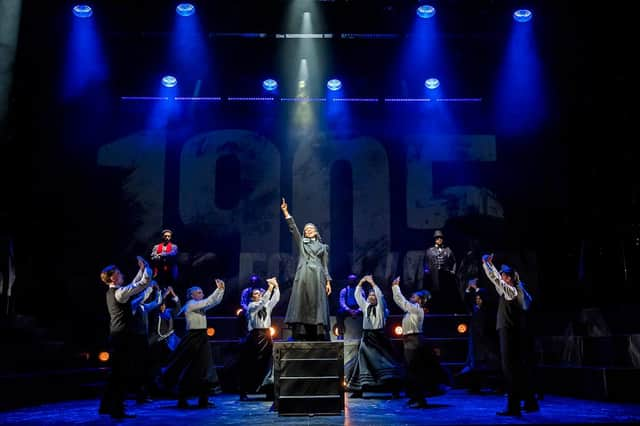

“There’s so much going on right now which is relevant and seems to happen every time we do this show, like in 2018, which was after Brexit, and in 2023, it was about Stop Oil and protesters in the road and, now, it’s about MAGA and the manosphere.
“It keeps on going and going and as long as the human condition is the human condition, this story has to be told.”
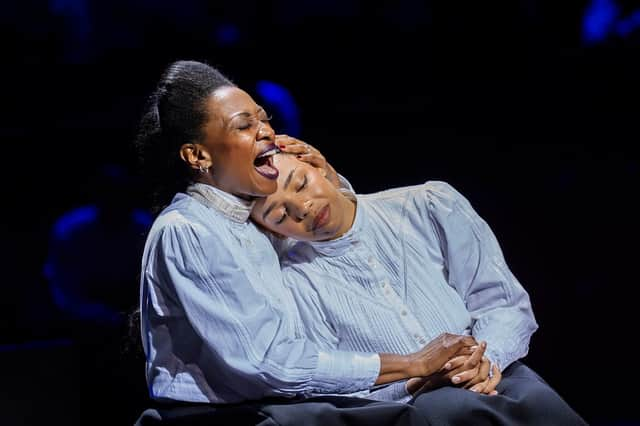
The production sees Beverley Knight reprise the role of Emmeline Pankhurst alongside Naomi Katiyo as Sylvia Pankhurst and is described as the untold story of the rebellious middle child of Emmeline Pankhurst.
The show utilises hip hop, funk and soul to tell the story of how, while her mother and sister battled for women’s suffrage, Sylvia ignited a revolution for the forgotten, which included working women, the impoverished and the silenced.
Beverley said: “The whole engine of the show is driven by the music and we’re either singing or speaking in rhythm and there are only two moments, which both belong to my character and where the music stops and Emmeline is talking in normal prose.
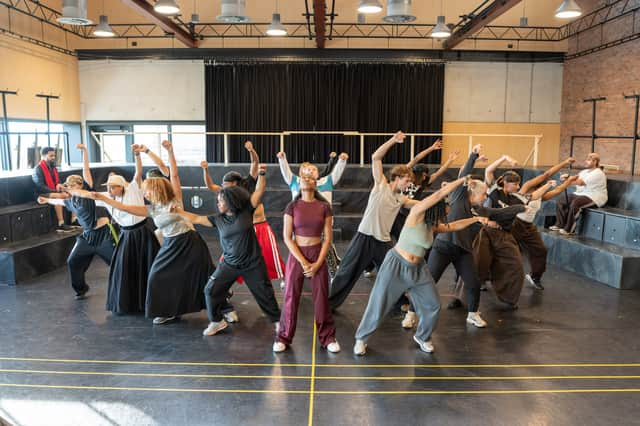
“The whole thing makes it feel current as it’s set to music such as R&B, hip hop, soul, garage, ballads, even a bit of ska, which makes it so great as it kind of gives it a modernity, even when the story is so old.
“The dance also elevates it and while it’s all very stylised, some of it is very real, such as a scene where we re-enact the Black Friday, where women were kettled and beaten up by the city police and police from the East End because they had rushed on Parliament due to another bill being kicked into the long grass that would have given women the vote.
“They were furious and we re-enact to music with singing and it’s very effective and very moving, with a lot of joy and some comedy moments in there as well.”
Beverley said the role was probably the one which left her the most exhausted afterwards due to the emotionally draining nature of the material and the show.
She said she fully inhabited the role of Emmeline Pankhurst, which could take a toll emotionally and physically, but helped to tell her story in a powerful way.
She said: “Emmeline was complex and was not only a British hero, but also a world hero in terms of women’s rights and the suffrage fight, so she is probably the number one figurehead in the world.
“More people know about Emmeline Pankhurst than they do about Susan B. Anthony or even Millicent Fawcett, who was a suffragist, as the distinction was non-violent.
“I think Emmeline became autocratic and that made her fall out with a lot of people, even her own children, which is the crux of our show and meant she was a real human.
“She had failings, but she knew what she wanted and she was going to pursue it, even if it broke her family up, so I have to tap into that element of resilience and determination at the cost of everything to get the result.
“You have to find that within yourself and pull it out yourself, which is why it’s so exhausting as who wants to fall out with their family every day?”
Beverley also said herself and Naomi Katiyo playing the role as two prominent black women had its own significance.
She said: “We’re not doing this as a biopic and it’s not for me or Naomi to look like the characters, but what we have to do is bring the spirit of these women to life and that’s the magic of theatre.
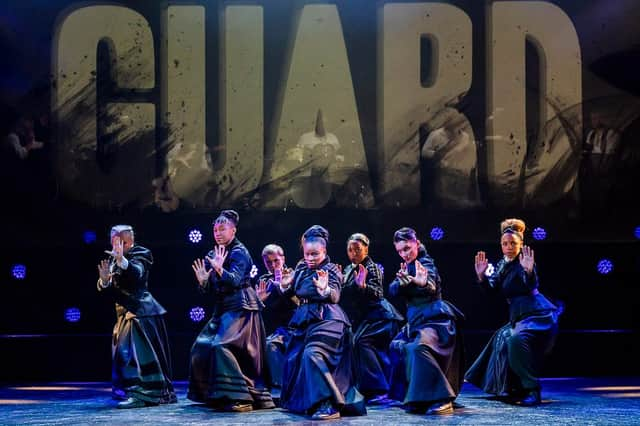
“People aren’t looking at faithful, accurate representations of human beings and what you bring is the human experience, so there’s another medium if you want realism and all that, so theatre isn’t it.
“If you are looking for hyper-realism, theatre isn’t the place to go either as your imagination has to do some work as well and, as an audience member, you have to imagine that a block of wood is a massive stage at the Royal Albert Hall.
“There’s so much that you, as the performer, bring to it and that’s why I’m glad we were chosen as how do you, in the 21st century, where you’ve only ever known what it is to have the vote, portray the people who were willing to have their bodies broken and, in some cases, die to get that vote?
“Both myself and Naomi come from a minority and intersect two different minorities of being women and black, so we understand inherently having certain disadvantages and so, with us playing these roles, we can bring our own experiences to the stage to help tap into the story.”
Alongside Beverley, the show includes assistant stage manager Lewis Francis, who Beverley said went to her secondary school Highfields School, and Solomon Davy from the show, who is also from Wolverhampton.
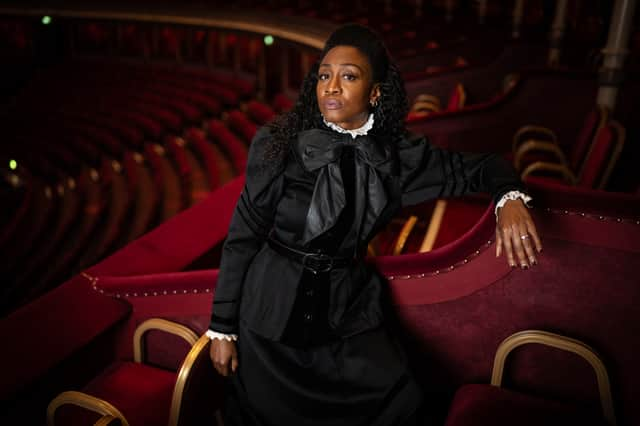
One thing Beverley said she was delighted about was being able to come home to the West Midlands to perform, particularly in a city with a suffragette history of its own.
“I am so excited to be playing home, just down the road from Wolverhampton and where you can take a tram straight down, and it’s just brilliant to be bringing this story to Birmingham, knowing that it had Hilda Burkitt.
“She was a massive and major suffragette who was born in Wolverhampton, but did a lot of her work in Sparkbrook and that whole area; then we’ve got Red Emma, who became the first female councillor for the Labour Party in Wolverhampton.
“Suffrage has a lot that has come from Wolverhampton and Birmingham and a lot for the cities to be proud of as those women came from there, so the stories we’re telling on stage are going to be the stories of the very same people in our audience.
“Some of their ancestors will know what we’re talking about because their great grandmother may remember it and that’s a heirloom, as it’s not just a dusty story way in the past.
“When I was a child, the oldest humans in Britain were, in terms of women, suffragettes and, in terms of men, World War One veterans, so that’s in touching distance of that history and means that story is not at all old.”
Comment Guidelines
Iconic Media encourages reader discussion on our stories. User feedback, insights and back-and-forth exchanges add a rich layer of context to reporting. Please review our Community Guidelines before commenting.