
The top 10 areas in Staffordshire that are infested with invasive plant

Staffordshire’s 2026 Japanese knotweed hotspots have been revealed
Environet has revealed Staffordshire’s Japanese knotweed hotspots for 2026 based on verified sightings from its live online tracker, Exposed: The Japanese Knotweed Heatmap.
It highlights where homeowners and buyers are most likely to encounter the invasive plant.
There are 564 verified sightings of knotweed across the county, equivalent to 0.54 incidents in every square mile.
If left unmanaged, knotweed can cause damage to buildings, hinder property sales and lead to legal disputes if it spreads across property boundaries.
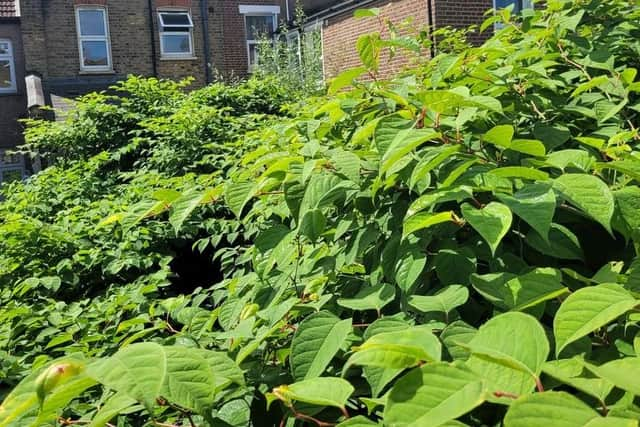

Research conducted by Environet in partnership with Censuswide in 2026 indicates that 7 percent of the UK’s homes – more than 1.58 million properties – are impacted by the invasive plant. Property values are typically reduced by around 5 percent, equivalent to £13,500 per home, highlighting the significant impact on the nation’s housing wealth.
The rankings are based on invasive plant specialist Environet’s own enquiries, public sources and verified sightings submitted by members of the public using the map’s ‘Add Sighting’ feature.
- 1. Stoke-on-Trent. Verified sightings = 89
- 2. Stourbridge. Verified sightings = 58
- 3. Burton-on-Trent. Verified sightings = 43
- 4. Newcastle-under-Lyme. Verified sightings = 30
- 5. Cannock. Verified sightings for both = 28
- 7. Tamworth. Verified sightings = 19
- 8. Leek. Verified sightings = 15
- 9. Rugeley. Verified sightings = 11
- 10. Stretton. Verified sightings = 10
Environet Director Emily Grant said: “Japanese knotweed is now firmly established right across the country, which means homeowners everywhere should know what to look for.
“My advice to anyone living or buying a home in a Japanese knotweed hotspot is to check your garden regularly during the growing season. At this time of year, an established knotweed plant can be identified quite easily by its hard bamboo-like canes and distinctive bright green shield-shaped leaves which grow in a zig-zag pattern along the stem.
“The earlier it’s spotted, the easier and cheaper it is to deal with. Acting quickly with professional advice will prevent it spreading further and help protect both your property and its value.”
Anyone who suspects they may have knotweed on or near their property can email a photo to Environet at [email protected] for free identification. If confirmed, a survey will determine the extent of the infestation, the risk of damage or encroachment and the most effective way to treat it.
Comment Guidelines
Iconic Media encourages reader discussion on our stories. User feedback, insights and back-and-forth exchanges add a rich layer of context to reporting. Please review our Community Guidelines before commenting.