
Crooked House campaigners explain round-the-clock vigil at site of demolished icon
Nothing gets past Rob Brown without him checking it first.
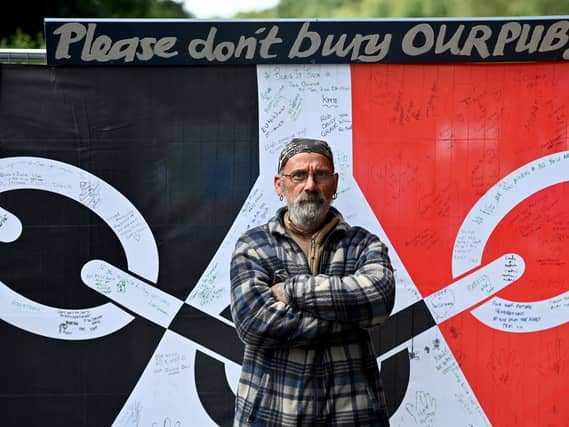


For the past 12 days, the 57-year-old has provided a one-man, 24-hour security operation at the site where the Crooked House pub once stood.
"I'm making sure nobody takes anything away from here," he says with a grim determination. One day, Rob became suspicious when a van tried to leave the site, but it proved to be a false alarm.
"They had a look in the back of the van, and it was just a roll of cellophane," says the 59-year-old.
"We had to check, it might have been a valuable historic pot or something. They now know that I've got my beady eye on them, and that they won't get away with anything."
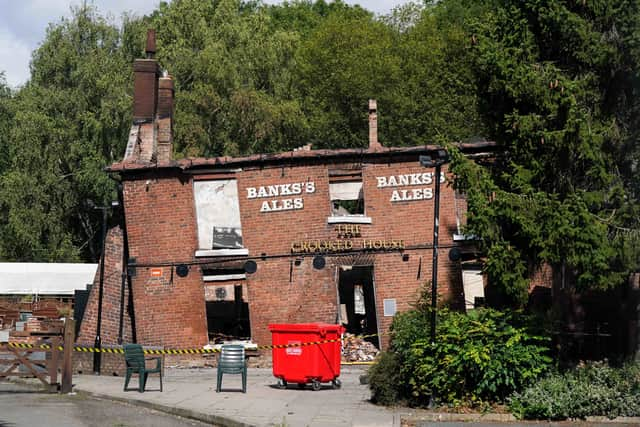
Rob, 57, has spent the past 12 days camped in his grey van in the narrow country lane leading up to where, until last month, the Crooked House stood.
"If I see anybody trying to take anything out, I will block the road with my van until the police arrive," he says.
The secluded, ramshackle and unlit access road had long been the pub's Achilles' heel, so one can only imagine how eerie it is after nightfall. Rob is unfazed, a bit of wildlife certainly isn't going to discourage him from holding his vigil.
"There's all sorts, there's the rats, bats and all sorts of animals," he says.
"The bats are amazing, there's loads of them, I just watch them," he says. "I've always been an outdoors person."
Rob says there is no chance of him leaving the site until the future of the historic pub is secured. On the afternoon of our visit there are half a dozen protesters, but they insist it gets a lot busier in the evening, with as many as 25 people turning up at some times.
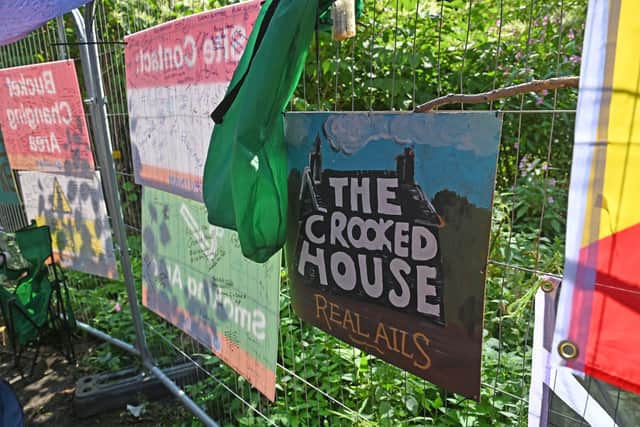
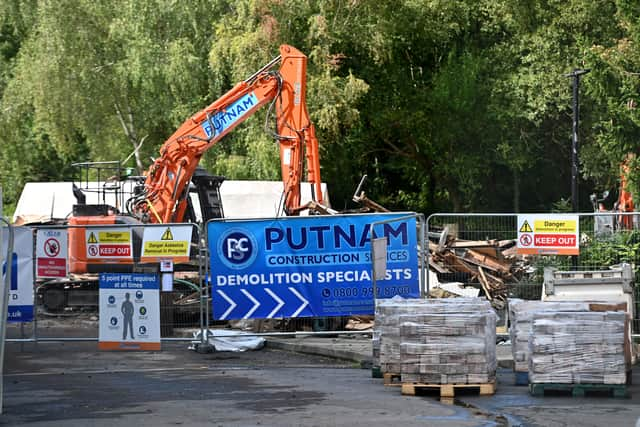
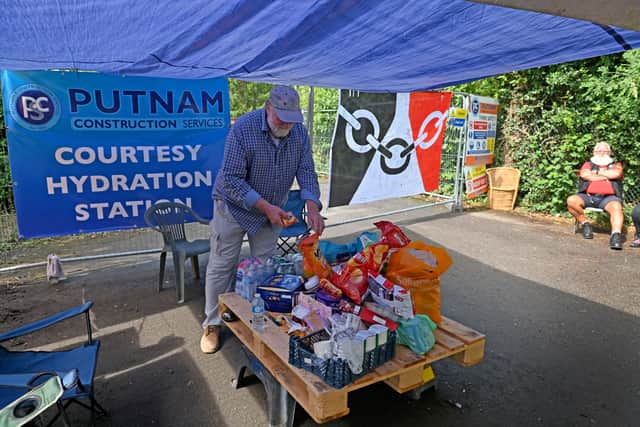
Indeed, a mini-community seems to have developed. A Black Country flag has been draped over the safety barriers which seal off the site. A shelter has been built, patio chairs for the campaigners to sit on, and a wooden pallet forms a trestle table to store the food supplies.
Rob says people have regularly been bringing him food: "I've had hot meals, I've had cold meals, people have brought me sandwiches, it's been brilliant," he says. "I've wanted for nothing."
Spider Spider– he says he has changed his name by deed poll, and doesn't want to reveal his previous name – first travelled up from his home in Bartley Green, Birmingham, on Saturday last week, along with his wife Anne Spider-McKeown. They initially went to build a shelter to keep the campaigners dry, but found the experience so rewarding, that Spider has returned regularly since.
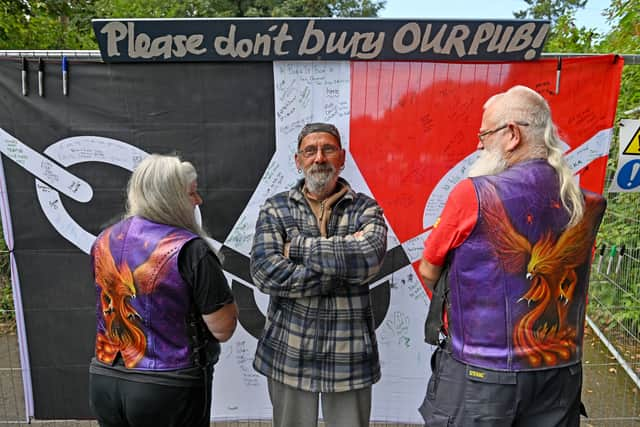
"Everyone made me so welcome, and they feel so passionately about the place," he says.
The 65-year-old says he first started drinking at the Crooked House when he used to visit on his motorbike in the 1990s, and has been a regular visitor since.
"I went in twice in two months before it closed," he said.
"I've always loved the Crooked House, it's an unbelievable place. It's the fact that before you even walk through the door you feel p*****. You have got to have been as a visitor to appreciate it."
Anne says her own memories go back a little further, having frequented the pub since the mid-1980s.
"I first came here when we were visiting the Black Country Museum, and we cane here for a drink," she says.
"I thought it was amazing, absolutely amazing."
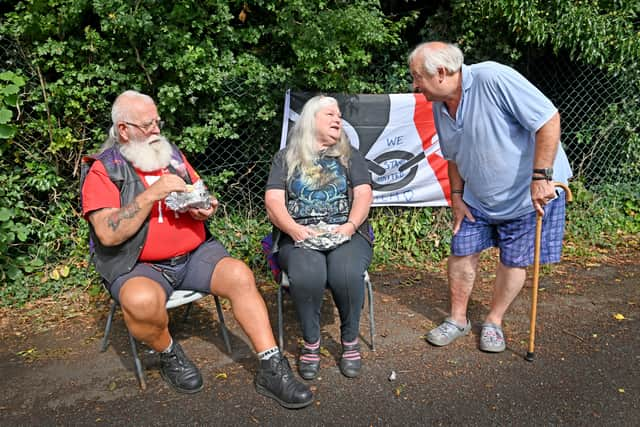
While many of the protesters have travelled to be at the site, Ron 'The Bread Mon' Witton is a local.
"I'm a Gornal chap through and through," he says.
"I lived in Ellowes Road, and came down with my dad as a kid,
"I was about five or six, I'm 76, so it would have been 70 years ago."
Retired history teacher Tony Hewitt has travelled from Cheadle, in the Staffordshire Moorlands, but is originally from the Black Country. He is mistrustful of Staffordshire County Council, and concerned about the decision to suspend a public right of way at the site.
He believes far more effort would have gone into preserving the pub had it been located in London, and can talk in great detail about the contributions the region has made to the world.
"This place was built before America was founded," says the 67-year-old. "It's a part of our heritage which has been discarded without proper care.
"We spend 10 times more on culture in London than is the case in the Black Country."
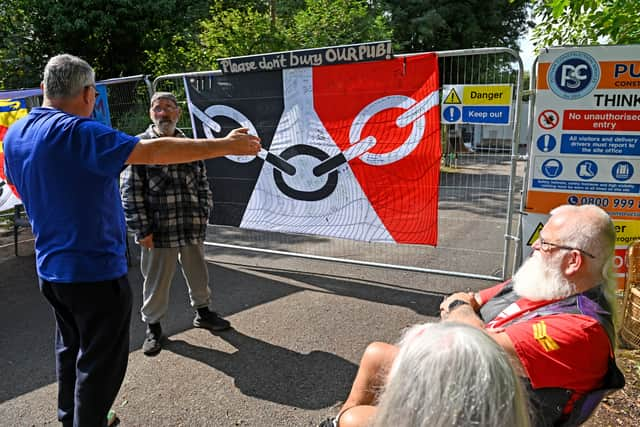
He is, though, encouraged by the words of West Midlands' elected mayor Andy Street, who demanded that the pub be rebuilt.
"He's not somebody I would vote for, but he does have a track record of delivering when he promises something on the record," he adds.
And the one thing everybody a the site agrees on is that the Crooked House must be rebuilt, as faithfully as possible, on exactly the same spot where it has stood for 248 years. Calls to move it to the Black Country Living Museum are dismissed out of hand.
But how will such work be funded, given that a specialist building company recently said it would likely cost between £2.5 million and £3 million to recreate?
The consensus seems to be some kind of crowd-funding appeal.
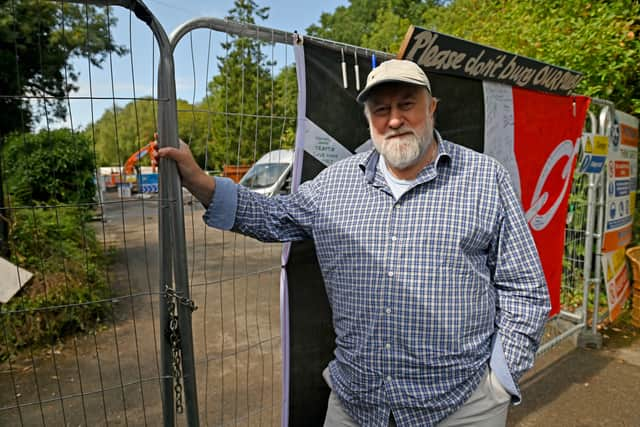
"Judging from the reaction of Gornal people, I think they would give it a good try," he says.
They are unmoved when it is suggested that the Crooked House's remote location, next to a landfill site at the end of a long, treacherous lane, was a major reason why it failed in the first place, and ended being offloaded by pub giant Marston's. Relocating it, or rebuilding it for use as a private house – as, indeed it was when it was built – is a complete non-starter.
The campaigners are convinced that the Crooked House could thrive as a pub once more, particularly given that it is now known around the world.
"More people are aware of it now, after all the publicity," says Tony Hewitt.
Ron the Bread Mon adds: "There are loads of fields around here, there could be music festivals and all sorts.
"It's had some great advertising, people would come from miles and miles around."
Comment Guidelines
Iconic Media encourages reader discussion on our stories. User feedback, insights and back-and-forth exchanges add a rich layer of context to reporting. Please review our Community Guidelines before commenting.