
'I realised we had discovered more Templar graves at Staffordshire church that no one knew about'
"I realised we had discovered more Templar graves. I think I may be breaking new ground". Those were the words of the Stourbridge researcher behind the recent discovery of a set of medieval graves in Staffordshire.
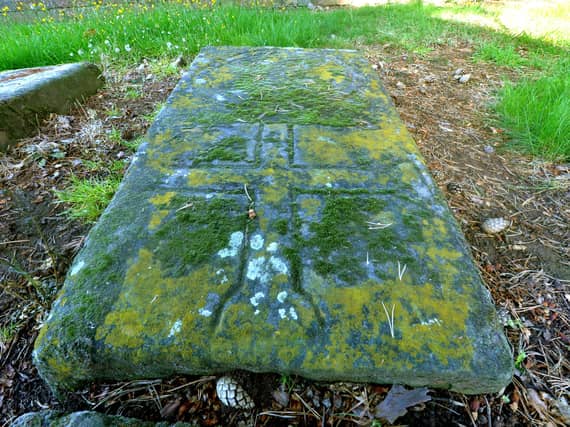


It has been hailed as one of the "most nationally important discoveries" of its kind.
Mr Dyas has spent the last 18 months researching the Templar Knights, a military order of the Catholic faith, and one of the wealthiest and most popular military orders in Western Christianity.
The order was founded around the year 1119, headquartered on the Temple Mount in Jerusalem, and existed for nearly two centuries during the Middle Ages, before disbanded by Pope Clement V under pressure from King Philip IV of France.
Mr Dyas said he had been fascinated by the Templar Knights since reading about them and how they were more like monks and, as he described it, "were not avaricious and used their wealth only for good purposes."
His research truly began when he discovered the first set of graves at St Mary's Church in Enville in South Staffordshire in 2021, which he said all started off by accident when he was reading an English Heritage website story.
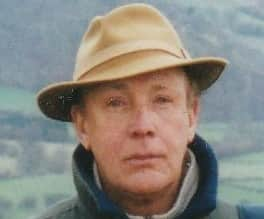
He said: "It really all started off by accident as I was talking to my American relative Darius Radmanesh and had seen people asking questions on English Heritage and other historic websites about these three stone slabs at the church in Enville.
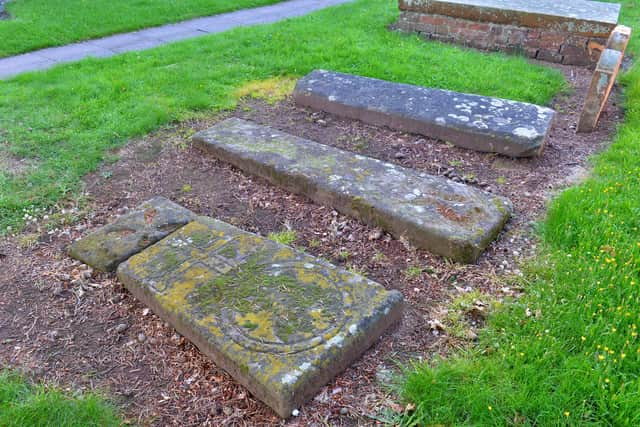
"It's a rather small village, so I went there with Darius and we had a really good look at them and get permission from Rev. Richard Clarkson at the church to clean the slabs, which were covered in moss, leaves and dirt.
"When we did that, I was amazed to see the imagery and realised these were Templar graves, something which not even the church had any idea about, so I wrote a report about it as no one seemed to know why the Templars were at that church."
In his report, Mr Dyas said that each of the three graves had a Templar Cross within double circles in a standard Templar design.
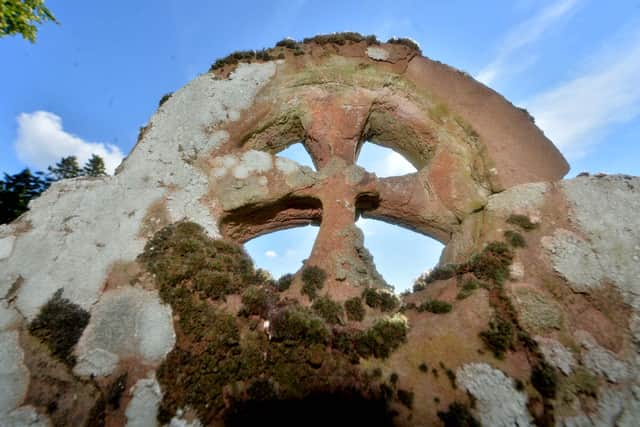
He also said that the cross at the head of the left grave of the three was barely visible and also detailed a stone which was a Templar cross and believed to be rare in Britain and a remarkable find.
He said the Templar Knights may have come to rest at Enville Church due to links with William Marshall, described as the most famous Templar Knight and buried at Temple Church in London.
He said: "He is buried at that church, which was built by the Templars in London and I had looked at windows inside St Mary's Church and found one dedicated to Hugh Mortimer, who was married to the granddaughter of William Marshall.
"That means we have these Templar connections and I then found other information about the people who owned it and who built the church and owned Enville and other places were all related.
"This is why the Templars were there, because of this deep family relationship with the most famous Templar Knight England ever had."
Mr Dyas said he had started out wanting to know more about the Templar Knights and the graves he had found, as well as the newer graves discovered this year, and now wanted to help tell the story of the Knights and what they did.
He said: "It all started out with my attempt to know what those tomb slabs were and I wasn't thinking of myself or even doing great research, but then I found out they were Templars and no one knew anything about why they were in Enville or, for that matter, who they were.
"The Templars were very secretive and it was rare for them to have their names placed on the tombstones, so I thought this might help the church and I also really wanted to find out the truth of who these men were and why they were there and had been neglected for 800 years.
"No one knew anything about it, but I think this has raised interest in it and it enhances the history of Enville on the subject, which is good, and I've even had a person who wrote a very well published book on the Templars and the Holy Grail.
"He agreed that my find was definitely unique and looked at my photos of the graves inside and outside the church and confirmed they were definitely Templars, and a man from the Templars Society who kept records of all the Templar sites came to me and said this site had never been recorded, so I think I may be breaking new ground."
Comment Guidelines
Iconic Media encourages reader discussion on our stories. User feedback, insights and back-and-forth exchanges add a rich layer of context to reporting. Please review our Community Guidelines before commenting.