
See inside the mammoth-sized HS2 mega viaduct set to link the West Midlands with London
As part of our look into the ongoing HS2 'Delta Junction' works, we received an exclusive look into the first viaduct built as part of the high-speed line


The HS2 works have long been ongoing, and after first being given the green light in 2012, many have asked what has become of it since.
So, as part of an exclusive, media-only look into the ongoing works, we visited the superstructure's first-ever built viaduct, called the Delta Junction, over looking the M45 and M6 Toll, near to Faraday Avenue, Sutton Coldfield.
When finished, Delta Junction will serve as a main connection that links London to Birmingham via faster travel than ever before.
So far, more than 10,000 people from the West Midlands have helped to develop the HS2 project, with more than 2,742 concrete being implemented to develop rail travel in the UK like never before.
What does it look like?
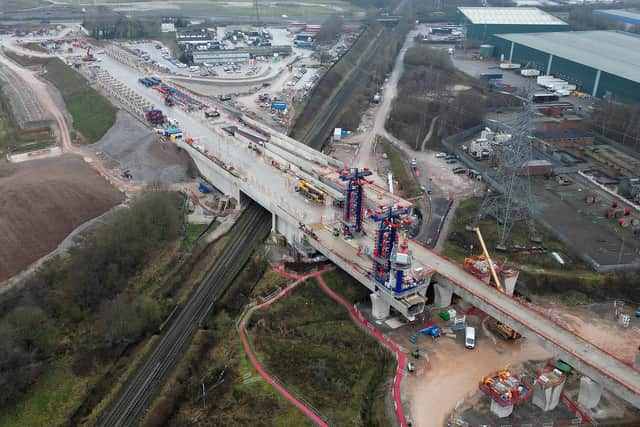
Overlooking the River Tame, the gargantuan project needs only one word to describe it - awe-inspiring.
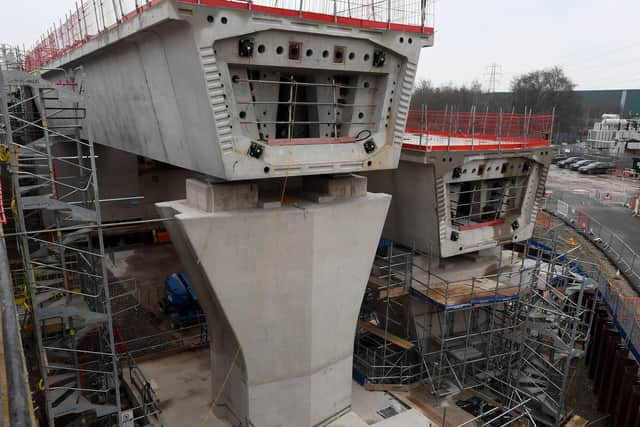
The grey-scale concrete struts sit moderately above the general landscape of the surrounding fields and stretch more than 472 meters, almost seeming like it has no end.
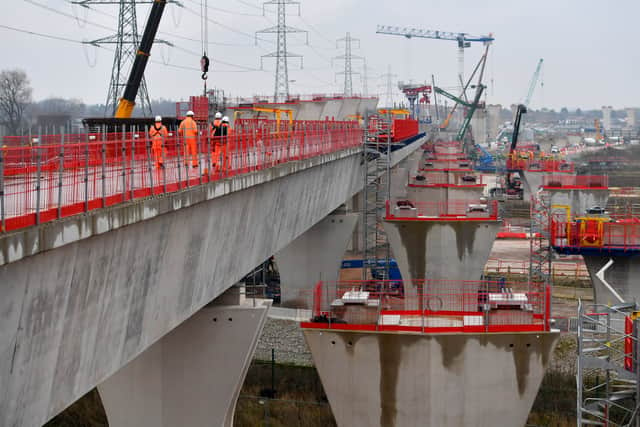
The development of the viaduct's piers started in 2023, followed by the seemingly unending concrete deck in early 2024.
However, since then, 190 pre-cast viaduct segments with hollow interiors have been lifted into place using a special technique called cantilever, marking the first time the technique has been used in the UK.
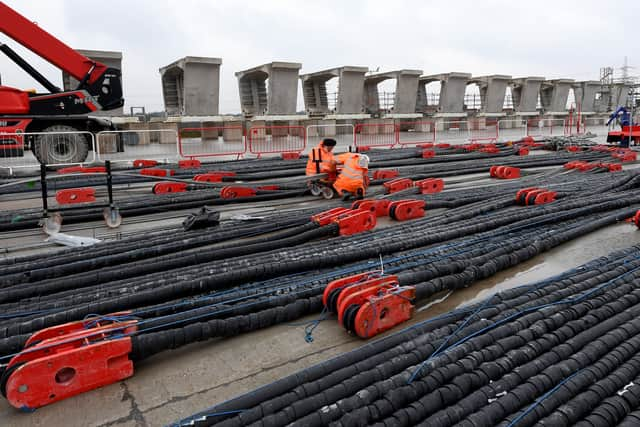
The technique uses cable strays from a gargantuan cantilever structure to keep the viaduct in place, while a 'mast and swivel crane' is used to place each segment into place.
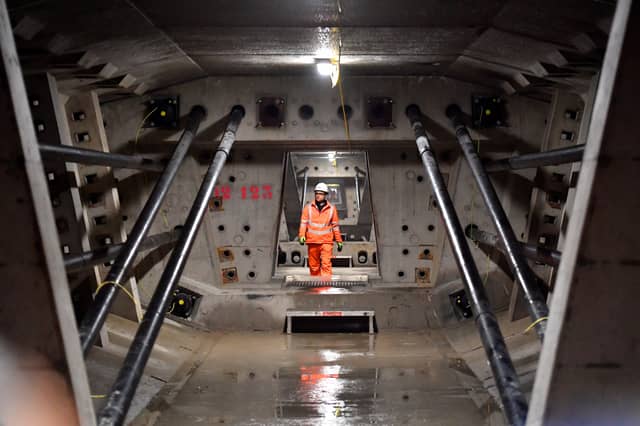
While the exterior is awe-inspiring, the interior of the viaduct is terrifying in the best possible way.
While many will not get to see it, the almost horror-worthy interior was a tight squeeze for a tall person in some areas, requiring some bending down, but is deceptively spacious in many.
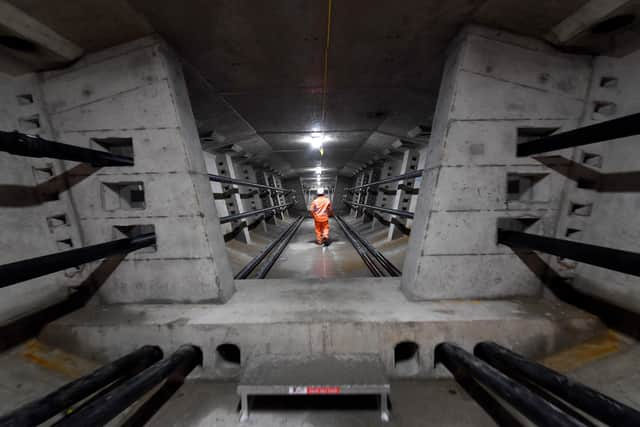
Pipes and reinforced cables fit along the sides of the structure, with a central reservation being reserved for a walkway for workers.
While a dull concrete grey in colour, the structure contrasts the green surroundings around it, and even as a naturalist at heart, it's hard to describe the structure as anything but impressive.
How is it being developed?
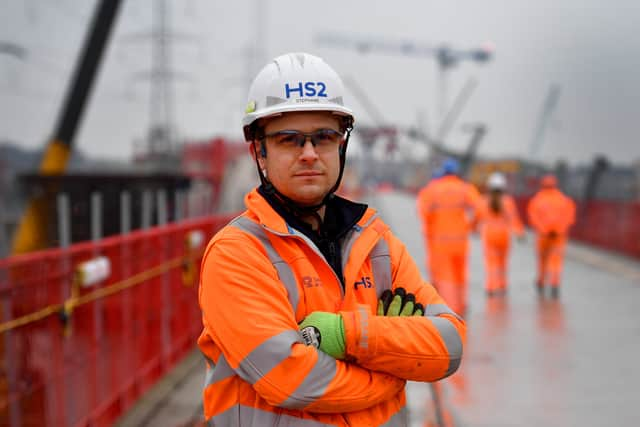
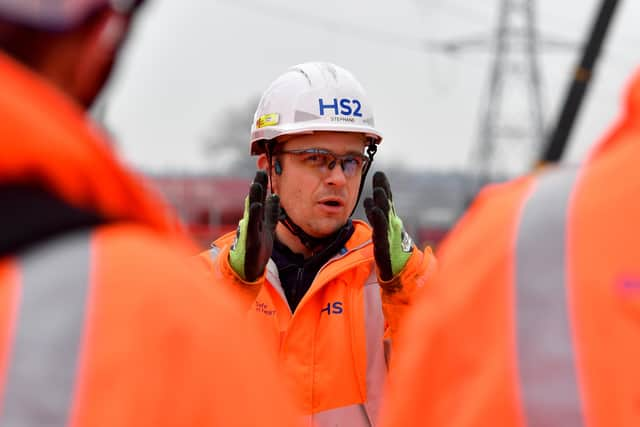
Talking to Stephane Ciccolini, site lead for Midlands contractors Balfour Beatty VINCI, we got an in-depth look into the scale of the work that goes into constructing a structure of this size.
Mr Ciccolini said: "There are a lot of innovative techniques we are using on-site to develop this structure, the biggest one is virtual reality.
"Before engineers come onto site, they can sit go through all of the plans, all of the sites, inside and out, so they know exactly what to do and what to expect."
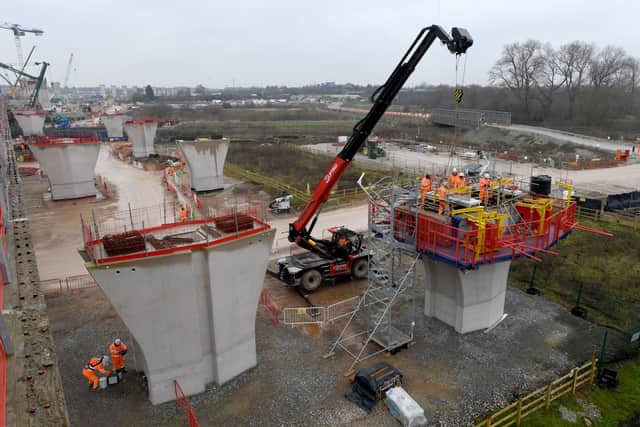
As well as more traditional bridge-building techniques, Mr Ciccolini and his team of 40 engineers utilised newer 'innovative' systems to help develop the structure.
He said: "We are using a system that is called cantilever, which is using a big cantilever machine to put the concrete structures into place piece-by-piece.
"While doing this, safety is extremely important to us, and the big cantilever machinery that lifts these into place are fitted with sensors that can sense when something is wrong, when this happens, the machine shuts off and it can't be overridden accidentally."
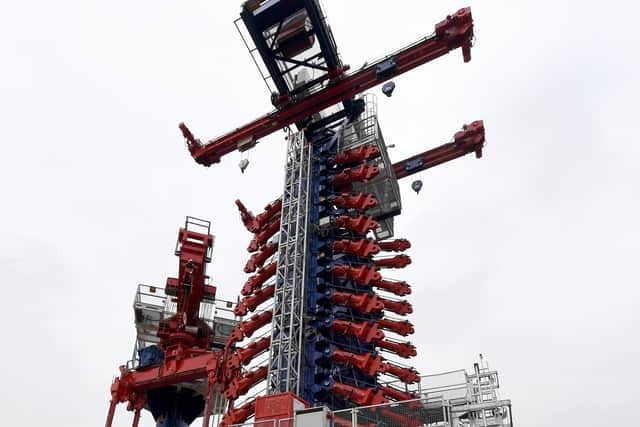
The process marks the first time that the technique has been used in the UK, with the system being used to place each strut of the overall 10km track into place.
Talking about the difficulties of working on the structure, he said: "There are a lot of difficulties and challenges going into this project.
"The biggest challenge is the environment itself, we have to tackle roads, the River Tame, the motorway, all of these create specific challenges which we have to overcome."
When finished, the River Tame West Viaducts will carry three rail tracks in total, made up of one single-track viaduct and one double-track viaduct.
When will it be completed?
A total of 2,742 segments will be moved into place at nine of the viaducts using the special cantilever technique over the coming year, with all the deck segments expected to be in place by late 2026.
When completed, developers at HS2 say that the structure will provide 'more reliable and faster' services between London and the West Midlands than ever before.
The group also say that the line will help to relieve pressure on the most congested southern end of the West Coast Main Line by creating extra capacity for local and freight services.
Sam Hinkley, Lead Senior Project Manager for Delta Junction at HS2, said the completion of the River Tame West single-track marks a 'big milestone' for the team.
He said: "The completion of the River Tame West single-track viaduct is a big milestone for the Delta Junction team. In this very complex construction area, we’re building a network of 13 viaducts to carry new high-speed trains over motorways, existing rail lines, rivers and floodplains.
“Nearly 10,000 people in the West Midlands are delivering this world-class engineering, which will lay the foundations for Britain’s future rail network."
Comment Guidelines
Iconic Media encourages reader discussion on our stories. User feedback, insights and back-and-forth exchanges add a rich layer of context to reporting. Please review our Community Guidelines before commenting.