
AI has given us some hilarious spoof videos, but how do we know what is real?
If you've got a problem, with a narrowboat stuck in a collapsed canal, maybe you can hire... The AI-Team.



 A spoof video, featuring a Chinook helicopter rescuing a stricken narrowboat from the collapsed canal in Whitchurch, accompanied by the theme music from the hit 1980s adventure series, has became a recent viral sensation.

Other AI-generated images include a man dressed only in bermuda shorts ice-skating atop the Pontcysyllte aqueduct, Sir Kier Starmer nursing a weasel, and a hippopotamus swimming up the cut.
The videos have all been shown on the satirical Facebook page Canal Boats, and are really good fun and completely harmless.
They are also easy to do. We created our own version of the helicopter rescue in seconds on ChatGPT. For good measure we asked it to look at how the Wrekin would look with high rise flats on – and what an M6 Grand Prix through the West Midlands would look like.
But while AI can be great entertainment, this all poses a more serious question – in today's multi-media age, how can we possibly know what is real and what is AI generated?

Back in January 2024, a voice recording emerged of then US president Joe Biden telling people not to support him in the forthcoming New Hampshire primary election, but to 'save their vote' for the General Election the following November. The message, of course was fake, and voting in the primary would not prevent anybody from voting the following autumn. And while few people actually believed it, it demonstrated how realistic these 'deepfakes' were becoming. Ironically, the last months of Biden's presidency were dogged with conspiracy theories that many of his speeches were 'deepfake' videos.
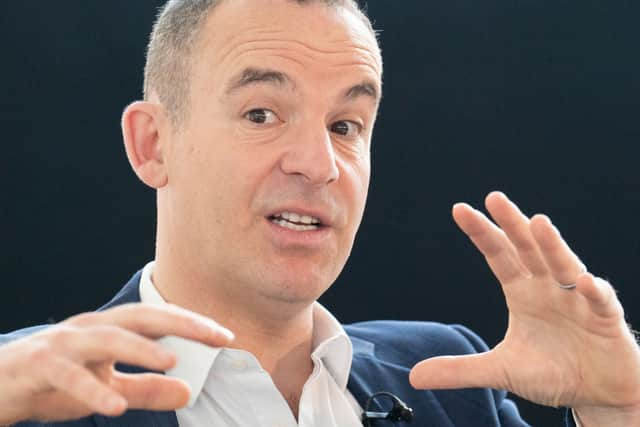
For Des Healey, the effects were much more keenly felt. In August 2023, Mr Healey, a self-employed kitchen fitter had been looking for ways to make a bit of extra money over the quiet period in the run-up to Christmas. and was attracted to a crypto-currency investment scheme being promoted on social media by television money expert Martin Lewis and tech billionaire Elon Musk.

Except that the scheme wasn't backed by Lewis at all, and the video Mr Healey saw was fake produced using artificial intelligence. Mr Healey was immediately contacted by a plausible sounding 'financial adviser' who encouraged him to put £1,000 into a Revolut account, a legitimate e-money scheme with nine million customers in the UK. 'Carl', his supposed financial adviser, told him he would invest the money, and a short while later he appeared to reimburse his money with a substantial return, advising him there was much more money to be made..
Mr Healey responded by putting his £5,000l life savings into the account, but was then told that if he wanted to withdraw it he would need to put another £5,000 in. Mr Healey started taking out loans, and ended up £76,000 in debt to the bank. When his son became concerned, it was revealed that Mr Healey had been scammed out of all the money.
Mr Lewis says he had the dubious honour of being the most frequently 'deepfaked' individual in Britain.
"My name and face have been the subject of scam adverts for many years, I get countless reports every day," he says.
"I've had friends of mine get in touch with me at times saying 'hey, I've just put some money in that investment scheme you're advertising'.
"I don't advertise, I don't do investment."

A similar earlier scam involved a fake episode of Dragon's Den, where the entrepreneurs were each invited to try out a bogus investment scam, with a running commentary on how their supposed investment was performing during the pitch.
Deepfakes involve the use of large datasets of images, videos and audio are used to reproduce the voice and appearance of individuals, including celebrities. AI technology now enables voice cloning, imitating the tone and language of an individual. It can be totally benign, such as the recreation of much-loved comedians such as Bob Monkhouse or Les Dawson - or indeed the Prime Minister nursing a ferret - but as the Martin Lewis scam demonstrates, can be dangerous in the wrong hands.
Phil Swatton, of the Alan Turing Institute, says the technology used to produce these bogus videos and audio clips are becoming ever more sophisticated.
"As deepfakes become more realistic and widespread, it is becoming harder to tell what is real and what is fake, risking an erosion of public trust in all kinds of information sources," he says.
"There is particular concern about the spread of deepfakes that perpetuate disinformation for electoral gain and deepfakes that mimic public figures.
"The manipulation of content, such as photography or audio, also raises ethical issues around consent. This is particularly the case with explicit content such as deepfake pornography that is based on a real-life subject."
Indeed, there is some irony that Elon Musk was featured in the Martin Lewis deepfake scam, given that his X platform is in the news at the moment over its Grok application, which allows the modification of photographs into sexually provocative images. The Prime Minister has warned X that if it does not act to regulate Grok, he will step in with legislation himself - potentially including the closure of the X platform. This prompted Musk to accuse the Prime Minister of censorship. Meanwhile, Technology Secretary Liz Kendall announced announced she would be speeding up legislation to make the creation of non-consensual intimate images a criminal offence. Requesting the creation of the images would become illegal from this week, she added.
Watton says there are still a few telltale clues as to how AI images and videos can be detected.
"Some deep-faked images contain clear spatial and visual inconsistencies, such as differences in noise patterns, or colour differences between edited and unedited portions," he says.
"Video and audio deepfakes, meanwhile, can be given away by time-based inconsistencies, such as mismatches between speech and mouth movements." Many leave identifiable ‘fingerprints’ within the pixels of images or videos."
"Deepfakes used to be easier to spot.," he says. "For example, some older deepfake videos contained people who didn't blink. However, once people who didn’t blink became a telltale sign of fake content, deepfakes appeared with people who did blink.
"In general, it is likely that deepfakes will continue to become more realistic as deepfakers are driven by constant innovation in detection methods to improve their deepfake generation techniques."
At the moment, lip movements are still one area that the technology is struggling to get right. Checking if the lip movements are synchronised with speech patterns is a good guide, and mouth movements are often heavily pixelated. Look for inconsistencies in the appearance of individuals, such as overly smooth or wrinkled skin, or noticeable changes in age throughout the video.
Reflections, shadows and inconsistent lighting may also reveal signs of manipulation.
Ultimately ,though, the best defence against deepfakes is a degree of streetwise scepticism. Social media has opened up all manner of sources of information, but these are mostly unregulated, leaving it up to the individual to decide what they believe to be true or untrue. And if you receive information from a source with no established track record, it's probably wise to err on the side of caution.
Comment Guidelines
Iconic Media encourages reader discussion on our stories. User feedback, insights and back-and-forth exchanges add a rich layer of context to reporting. Please review our Community Guidelines before commenting.