
The West Midlands goes to the polls on May 7. But just how much of a change can we expect?

Mark Andrews weighs up the prospects of the different parties in next month’s local elections
Most of the West Midlands goes to the polls on May 7, and all eyes will be on Reform UK, to see if the party can repeat the sensational gains it made last year, when it took control of 10 councils.
But one council it won’t be taking control of is Wolverhampton. Political forecasting is fraught with difficulty, but I’m going to put my neck on the line and predict that Labour will still be in control of the authority come May 8.
That forecast is not based on inside information or special insight, just basic arithmetic. Reform will likely do well, and will probably make significant gains, particularly in blue-collar areas where it has a growing base. But ousting Stephen Simkins as leader of the council will be a step too far.


In simple terms, there are not enough seats up for grabs for this to be possible. On May 7, voters will be asked to elect 21 of Wolverhampton’s 60 councillors. For Labour, trailing in the polls, and defending 15 of the 21 seats, this will clearly be a damage-limitation exercise. But with 29 councillors not facing election this year, Labour needs to win just two seats to ensure another year in control.
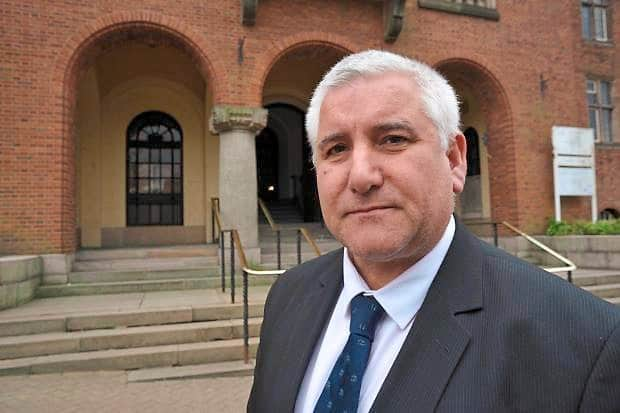
Similarly, despite some of the more excitable comments on social media, Reform will not take control of Dudley Council either. Twenty-five of the council’s 72 seats are up for election, but Reform would need to win every single one just to overtake the Conservatives as the largest party. It has been a torrid two years for the Labour group, which actually tied with the Conservatives at the 2024, before losing Brockmoor and Pensnett to the Tories in a by-election. Since then Labour lost a further nine councillors, one defecting to the Liberal Democrats, the other eight forming the breakaway Black Country Party. Three of these will be up for re-election, and the Black Country Party is fielding a further two candidates. For Labour the target will be to hold onto the nine seats it is defending, and perhaps regain some of the seats it has lost over the past couple of years.
Tory council leader Patrick Harley, who has been in charge for eight of the past nine years, has been dependent on support from the Liberal Democrats since 2024, and will be looking to regain his majority. The likelihood is that the Conservatives will remain the largest party, but Councillor Harley’s fate as leader could yet hang on the performance of Reform, the Liberal Democrats and the Black Country Party - and more pertinently what deals are done after the election.
It will be a different story in Sandwell, and Walsall, where all seats will be up for grabs. Apart from one year in 1978-79, Labour has been in control of Sandwell for its entire 52-year existence, and at the moment it goes into the election defending 63 of its 72 seats. But with all seats up for grabs, Reform feels it has a real chance of breaking Labour’s stranglehold. Reform will be bolstered by the defection of former high-profile Tory Ray Nock, who will be standing in Charlemont and Grove Vale ward.
However, veterans of the 1980s and 90s will testify that the Labour vote in Sandwell has proved very resilient, even when the party has struggled in the polls nationally, and council leader Kerrie Carmichael has launched a fierce attack on Reform’s record in local government. Nevertheless, if Reform is going to take control of any council in the West Midlands this year, it is most likely going to be this one.
The picture in Walsall is somewhat more complicated, and harder to predict, given the chaos across both sides of the chamber over the past couple of years. In May 2024 the Conservatives actually bucked the national trend by increasing their majority, but days later veteran council leader Mike Bird was suspended from the party. He served for four weeks as leader of a Conservative and Independent group, but was replaced the following month by Garry Perry. Councillor Perry resigned a year later, and Councillor Bird returned to the helm for a record sixth time. Since then the party has lost its majority following a string of defections, but remains comfortably the largest group on the council.
Labour, which ran a minority administration from 2016-2018, has now been relegated to the status of the third party on the council, following the resignations of Councillors Paul and Christine Bott. Walsall Community Independents, led by former Labour group leader Councillor Aftab Nawaz, is now the principal opposition group. Predicting who will come out on top there is a near impossible task - the most likely outcome is that the council will remain under some form of minority administration.
While Reform will not be able to take control of Cannock Chase Council, a strong showing could well leave the party deciding who does lead the authority.
Labour, which took control of the council in 2024, after a 12-month coalition with the Greens and Liberal Democrats, will be defending eight of the seats up for grabs next month - and will need to hold all of them to remain in control. The Conservatives, who are only defending two seats this time around, will need to make nine gains to take control of the council, but with the opinion polls showing rising support for the smaller parties, some form of minority administration is the most likely outcome.
Comment Guidelines
Iconic Media encourages reader discussion on our stories. User feedback, insights and back-and-forth exchanges add a rich layer of context to reporting. Please review our Community Guidelines before commenting.