
One year on, is time already running out for PM Rishi Sunak? Our readers think so
Rishi Sunak has failed as PM – but there’s not much enthusiasm for the other guy either.
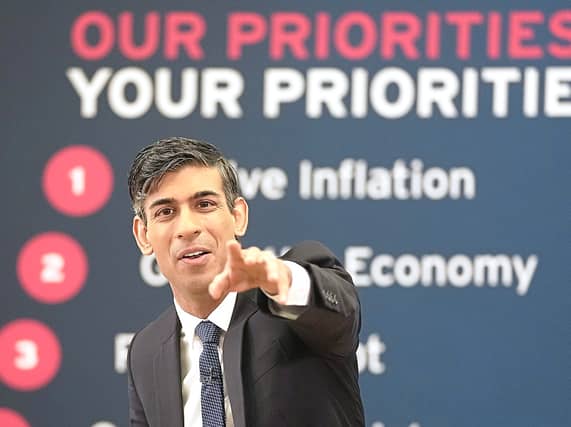


That’s the withering verdict from Star readers as they assess the Prime Minster’s performance one year on from him taking residence in Number 10.
Our online poll reveals most people believe Mr Sunak is a busted flush, with only 15 per cent saying he can win a general election. Interestingly, when asked to pick out who has been the best leader, Boris Johnson outscores Mr Sunak, polling 55 per cent to the current PM’s 32 per cent.
Mr Johnson was given credit for the Tories’ remarkable success in so-called Red Wall seats in the West Midlands and it is clear that many in our region still like him despite his well-publicised misdemeanours.
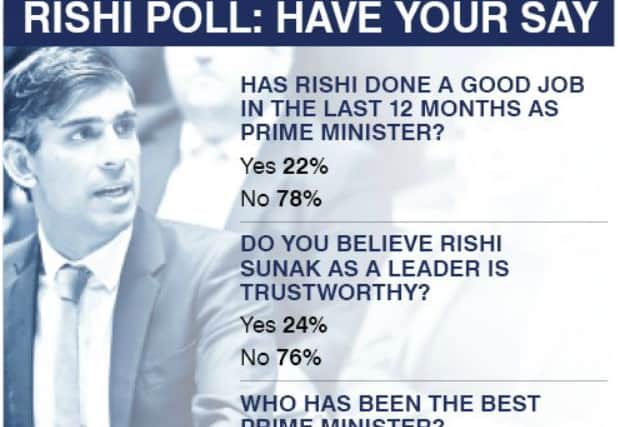
Remarkably, 13 per cent voted for Liz Truss, despite her short-lived premiership during which a free-spending Budget crashed the markets and added substantially to the UK’s debt burden.
Tellingly, however, Mr Sunak scores a little better when compared to Sir Keir Starmer. He still lags behind the Labour leader but manages 40 per cent of the vote, showing there is still much work to be done to persuade the British people that Sir Keir is a leader in waiting.
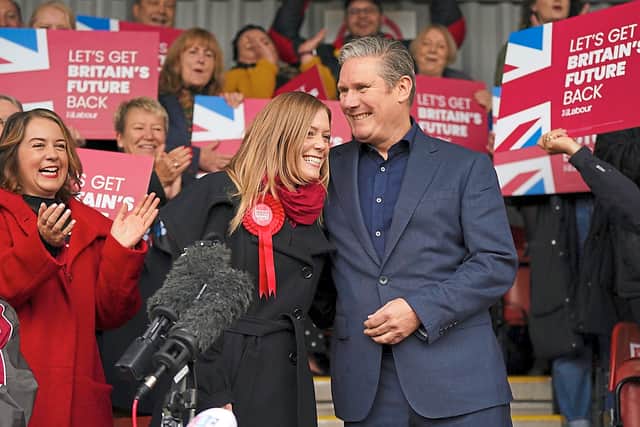
Sir Keir’s inability to score with the electorate on a personal level is a significant failure at a time when many people are looking for change. Only around one in five people believe Mr Sunak has done a good job in the last year and fewer than a quarter see him as trustworthy.
The Prime Minister would have hoped for so much more when he took office on October 25, promising to bring stability in the wake of Liz Truss’s disastrous tenure.
A year on he has suffered embarrassing by-election setbacks in previously safe Tory seats and his MPs are worried about their prospects in the general election expected in 2024.
His own five priorities – halving inflation, growing the economy, reducing the national debt, cutting hospital waiting lists and stopping the boats bringing migrants across the English Channel – have all proved difficult to meet.
An increasingly dangerous international situation, with war grinding on in Ukraine and the Israel-Hamas conflict in the Middle East powder keg, has added to the Prime Minister’s headaches.
Yet Mr Sunak remains outwardly upbeat, insisting that not only is he going to keep on with his five priorities but he is also taking “long-term decisions” – suggesting that he believes he will be able to see off Sir Keir’s Labour Party and secure further time in Downing Street to implement his plans.
He points to his “new approach” to reaching the net zero target, easing the burden on households by delaying the implementation of key policy choices as an example of his ongoing plan.
Scrapping the Birmingham to Manchester leg of HS2 to free up money for other transport schemes and the plan to increase the smoking age to effectively ban it for the younger generation are other examples of his approach. He said at the weekend that £150 million saved from HS2 would go to improve bus services in the West Midlands and northern England, adding it was the start of his “Network North” plan coming into action.
In the wake of the Tamworth and Mid Bedfordshire by-election defeats, he wants to be able to show that he is making a difference, saying: “We’re backing buses with one of the biggest ever support packages and keeping bus fares down to ensure the country’s favourite means of transport is more affordable for millions of people.
“Those are the type of decisions that I’m making for our country. That is the change that we’re going to bring, and I’m committed to delivering for the British people.”
His number one priority – halving inflation to around 5.3 per cent – appears to be on course despite progress stalling in the most recent set of figures. The economy is growing, perhaps more weakly than he would have hoped, while the latest official figures showed the national debt stood at almost £2.6 trillion, around 97.8 per cent of GDP, some 2.1 percentage points higher than at the same time last year.
Small boat crossings are down, although with more than 26,000 people detected making the journey in 2023 he is a long way from being able to say he has stopped them. And strikes by NHS doctors have hampered Mr Sunak’s plan to cut waiting lists.
Against this background, losses to Labour on the scale of Tamworth in Staffordshire, where the swing was 23.9 points, and Mid Bedfordshire, where Sir Keir’s party overturned a majority of 24,664, are ringing alarm bells amongst Tories.
The Conservative leadership attempted to shrug them off as mid-term blips with exceptional local factors at play, but they followed hot on the heels of Selby and Ainsty – another Labour win – and Somerton and Frome, where the Liberal Democrats picked up the seat.
The Sunday Times reported that even before the two most recent defeats, Mr Sunak’s critics, both centrist moderates and allies of former prime minister Boris Johnson, were moving against him.
The newspaper reported that the groups believed up to 25 letters of no confidence in Mr Sunak had already been submitted or were about to be sent to the powerful backbench 1922 Committee, less than half the number required to trigger a vote on Mr Sunak’s future but a sign of discomfort at Westminster.
The Prime Minister could not face a confidence vote in his first year in office and one MP who spoke to the agitators told them: “I didn’t think the British public would forgive us for changing prime minister again and that it would likely hurt not help our electoral fortunes.”
But Mr Sunak will undoubtedly come under pressure from within his party to offer tax cuts and focus on core Conservative issues.
The threshold for paying the 40 per cent higher rate of income tax could be raised in the 2024 spring budget, according to a report, while it is also suggested Mr Sunak and Chancellor Jeremy Hunt are considering easing the burden of either stamp duty or inheritance tax.
The King’s Speech on November 7 will offer another opportunity for Mr Sunak to set out his vision for the country, while the Chancellor’s Autumn Statement on November 22 will be another key test for the leadership – although next year’s budget would appear to be the more likely time for Mr Hunt to offer pre-election tax cuts in an effort to win votes.
One thing is for sure. Time is running out for Mr Sunak to persuade the people of the UK that he is the man for the job.
It may be that, after 14 years of Tory rule – and three leaders in as many years – Brits feel it is time for a change. Mr Sunak may simply go down in history as being unlucky with his timing.
Mr Hunt’s own future has also been the subject of speculation, with sources suggesting he might not stand at the next election because he fears he would lose his seat and become the highest-profile scalp of the night in a “Michael Portillo” moment – a reference to the Cabinet minister whose defeat in 1997 became totemic as New Labour swept to power.
But a spokesman for the Chancellor said: “Jeremy Hunt will stand as the Conservative Party candidate for Godalming and Ash at the next general election.”
Immigration Minister Robert Jenrick said inflation will have to be brought under control before tax cuts can be considered.
“You can trust the Conservatives to make sensible, prudent decisions on the future of the economy and to bring down taxes where it is capable to do so,” he said.
Pressed on the fact that it is only a year since Ms Truss and the ill-fated mini-budget, he said: “Look at the difference that we’ve seen in the last 12 months under Rishi Sunak, the fact that we have stabilised the economy, that it’s growing, that inflation is falling, and on critical issues like immigration we’re making significant progress for the first time in a long time.”
But former Cabinet minister Sir Jacob Rees-Mogg, writing in the Mail on Sunday, said: “It is high time the Tories stopped hitting our own voters with policies that make them worse off, or with woke nonsense that offends them.
“Instead, we need to start cutting the size of the state, offer tax cuts that give people back their own money, and provide a solution to the migration issue.”
Comment Guidelines
Iconic Media encourages reader discussion on our stories. User feedback, insights and back-and-forth exchanges add a rich layer of context to reporting. Please review our Community Guidelines before commenting.