
Express & Star readers put Labour leader Sir Keir Starmer on the spot in Q&A session
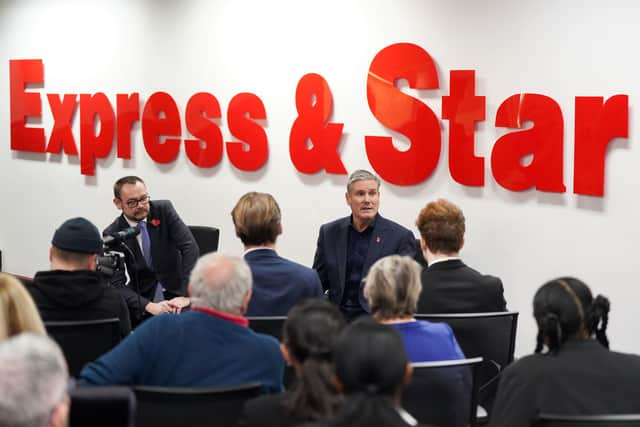
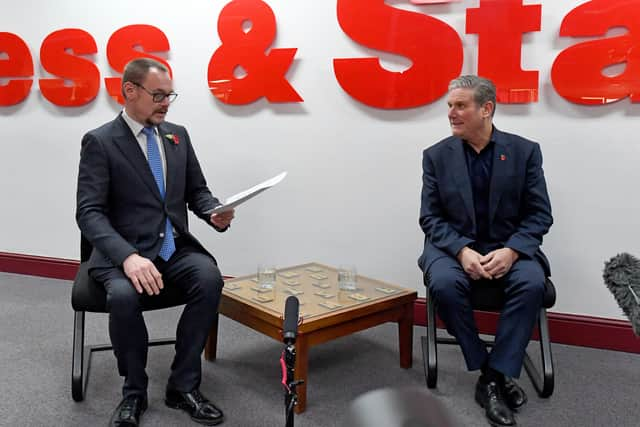
Labour leader Sir Keir Starmer faced a grilling from Express & Star readers during a visit to its offices.
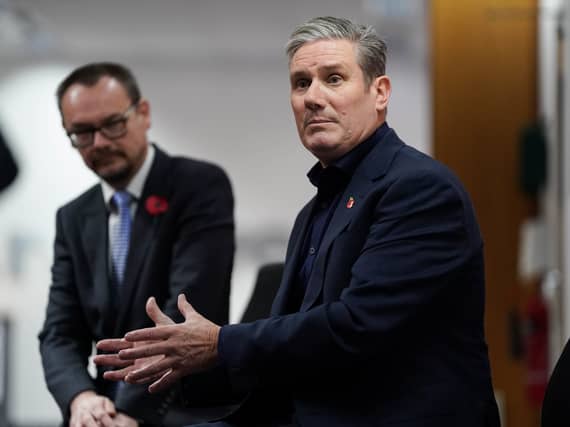


Sir Keir faced a series of searching questions about pensions, the state of the high street, health and education during a visit to the newspaper's head office in Wolverhampton.
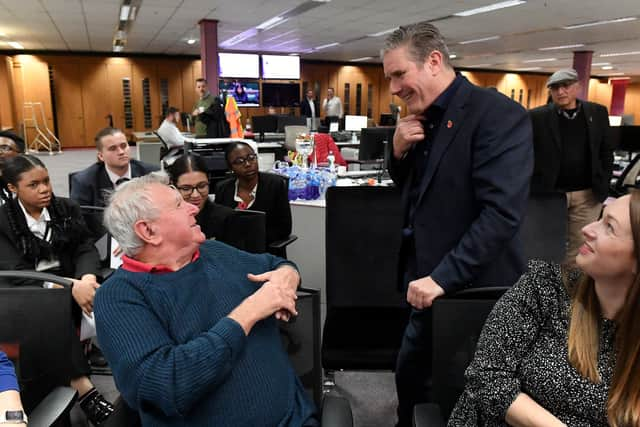
He then mingled with our panel of almost 30 Express & Star readers, before going on a tour of the Express & Star's editorial and digital departments, chatting to journalists and staff.
The panel, made up of readers from a variety of backgrounds put Sir Keir on the spot with some tough questions.
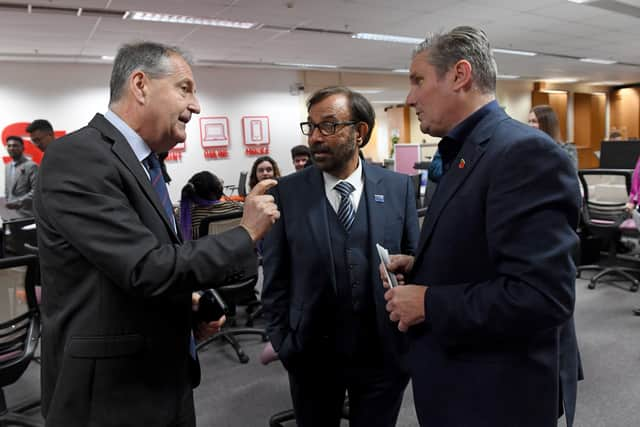
Sham Sharma, chairman of Wolverhampton Business Forum, voiced his concern about the decline of the city centre. He asked how he would address that, given that Labour had been in charge of Wolverhampton Council for many years.
Sir Keir said a future Labour government would abolish business rates, and replace them with a fairer system that would provide a level playing field for high street and online retailers.
"I think there's been a real problem with our high streets and our businesses," he said.
"I think there are a number of reasons for that, one of them is business rates don't really work any more, if they ever did.
"Many businesses say 'we want to thrive, but business rates kick in before we've made any profit', and that means too many businesses feel they can't operate in a city centre any more, or the high street doesn't feel like the high street it once was.
"We want to abolish them and put in place a different approach, which gives a better level playing field."
Tony Whitehouse, secretary of the Halesowen branch of West Midlands Pensioners' Convention, asked Sir Keir whether a Labour government would commit to retaining the triple lock on pensions.
Sir Keir replied: "We will assess the situation as we come into government, but I would want all pensioners to be treated properly and respectfully and have the income that they need to get through whatever is thrown at them, and I don't think that is the position at the moment, I don't think we're properly respecting pensioners."
He said tackling energy bills was also important.
"In the middle of last winter of I was talking to pensioners about their energy costs which were going through the roof, and I've got absolutely implanted in my mind an 84-year-old woman who said that last year she didn't get out of bed before midday because she was too scared to turn the heating on because it cost her too much.
"So there's the pension itself, there are other things that can be done, such as getting energy costs down."
He said in the short-term, this could be achieved by imposing a windfall tax which would be used to provide subsidies, but in the longer term there needed to be more investment in renewable energies to provide cheaper energy that was not dependent on hostile regimes such as Putin's Russia.
Elle Windsor, a 17-year-old sixth former from St Thomas More RC School in Willenhall, asked Sir Keir how he would encourage more students to be politically aware.
Sir Keir said he believed young people generally were very interested in politics.
"They may not align with the main political parties in the way that may have been the case years ago," he said, "but whenever I talk to younger people, the two things that come up, over and over again, are climate, and this real sense that it's your lives we are talking about, if we don't get things right, and also the other one is mental health."
He said young people should not be afraid to ask questions, even if it meant revealing that they did not know the answer to everything.
George Bobby, 17, from Royal Wolverhampton School, asked Sir Keir whether the resignation of shadow minister Imran Hussain would make him reconsider his position on calls for a ceasefire in Gaza.
He replied: "I've set out my position in relation to a ceasefire. There was an awful terrorist attack on October 7 from Hamas, which nobody could support, killing men and women and children and babies, and the taking of 200 hostages who are still being held in tunnels in Gaza. To say to Israel, while its citizens are still being held is, in my view, inconsistent to saying they have a right to get their hostages back. If hostages were taken from this country, we would be doing everything we could to get them back, and we wouldn't take kindly to people saying you shouldn't be doing that."
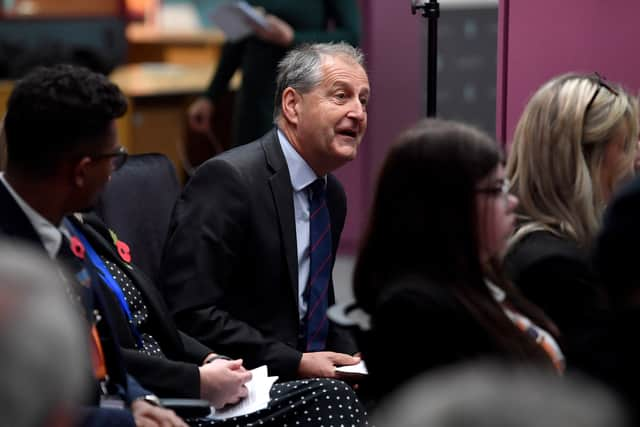
Henry Carver, managing director of Carver Building Supplies, voiced concerns about the number of empty buildings in Wolverhampton city centre. He said many were owned by rogue investors who had no intention of developing them, and asked Sir Keir what he would do to improve the city.
The Labour leader agreed there was a need to encourage people to live in town and city centres.
"That gives it vibrancy, and where it's done well, it can work really well," he said.
He added there was a wider point that people of different political persuasions should be able to work together to improve their communities.
"I came into politics relatively late. My experience in life, whether you're in business, whether you're in the private sector or the public sector, you tend to get around the table, work out what the problem is, and pull people together and try to fix it. In politics there's too much dividing on it, and pretending there's only one answer."
Claire Old, who retired last week as a nursing director in the NHS, said prolonged hospital stays were putting the older population at risk.
"Our social care services are stretched to breaking point, discharge is delayed and flow halts in hospitals all over the country," she told him, and asked what Labour would do.
Sir Keir said there was a clear need to improve social care, and better pay and conditions for care workers were part of the answer.
He said: "It's not well paid, it's not particularly secure, therefore there's very high turnover, I think almost all the people leaving care are trying to get into the NHS.
"We need better terms and conditions, we need the ability to progress as a care worker for people who want to stay with it and have a proper framework around it, but I would also go further and say we should have a sector-wide pay negotiation for care workers. We build towards a sense of a national service, you can't do that in one go, I won't pretend you can wave a magic wand, but we have vitally got to start on this."
Hollie Smith, 18, said she was concerned that the cost of buying a property meant that she could still be living with her parents by the age of 40.
Sir Keir joked: "They don't want that and you don't want that," adding that he had a 15-year-old son and a 12-year-old daughter.
"To buy your own home you have to be, on average, 35," he said. "The Government is simply not building enough homes. There were targets for building homes, but Rishi Sunak took the targets down just before Christmas because his backbenchers didn't like it."
Hollie also asked Sir Keir what he would do to help young people from working-class backgrounds to enter higher education.
Sir Keir said that, coming from a working-class background himself, it was a subject close to his heart, and he was the first person in his family to go to university.
He said he felt the present system of student loans was a big deterrent for many families.
"My mum and dad would have been really worried about things like loans because if you don't have a lot of money coming into the family, you get very cautious about borrowing money," he said.
"I don't think the current loan system works very well for students, I don't think it works for universities either, so we're looking towards what an alternative to that would be.
"What we can do is constrained because the economy is badly damaged after the last 13 years, we have got to be careful about what we can afford, but we need to change it."
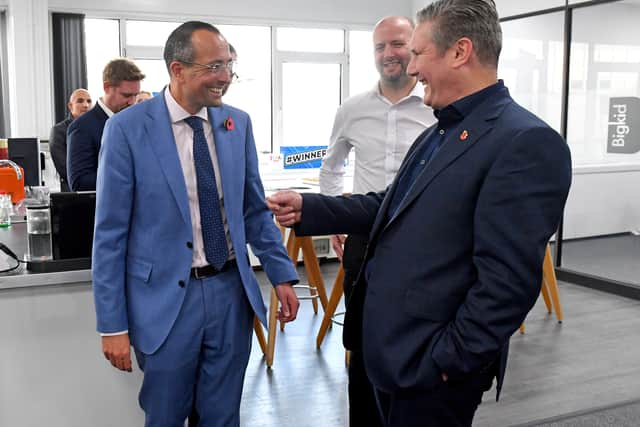
Amy Grayland, better known as Money Saving Amy for her tips on coping with the rising cost of living, asked the Labour leader how he would go about helping families who faced rising bills, a lack of flexibility with maternity leave and high childcare costs.
Sir Keir said reducing energy costs would be crucial to this, while more breakfast clubs in schools would make life much easier for working parents, while ensuring that youngsters started the day with a nutritious meal.
Retired electrician and ex-serviceman Tony Levy asked Sir Keir how he would improve financial support to local councils.
The Labour leader said he could not yet commit to precise numbers, but it was essential that local councils had adequate funding.
He said: "Most local authorities say to me 'because it's year on year on year, we can't plan properly for three years, therefore we have to take short-term decisions that cost more money, and we go round and round in circles'. We need to work with them. We are already meeting on a regular basis, I meet with our mayors, with our combined authority leaders to make sure how we're planning to work together after the election if we are privileged enough to be elected into power."
Emily Brown, 17, asked Sir Keir what his proposals would be for investment in schools.
Sir Keir criticised the Government for abandoning Labour's Building Schools for the Future programme, which he said was part of the reason why some schools now had crumbling buildings.
"The first place I would invest in staff. I feel very strongly that the basics like maths should have the right teacher in the classroom," he said.
Sir Keir said he had no problems with private schools, but said they provided opportunities which were not available to children from working-class backgrounds.
"I want to be in the situation where it doesn't matter whether you went to state or private school, the opportunities are the same, and the likely grades and outcomes are the same, and your career or whatever you want to do with your life is equal, whichever school you went to," he said.
Sir Keir said removing the VAT breaks on private education would raise the funds to raise standards in state schools.
Comment Guidelines
Iconic Media encourages reader discussion on our stories. User feedback, insights and back-and-forth exchanges add a rich layer of context to reporting. Please review our Community Guidelines before commenting.