
Poignant images capture three-year agony which tore Spain apart
Today’s Spanish holiday destinations share a history so painful that there was a pact of forgetting
Off to Spain for your summer hols?
Sun, sand, sea and, for those who want it, history. But some of that Spanish history has left scars so painful that there was a pact of forgetting.
Places which today draw hordes of tourists were once the scenes of destruction and bloody battles.
It was 90 years ago, in July 1936, that the Spanish Civil War began with a military uprising against the government, leading to three years of tragedy with a legacy of fascism under General Franco which lasted into relatively recent times.
We’ve dipped into the Star’s picture archive for a selection of contemporary original images which capture some of the suffering, drama and upheaval.
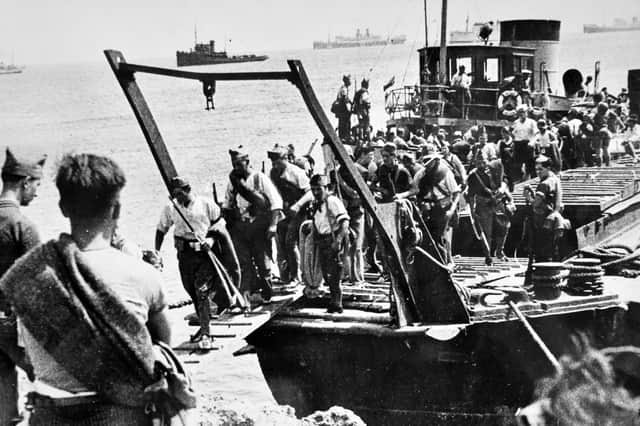

Majorca is today a popular holiday hotspot, but it was also the scene of one of the war’s first big battles, with our photo from August 1936 showing the leftist Republican government forces landing in an attempt to retake the island from Franco’s Nationalists. The expedition failed disastrously.
If you are heading to a Majorcan beach this month, here is a sobering thought – according to some estimates as many as 3,000 people on Majorca may have been executed during the civil war and buried in mass graves.
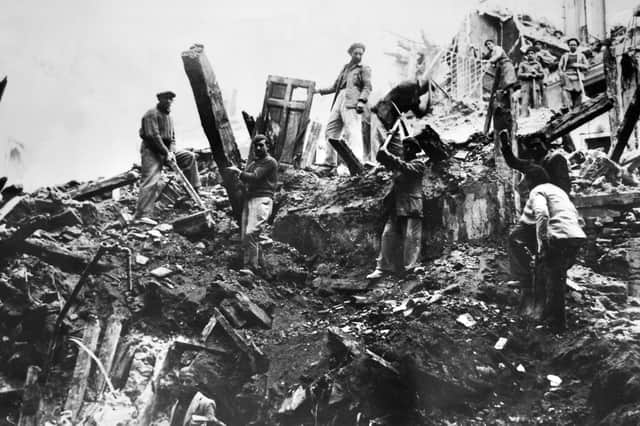
The Blitz during the Second World War is seared into the British consciousness, but it was in Spain that such methods of aerial attack were first used, as illustrated by our December 1936 image showing the aftermath of a bombing raid on Madrid, the building turned to rubble in this particular case being the Theatre Comico, which had been one of the city’s most popular theatres before the conflict.
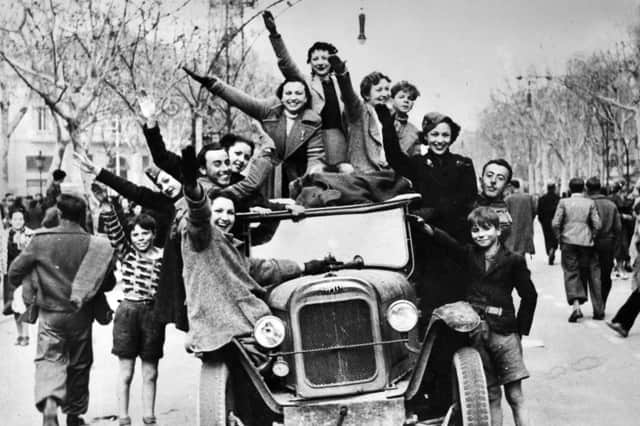
Then we turn to Barcelona, the fall of which to the rebels in the final stages of the conflict was a shattering blow to Republican morale. Our picture from January 1939 shows women and children giving the fascist salute in Barcelona in celebration of the Nationalists’ victory.
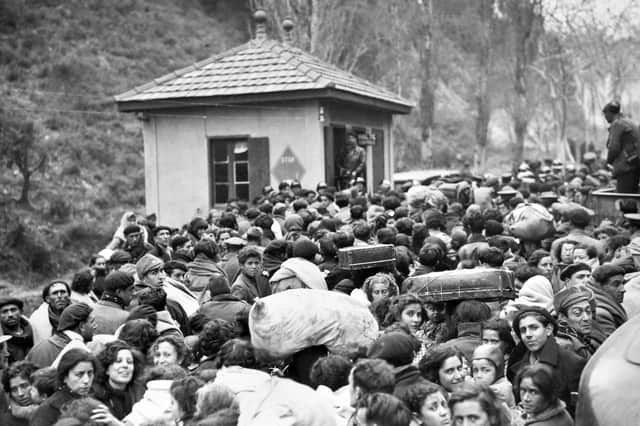
Afterwards hundreds of thousands of soldiers and civilian refugees crossed the Pyrenees into neutral France in an episode known as La Retirada. Our last picture shows some of them at the frontier at Le Perthus, north east of Barcelona.
The French, keen not to upset Franco, were unwelcoming, putting them into basic camps where over 10,000 died as a result of the terrible conditions.
In the decisive finale the Spanish capital Madrid, which had withstood a long siege, fell to Franco in March 1939.
Only five months after the Spanish Civil War ended the Second World War broke out, and as Britain stood alone in 1940 there was a serious prospect that Spain would join the war on the side of Nazi Germany, but such were Franco’s conditions and demands for doing so that no agreement was reached with Hitler.
After the Allied victory in 1945 Franco was Europe’s last fascist leader still standing and for a while Spain was a pariah state, until the Cold War led to the West taking a more expedient approach. His death in 1975 marked the end of his fascist dictatorship and Spain transformed itself into a modern democratic state.
Comment Guidelines
Iconic Media encourages reader discussion on our stories. User feedback, insights and back-and-forth exchanges add a rich layer of context to reporting. Please review our Community Guidelines before commenting.