
People need to see police on the streets, says new Chief Constable

New Chief Constable says talking to young people is crucial to winning the war on knife crime
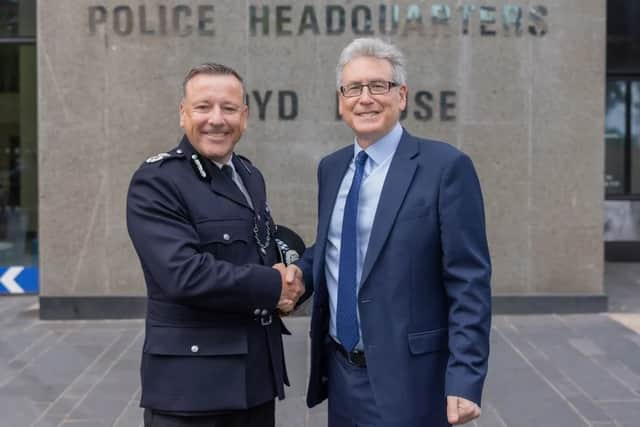
The new Chief Constable of West Midlands Police has pledged to get to grips with knife crime, unlawful e-bikes and anti-social behaviour as he began his first week in the job.
Scott Green, who had served as acting constable since January, was formally announced as the new head of the force on Tuesday.
In an interview with the Express & Star, Mr Green said a visible police presence on the ground was crucial to tackling both low-level nuisance and more serious organised crime, adding that the two were very often linked.
He also said that talking with young people was vital to winning the war against knife crime.

Mr Green said he was aware with growing concerns about anti-social behaviour in town centres, and in particular people wearing balaclavas and riding illegal e-bikes and scooters.
He conceded that these were difficult issues, but said that a regular uniformed presence in hotspot areas was central to his approach in dealing with the problems.
“I acknowledge that the impact of e-bikes, particularly when they’re in pedestrianised areas, the risks to both the riders but also the general public,” he said.
“All of those issues centre back to anti-social behaviour, and the solution to that is our continued investment in neighbourhood policing teams.
“Of course, it’s not an offence to wear a balaclava, but you are likely to come to the attention of the police if, on a milder day like today, you are wearing a balaclava.”
He said recent legislation in relation to public protests, and specific bylaws, were making a difference.
“What we’d encourage the public to do is report concerns like that to us and allow our officers on the ground to interact with those concerned.”
He said working with the public and retailers, discouraging the purchase of illegal e-bikes and scooters, would also play an important role.
At the moment it is illegal to ride an e-scooter in a public place, unless it is part of an authorised hire scheme. Pedal-powered e-bikes can be ridden on public roads and cycle paths providing the rider is at least 14 years old, and the motor does not exceed. The speed must also be limited to 15.5 mph, and the bike must clearly display the manufacturer, power output, and battery voltage or maximum speed.
Mr Green, who joined the force three years ago as assistant chief constable, said he was proud of it success in reducing knife crime, with both reported knife crime and serious youth violence involving knife crime.
“One offence of knife crime in any of our communities is too many, one knife being carried on any of our streets is too many,” he said.
“However, none of us should be complacent about it, we need to continue to focus on it. We need the public to keep talking to us about it and reporting knife crime. And I would encourage anybody that listens to me or reads your article to always talk to young people, in particular, about the dangers of knife crime
Mr Green said a large number of knives had been seized over the past three years, and this was important to tackling the problem.
But he said it was not purely a matter for the police.
“There’s an important role for policing to play in reducing knife crime, which is to be present in the right areas, to be present in hotspots, to use our powers, particularly our powers of stop-and-search, our powers of seizure, our powers of arrest, to target those who intelligence suggests are carrying knives, those habitual knife carriers,” he said.
“But there are also important roles for others to play: families, parents, local authorities, education providers, because the use of a knife on our streets, particularly by young people, impacts on the life of both the victim, the offender, and both families. So we always need to keep talking to young people in particular about the dangers of knife crime.”
Mr Green would not be drawn on whether the pressures were greater on young people today to be drawn into knife crime.
“I think that’s a broader question, probably for academics to argue,” he said. “What I would say is there’s always a connectivity between organised crime, the supply of controlled drugs, and violence on the streets of all our communities, and the sense that young people sometimes have that either they want to carry a weapon because they feel safer, or they’re in fear, which is why I always reiterate, we all need to keep talking to young people about the dangers of knife crime.