
Victorian transport pioneers didn't hang about – they built three tramlines in a matter of months
They didn't hang about, those Victorians.


Last week we learned that the long-awaited tram link from Wednesbury to Dudley had been delayed by another year, almost 30 years since the line was first proposed, while the extension to Brierley Hill High Street may never be built.
But it wasn't always like that.
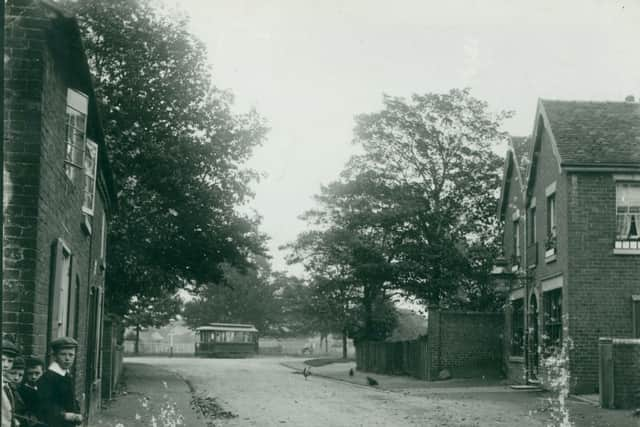
In 1877, the Wolverhampton Tramways Order was passed, giving the Wolverhampton Tramways Company permission to construct three routes: one running from a central hub in Queen Street to Tettenhall, a second one to Willenhall, and a third to Bilston and Moxley.
And within a matter of months, it was ready to run.
The first section, from Tettenhall to Queen Square, was inspected by Major-General Charles Scrope Hutchinson of the Board of Trade on April 30, 1878.
He recorded that the horse-drawn tram took six minutes to get from the yard at the bottom of Darlington Street to Queen Square and back, including the time it took to turn the tram around. It took a further nine minutes to reach the terminus in Tettenhall Road.
After being passed as fit for service, it opened to the general public on May 1.
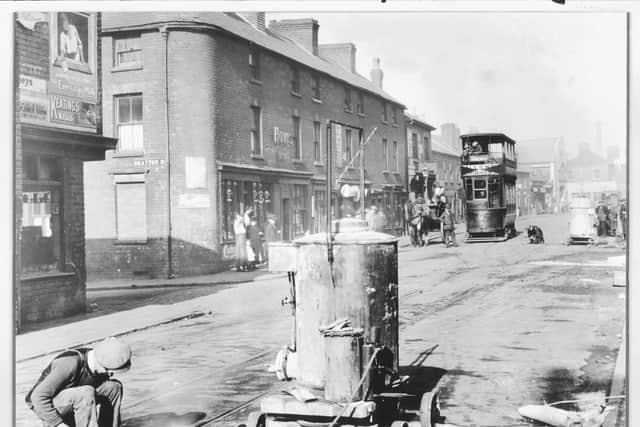
Wolverhampton Tramways, a private company, laid 1,800 tons of steel rails bought from the Landore-Siemens steel company in South Wales, and paved around them with 10,000 tons of granite from Mount Sorrell and the Clee Hills.
The cost of laying the rails was about £50,000 – £5 million at today's prices – and a further £10,000 – £1 million today – was needed for yards, stabling, horses and tramcars. The company bought a mixture of tramcars, some from H Hughes and Co of Leicester and others from Stevenson and Co of New York.
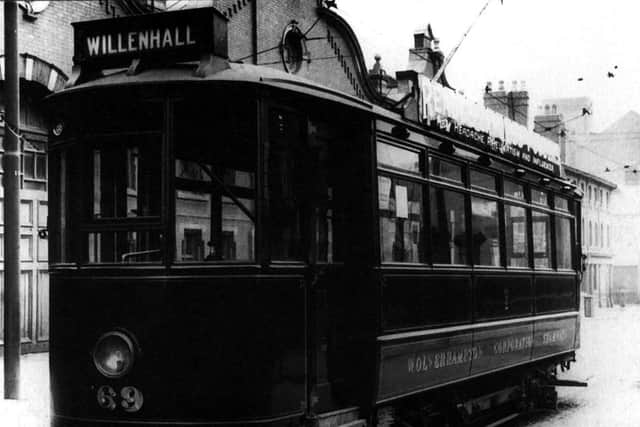
By the end of 1878, all three lines were up and running, offering a service that ran every 15 minute. The line never quite reached the centre of Tettenhall Village, though – the steep climb up Old Hill, a one-in-five gradient, was just too much for the horses.
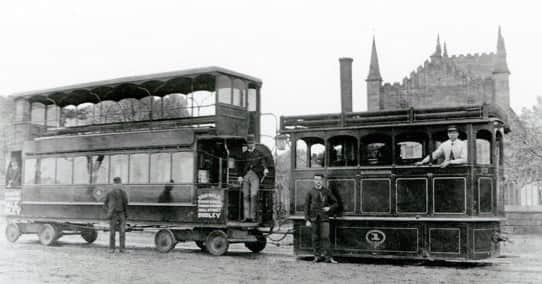
Within another year, Wolverhampton was linked to Dudley, and in mid-1880 the Board of Trade gave permission for the use of steam on the three-mile route to Willenhall, and the 1.5 mile route to the edge of Tettenhall.
However, the board of trade were not convinced that the sharp curve at the top of Piper's Row would be safe for this newfangled steam technology, and turned down the company's application to use it on the Bilston line.
A steam tram was built by Hughes's Locomotive & Tramway Engine Works of Loughborough, but was restricted to use on the Tettenhall Road line. In October 1881 Wolverhampton Town Council banned steam trams altogether, although they continued to be used on the Dudley services for many years.

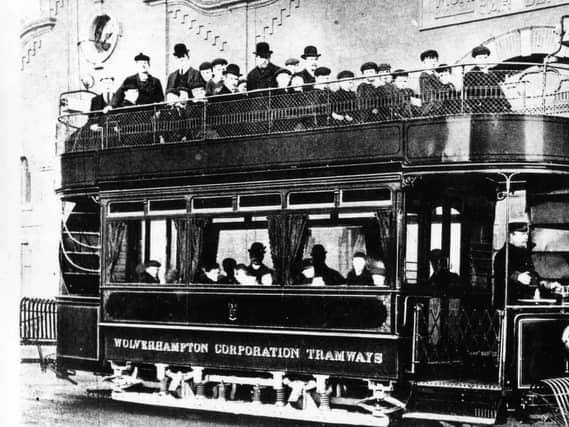
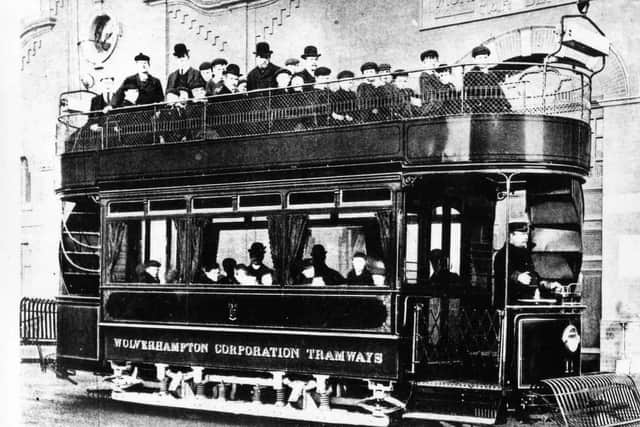
By 1896, the tramway was carrying more than 1.6 million passengers a year, and making annual profits of more than £5,000, about £600,000 at today's prices. In 1898, Wolverhampton Corporation made the decision to take the tramline into public control. The council paid £26,750 for all the tramlines within its boundary, completing the purchase on May 1, 1900. And the takeover would mark the beginning of a new era for the tram service.
The new Wolverhampton Corporation Transport Department began a comprehensive modernisation programme, replacing the 4ft 8.5in tracks with a narrower 3ft 6in gauge.
More significantly, the corporation made the decision to electrify the route. But, while most local authorities accepted that overhead cables were a price that would have to be paid for the bold new era of electrification, environmentalists along the Tettenhall Road were not impressed.
To pacify the objectors, the corporation adopted a system of underground electrical pick-ups. Known as the Lorain system, it was unique to Wolverhampton apart from a brief experiment in Washington DC.
It involved the use of contact boxes set in the ground at 10 feet intervals and connected to each other by cable.
The update was accompanied by the construction of the grandiose terracotta tram depot in Cleveland Road, which survived for 116 years before demolition in 2017.
But while the Lorain system avoided the need for unsightly cables, it wasn't much fun for the horses. If they had the misfortune to step on one of the electrified studs, and place their other foot on the rails, they would be electrocuted instantly, and there were many reports of dead horses being left at the side of the road.
Furthermore, when the copper pick-up went over a box it gave off a blue flash and make a sound like gunfire, and the snow would regularly bring the trams to a halt.
The other problem was that it left Wolverhampton isolated from the rest of the region, as no other operator had adopted the Lorain system. The Dudley, Stourbridge and District Electric Traction Company, which had made the switch to electric the year before, adopted the system of overhead cables.
Despite these problems, the Lorain system ran for 20 years, until general wear and tear led to its replacement with overhead cables in 1921, meaning that the town could connect to the services in Dudley once more. However, a lack of maintenance during the war years led to a deterioration in the rails, and trams were rapidly going out of fashion.
To save the cost of replacing the tracks, Wolverhampton Corporation decided to replace them with trolley buses – to those who don't remember, they were electric buses which made use of the new overhead cables, but ran on conventional rubber tyres, and didn't require rails.
The final Wolverhampton tram, at least for the next 70 years, ran on August 26, 1928. They continued in Dudley until 1930.
Comment Guidelines
Iconic Media encourages reader discussion on our stories. User feedback, insights and back-and-forth exchanges add a rich layer of context to reporting. Please review our Community Guidelines before commenting.