
Amazing story of William Buckland – Dinosaur genius had an appetite for destruction
Many of the great minds who shaped the world we live in today had a fairly loose grip on sanity.


The quest to solve this planet’s greatest mysteries evidently took its toll on their mental faculties.
Or perhaps they had to be more than a little strange to approach life’s puzzles from a different angle.
History has kindly dubbed them eccentrics, although their actions point to more severe afflictions.
In the search for answers, some also showed total disregard for their own physical well-being.
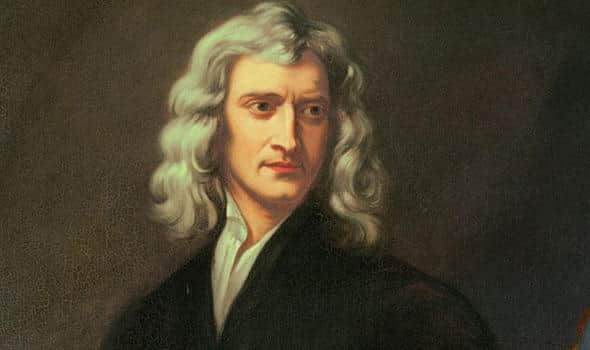
Sir Isaac Newton, the 17th century polymath, was not a grounded individual, despite discovering the laws of gravity. Those who dealt with the genius quickly concluded he resided on another planet. And not necessarily in our galaxy.
He shunned interaction with others and would, in the process of getting out of bed, stare at his legs, then become lost in a fog of deep thinking.
Newton would remain seated on the bed, eyes trained on his thin limbs, for the rest of the day.
He once rose long enough to perform a near lobotomy on himself. In an attempt to discover how our eyes perceive colour, Newton drove a bodkin – a large sewing needle – “betwixt my eye and bone as near to the backside of my eye as I could”.
Following the potentially lethal experiment, Newton observed he experienced spots before his eyes.
You and I could’ve predicted that result.
Sir Isaac, a man whose most acclaimed eureka moment was inspired by a falling apple, was “off the wall”.
But when it comes to geniuses with maverick minds, he couldn’t hold a candle to revered West Midlands fossil hunter William Buckland.
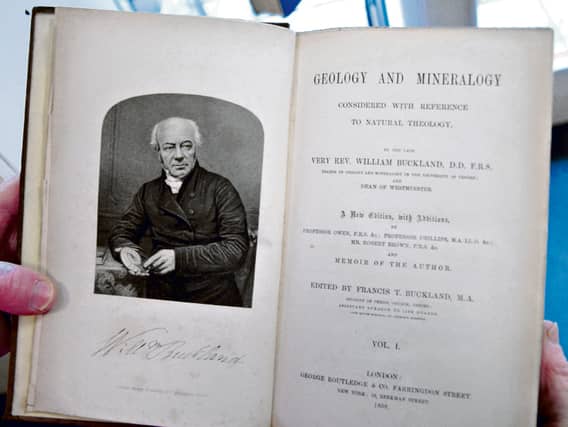
Yes, the man’s work at Coalbrookdale, Shropshire, throughout the Black County and on the Lickey Hills re-shaped our understanding of life.
Yes, he pretty much discovered dinosaurs by unearthing the first bones. The Rex is history.
There is, however, no denying Buckland, Dean of Westminster, was weird. Some may use the politically incorrect expression, “bonkers”.
And it was his deranged habits at the dining table that marked Buckland as mad. The boffin was a culinary car crash who believed to truly understand living creatures you had to eat them.
All of them.
He hoovered up everything in his path. To him, Noah’s Ark wasn’t a Biblical story, it was a “specials board”.
Fiercely religious, he took Genesis 9:3 literally: “Every moving thing that lives will be food for you.”
And the Dean who possessed an appetite for destruction claimed to have succeeded in swallowing every type of creature, great or small.
I think he was having a giraffe.
During lectures, Buckland would tell his audience: “The stomach rules the world, Sir. The great ones eat the less, the less the lesser still.”
He consumed them all – marinated maggot, basted bat, tossed tadpole…
Slugs, snails, puppy dog tails all went down the hatch.
Whisper there was a fly in his soup and he’d probably whoop with joy.
Buckland claimed only two meals made him retch – mole and bluebottle fly. Normally, “with a bit of butter most things go down well”, he concluded.
Despite his gruesome gastronomical traits, the father of nine made it into old age – and his bizarre cuisine didn’t prove the killer.
He died, aged 72 in 1856, from brain and neck injuries linked to an accident years before.
Many of his dinner guests – and Buckland loved dinner parties – may have come close to meeting their maker courtesy of the innovative menus.
Make no mistake, the Dean served-up a “Come Dine With Me” experience that dripped danger.
Author Sam Kean recalled one stomach-churning soiree: “Crisp mice in golden batter, panther chops, rhino pie, trunk of elephant.”
The “mains” were smothered in gravy made from marmoset blood.
“Breakfast consisted of crocodile, sliced porpoise head, horse tongue, kangaroo ham,” Kean added.
The cleric was also partial to puppy. He believed a dog wasn’t just for Christmas, it would also make a tasty Boxing Day curry.
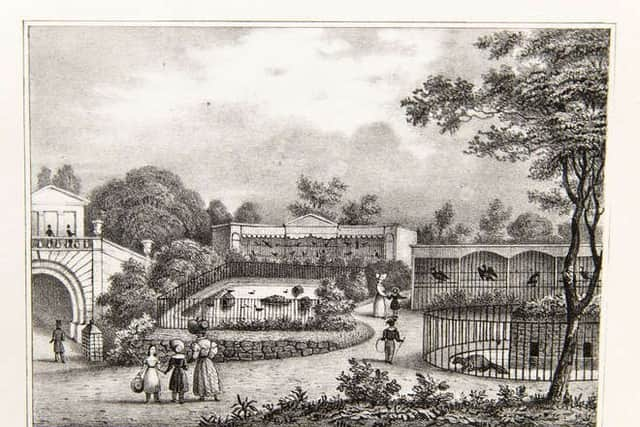
The family butcher had his work cut out, although Buckland benefitted from once living close to London Zoo.
He’d queue with the tourists, enquire if anything had recently died, then return home to cook the exhibit.
It wasn’t just what Buckland devoured that raised eyebrows, but the gusto with which he devoured it. If the urge for a snack surfaced, the palaeontologist didn’t give a fig about where he was or who was watching.
He blotted his copybook while visiting, between 1826 and 1836, an Italian cathedral. When told the floor was still wet from the blood of a saint, Buckland fell to his knees and began lapping up the liquid.
After taking a few mouthfuls of the substance, he declared: “You, sir, are quite wrong – it’s bat urine.”
Much worse was to follow.
The Archbishop of York, Lord Harcourt, made the mistake of showing Buckland what he believed to be the mummified heart of Louis XIV.
It had been plundered by grave robbers during the French Revolution, acquired by the archbishop and kept in a silver box at Nuneham Courtenay, near Oxford.
When shown the relic, Buckland immediately bit a chunk out of it. He couldn’t help himself.
Lord Harcourt was speechless, his guest described the item as “chewy”.
“I have eaten many strange things, but I have never eaten the heart of a king before,” Buckland declared,” wiping his mouth.
History should not judge the Dean, born in Axminster, Devon, merely on what he swallowed. His discoveries proved game changers in terms of how life evolved.
In the coal-seams of Coalbrookdale, he found the preserved remains of the world’s first beetle, Eophrynus prestvicii. Soon after, Buckland unearthed an even better specimen close to Coseley.
At Stonesfield, Oxfordshire, he discovered the fossilised bones of a great lizard, Megalosaurus. This was to provide the first written account of what are known today as dinosaurs.
He followed that by finding dinosaur droppings and became a pioneer in the study of coprolites. That’s fossilised poo to the layman and his home was decorated with examples.
The property was also over-run with a menagerie of guinea pigs, snakes, ferrets, frogs, cats, dogs…and pet hyena Billy. In the garden, a giant tortoise served as a stool.
Quartz pebbles on Lickey Hills provided the smoking gun for Buckland’s theory a raging torrent of water – the Great Flood – had once swamped this land. The same type of stones had been scattered as far as London.
Buckland’s study of fossilised hyena bones at Kirkdale Cave, Yorkshire, was rewarded with the Royal Society’s coveted Copley Medal in 1822.
The list of “firsts” is endless.
Yet, it is the eccentricities that have lasted the test of time. Buckland was, some believe, a victim of his own PR.
The outlandish behaviour was an act - showmanship, pure theatrical shtick to grab headlines and pull in crowds: his lectures were certainly performances, with the star-turn stomping around halls and bellowing in elaborate dinosaur mimicry.
Charles Darwin hated Buckland’s theatrics, dubbing him a “vulgar and almost coarse man”.
Patrick John Boylan, a geologist who wrote a thesis on Buckland in 1984, believed the public never saw the real man.
He said: “Buckland progressed from a fairly modest middle-class provincial background by means of his extraordinary hard work, innate intelligence and ability and considerable charm (of which his well documented eccentricities were an integral, and probably deliberately contrived at times, part.”
Despite his odd ways, Buckland was a doting father to his children, five of whom survived to adulthood. Admittedly, he fell a bit short when ensuring the family ate healthily.
Daughter Elizabeth said: “Buckland was a kind and affectionate father and always liked to have his children about him.
“The young people were always presented to the numerous learned foreigners and illustrious travellers who came to Oxford to see the Professor’s world famed collection of fossils and bones.”
He also retained a devilish sense of humour to the very end.
Gravediggers discovered the ground that Buckland had chosen for his final resting place comprised solid Jurassic limestone.
Dynamite was used to create the hole.
The prank was mentioned in theologian Richard Whately’s eulogy:
“If we hew him a rocky sepulchre,
He’ll rise and break the stones
And examine each stratum that lies around
For he’s quite in his element underground.”
We owe a lot to William Buckland. Scientists copied and adapted his methodology when studying extinct species.
Restaurants have, thankfully, not copied and adapted his favourite dishes. If they had, your local fast food drive-thru would probably be serving McMillipede.