
Inspectors downgrade Wolverhampton A&E rating as they find health of patients put at risk

CQC inspected New Cross Hospital in November last year
Urgent and emergency services at Wolverhampton’s New Cross Hospital have been downgraded to ‘requires improvement’ by inspectors who found the health of patients to be put at risk.
Staffing concerns, medicine management issues and inappropriate transfers were among the matters raised by the Care Quality Commission (CQC) following an inspection in November 2025.
Staff also felt ‘vulnerable’ and often had to deal with people being verbally aggressive due to long waiting times, bosses said.
The health watchdog, which downgraded the rating of urgent and emergency services from good to requires improvement, identified three breaches of regulations in relation to safe care and treatment, dignity and respect, and management.
Following the inspection, the rating for how safe the urgent and emergency service is was downgraded from good to inadequate. The ratings for caring, responsive and well-led dropped from good to requires improvement. Effective was re-rated as requires improvement.
Among the findings, the CQC said patients were regularly, inappropriately transferred to same day emergency care which was used as an extra medical area to accommodate the volume of people in the emergency department, despite not fitting the criteria.


Leaders didn’t always listen to concerns about safety, inspectors said, and staff didn’t always follow systems and processes to prescribe and give people medicines safely, not always accurately completing records either.
It meant people didn’t always receive medicines on time. Limited messages on nursing handover records and a lack of detail on notes were further concerns.
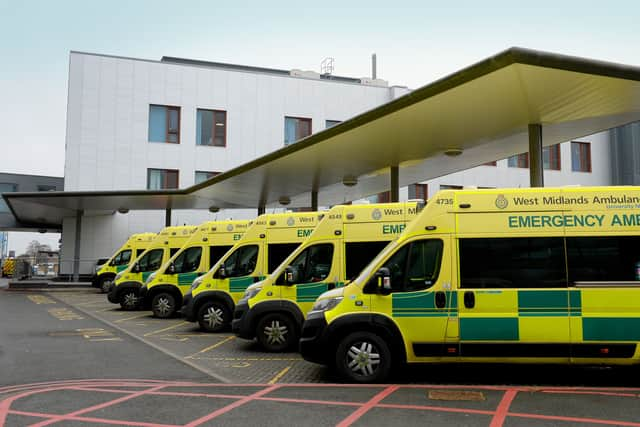
Carolyn Jenkinson, the CQC’s deputy director of hospitals in the West Midlands, said: “When we inspected the urgent and emergency services department at New Cross Hospital, we found a lack of clinical management had the potential to put people’s health at risk, and there weren’t enough staff to deliver safe care to people.
“The service didn’t work well with people to understand and manage risks and observations weren’t routinely carried out on people in the waiting room, despite them waiting hours to be triaged.
“This meant that unwell people were at risk of their health deteriorating and this not being detected while they waited.
“We were told that staffing was a concern.”
She said although staff treated people with kindness, there weren’t enough staff to meet people’s needs due to the crowding and capacity of the department.
“Pathways were not always followed, such as the chest pain pathway. We saw people were not always in the appropriate area within the department for their health concern, putting them at risk of harm,” she added.
“We also found that while systems were in place to protect staff, these didn’t work.
“Staff told us they felt vulnerable, especially at night and often had to deal with people who were verbally aggressive towards them due to long waiting times.
“Although security was on site, they often took a long time to come when staff needed support.”
Inspectors did however note that some care pathways worked well and the service had effective systems, processes and practices in place to protect and support people from abuse and neglect.
Staff also knew how to identify children at risk of exploitation and gave people clear information about the care and treatment needed to support their physical and mental health.
Ms Jenkinson added: “Following our inspection, we were advised by the trust that they had made several improvements, including redeploying a healthcare assistant into the waiting room to help with observations.
“We have told the trust where it needs to make further improvements and will continue to monitor the service to ensure people stay safe while this happens.”
The full report will be published on CQC’s website in the coming days.
Joe Chadwick-Bell, Group Chief Executive of The Wolverhampton and Walsall Healthcare NHS Trusts, said: “We recognise that today’s report from the CQC, following its inspection of our Urgent and Emergency Care Service last November, is disappointing for patients and staff. The rating for the Urgent and Emergency Service has been downgraded from an overall Good to an overall Requires Improvement, although one of the five domains affecting safety has been rated as Inadequate.
“We accept that some of the observations the CQC made at the time of the inspection were not as we would have hoped. Following feedback on the day, and receipt of the report, we took immediate and widespread action to improve patient and staff safety in a very busy and often complex department.
“This has included strengthening clinical oversight in our Emergency and Same Day Emergency Care (SDEC) departments, including the waiting room, and improving triage waiting times for those patients who do not arrive by ambulance. We have also placed additional staff in clinical areas as necessary, reviewed our chest pain pathway and reinforced our governance arrangements across the department and the Trust.
“The report recognised that staff were kind and caring towards the patients we see and treat and we will continue to work with our dedicated colleagues in the Urgent and Emergency Care Services and our wider Trust teams to improve the services we provide.
“The overall rating for The Royal Wolverhampton NHS Trust remains good.”
Comment Guidelines
Iconic Media encourages reader discussion on our stories. User feedback, insights and back-and-forth exchanges add a rich layer of context to reporting. Please review our Community Guidelines before commenting.