
Mark Andrews: How to solve the prison crisis and boat crossings in one fell swoop

Mark Andrews takes a wry look at the week’s news
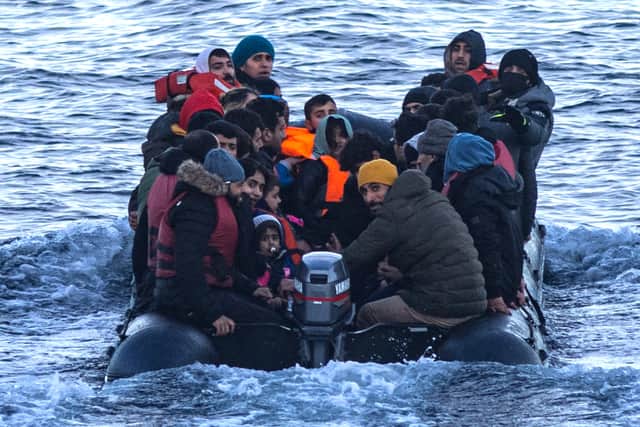

Here are the three main problems that the country is facing at the moment, and a possible solution: 1. Over the past 12 months, 18,565 undocumented migrants entered the UK via small (and not so small) boats; 2. Our jails are full, resulting in the Government releasing 4,500 crims over the coming months to free up space; 3. Many of the released criminals start offending pretty much the moment they leave the prison gates, wasting hundreds of man-hours of police time rearresting them and putting them back inside - if they catch them, of course.
And here is the answer: The Government releases 18,565 jailbirds to free up space, and immediately sticks them in rubber dinghies bound for Calais, where they will be able to claim asylum on the grounds that they face imprisonment if they return to the UK.
I’m sure our Gallic friends will understand.
They did agree to ‘one in, one out’, didn’t they?
The other solution to free up more jail space, as I have suggested before, is to introduce some form of corporal punishment for young offenders committing crimes such as graffiti, shoplifting, and maybe even first-time burglary. Far cheaper than locking them up, and far more effective than tagging, which clearly doesn’t work. It also gives first-time offenders an opportunity to swiftly put their bad ways behind them, rather than festering for months with other unsavoury characters. And I’ll wager that seeing a few miscreants reduced to tears in a public flogging would provide a far greater deterrent to would-be offenders than anything than any of the sentencing options currently available.
Given that leaving the European Convention on Human Rights is now firmly in the mainstream arena of discussion, I don’t understand why no-one is seriously pressing for it.
A trial of new AI cameras at sites at two sites, one in Wolverhampton, one in Birmingham, has caught 19,000 motorists committing offences behind the wheel. These include, at Fallings Park, Wolverhampton, 757 suspected incidents of using a mobile phone while driving, and more than 6,000 incidences of not wearing seatbelts.
Some of these drivers should clearly not be on the road. There is one example of a driver holding a phone with two hands, staring at the screen while ignoring the road ahead. Another shows a front-seat passenger holding an unrestrained small child.
Nevertheless, the prospect of the state holding such powerful surveillance tools makes me deeply uncomfortable, and fearful of how else it might be used.
And while the authorities have been quick to publicise the clearly outrageous infringements, I would really like to know how many of the mobile-phone offences were committed while stationery in traffic, which in my view should not be an offence at all. It presents no danger to anyone, and the most likely reason for doing this is to explain you are going to be late for a meeting because the public authorities have decided to dig up the road.

More pertinently, this operation comes up with no suggestion as to how to deal with what is surely the most terrifying thing on the roads at the moment - the hoards of men, dressed in black, whizzing in and out of the traffic on unlit bikes and e-scooters in the dark.
I sure know what scares me the most.
.jpeg?crop=3:2,smart&trim=&width=640&quality=65)
Always one to use cutting-edge technology to further the good of mankind, Donald Trump tastefully responded to the death of a man in a tiger enclosure in Doncaster by producing an AI video of himself wrestling with a tiger. Well, why wouldn’t you?
Maybe next time he should be a bit more ambitious, though, push the boat out a bit. How about of a video of, I dunno, him courageously fighting in the Vietnam war?
Comment Guidelines
Iconic Media encourages reader discussion on our stories. User feedback, insights and back-and-forth exchanges add a rich layer of context to reporting. Please review our Community Guidelines before commenting.