
'It was catastrophic' - Looking back at how devastating floods almost put an end to the Severn Valley Railway in 2007
While the Severn Valley Railway's landslip in 2025 was a huge disappointment and challenge, it was nothing compared to the catastrophe of 2007.
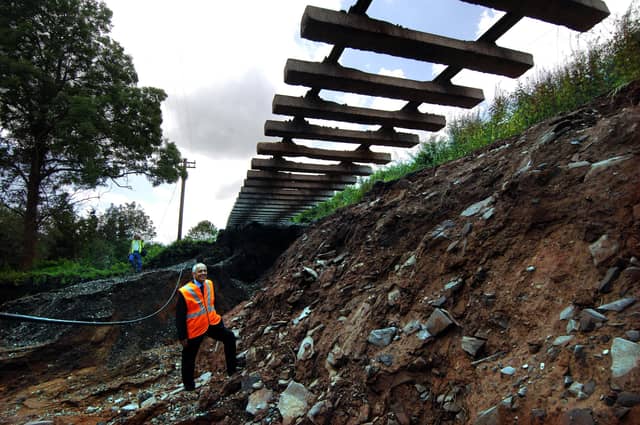


The shocking floods of June 19 of 2007 threatened to put an end to the heritage railway, with the line damaged in 45 places - with nine landslips.
The thunderstorm, which swept along the route at about 8pm, only lasted about 30 minutes, but within that time a month's worth of rain landed on the route.
The damage to the Severn Valley Railway's (SVR) infrastructure was catastrophic – cuttings were filled with debris and embankments collapsed, leaving sections of track suspended in mid-air.
Only a small section of the line between Bewdley and Kidderminster could remain open for passenger services.
The devastation was compounded the following month by another storm which caused further damage towards the southern end of the line.
The issue had largely been caused by Victorian drainage systems becoming overwhelmed.
Water draining from the surrounding land towards the River Severn normally flows under the railway through culverts.
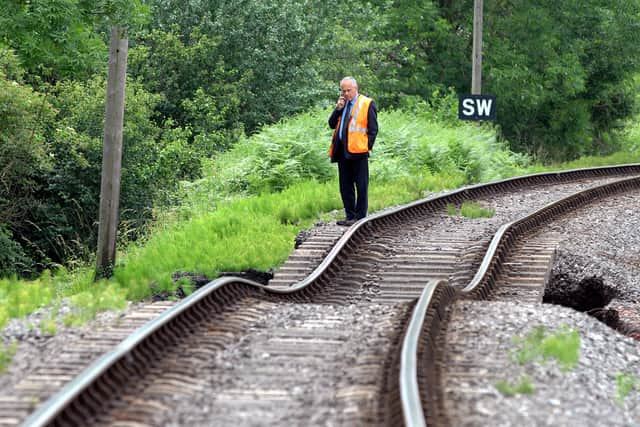
Many of the culverts became blocked by debris brought down by the storms, contributing to the number of washouts that damaged the line.
Prior to the storms, the SVR possessed plans identifying 28 culverts under the railway.
After the storm a detailed survey increased the number to 108, with all examined and upgraded or replaced where necessary.
The final repair bill was a staggering £3.8m, with funding coming from the railway’s insurances, grants from the European Regional Development Fund, Advantage West Midlands and the Heritage Lottery Fund.
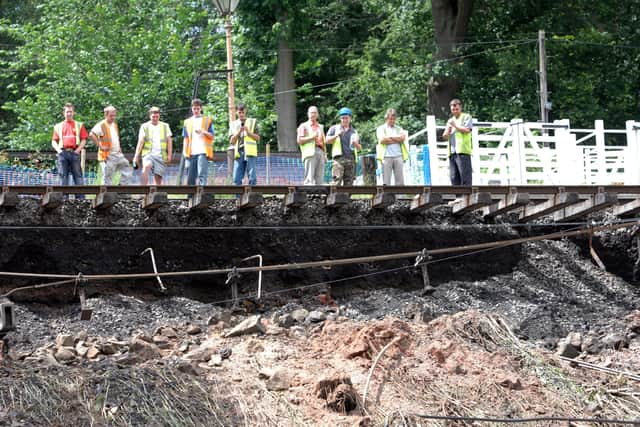
Donations also flowed in from fellow railways, SVR supporters and the general public from all across the country, and those, coupled with SVR reserves, made up the final funds needed to get the railway back on track.
The section of the line between Bridgnorth and Hampton Loade reopened for passenger services on Saturday, February 9, 2008, to coincide with the half-term holiday.
One year on from the devastation, crowds gathered to watch The Prince of Wales and The Duchess of Cornwall make their first visit to the SVR.
The trip was not originally intended to mark the re-opening - but was a happy coincidence for the railway to make its return to operation.
The SVR's own news publication explained, saying: "The popular misconception was that the reason for the visit was especially for Their Royal Highnesses The Prince of Wales and the Duchess of Cornwall to view the most major repairs to the storm damage on our line.
"This was not the only reason; His Royal Highness had requested a visit to a heritage tourist line with the Royal Train, steam-hauled. And that is what happened."
Thankfully the Severn Valley has thrived since, although it has had many challenges along the line.
The collapse of the embankment between Bridgnorth and Hampton Loade on January 29 last year brought back many bad memories of 2007.
The collapse led to a landslip underneath the railway line, leaving a section of track suspended in mid air.
What followed is a stunning story of endeavour, co-operation, support, and love for the railway, with repairs incredibly completed in just six months - celebrated by a special guest appearance from the world's most famous train, the Flying Scotsman, for its reopening.
The Severn Valley Railway's managing director Jonathan 'Gus' Dunster said there was no doubt it had been a year of ups and downs.
He said: "The best way of describing 2025 for us? It has been a real rollercoaster. We started off heading into our 60th anniversary year with a lot of positive energy, looking forward to celebrating - and celebrating the national 200-year anniversary of the railways.
Comment Guidelines
Iconic Media encourages reader discussion on our stories. User feedback, insights and back-and-forth exchanges add a rich layer of context to reporting. Please review our Community Guidelines before commenting.