
I walked a disused Great Western Railway line from Compton to Tettenhall that has huge historical significance
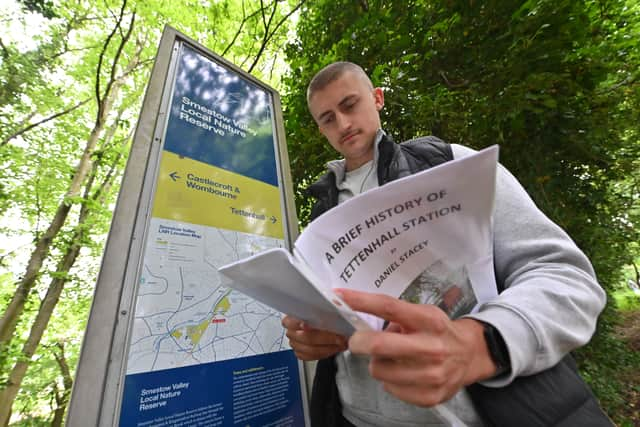
Armed with my year five school project, I headed out to one of Wolverhampton’s most historical walking spots
We are lucky in the West Midlands to have a number of great walks on our doorstep, but few are as distinctive or share the remarkable local history as this one hidden away in Wolverhampton.
In the early 20th century this now-peaceful green corridor through the Smestow Valley Local Nature Reserve was not a walking route at all, but a working railway line - part of the Great Western Railway network, which carried steam trains all the way from Oxley to Wombourne.
For many people in the West Midlands the route will be relatively unknown, but for me as someone who lives locally ‘The Track’ was somewhere I spent a lot of time as a child, and even became the focus of a school project of mine when I was just ten years old at Christ Church Junior School in Tettenhall.


After digging that project out from a folder I headed to Compton and the Bridgnorth Road, where a ramped entrance point to leads up to the Smestow Valley Nature Reserve.
The route follows the old Great Western Railway line through what is now the Smestow Valley Local Nature Reserve, threading from Compton towards the former Tettenhall Station, where Cupcake Lane café now sits.
Today it is all dog walkers, cyclists, and children taking short cuts to school, but once upon a time the route formed part of a thriving rail network.
Construction on the line began in 1913, part of the Great Western Railway’s wider expansion plans across the Midlands. Then came the interruption of the First World War, halting progress almost as soon as it had begun. Work eventually resumed, and the line was finally completed in 1924 under the banner of the Great Western Railway.
During the Second World War, trains used the line to carry evacuees away from danger, transport supplies to Dutch Army units stationed at Wrottesley Park, and some were even used to receive injured soldiers following D-Day. It is strange to think that what is now a peaceful woodland path once carried such urgent, heavy responsibility.
The last train along this line ran on 27 February 1965, and after that, the silence set in quickly. By 1967, demolition work had begun, and by early 1968 the railway had been almost entirely erased from the landscape - at least physically.
What strikes me most on the walk was how the landscape still remembers the railway. Platforms are still visible at certain points and bridges - including the iconic ‘Meccano Bridge’ which crosses the Staffordshire Worcestershire Canal - pay impressive tribute to the building work that was done on the line more than a century ago.
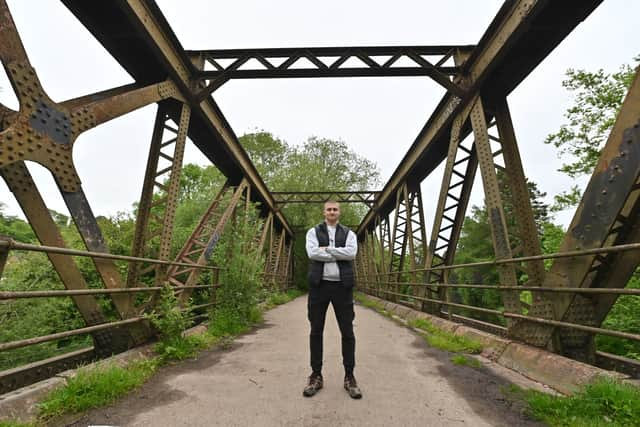
Today, the route is very different. It is one of the most well-trodden green corridors in this part of Wolverhampton, especially for students from Smestow School, St Peter's Collegiate Academy, and St Edmund's Catholic Academy.
The path is part of the Smestow Valley Local Nature Reserve, and its accessibility has made it a natural commuting route as much as a recreational one, as well as being popular with runners, hikers and dog walkers.
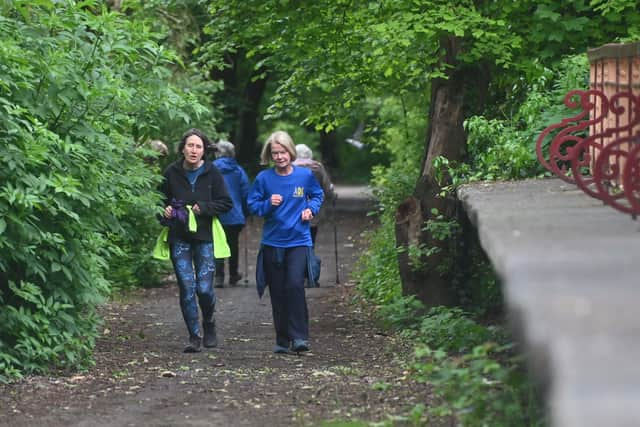
There is also a relatively hidden but major link for supporters of the city’s football team Wolves. Sections of the walk come out near to the Sir Jack Hayward Training Ground, as well as lots of open green space that become popular when the weather is nice.
But the most striking transformation is at the old Tettenhall Station, where the former waiting room and ticket office have been restored and given a second life as ‘Cupcake Lane’ café, a warm, bustling stop for walkers, cyclists, and families. Sitting there, it is easy to forget that trains once pulled into the same platforms, although that history is proudly demonstrated by pictures and newspaper clippings on the walls.
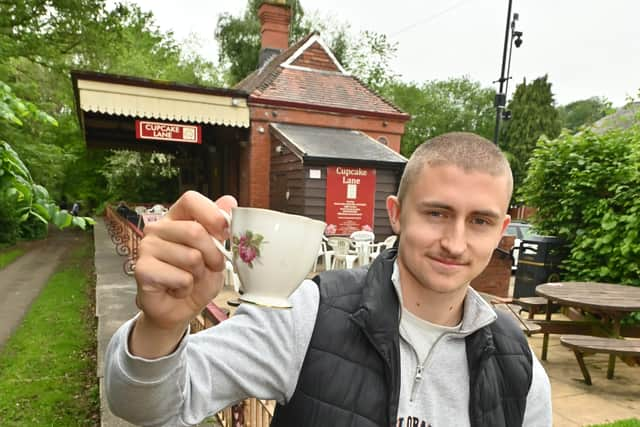
While the railway has been almost entirely erased from the landscape physically, the feeling of its historical importance is still very much present.
The old embankments have become hedgerows, the trackbed a footpath, the stations places to pause rather than pass through, and bikes and feet have replaced wheels and engines as the way to move up and down the track.
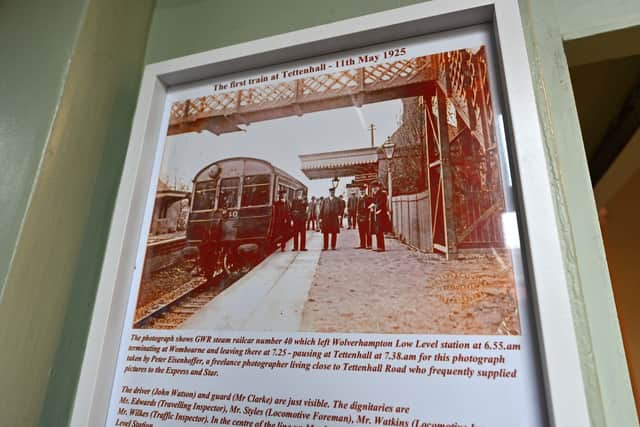
It is still possible to walk from Aldersley Stadium in Claregate to Wombourne, nearly seven miles, along ground that for many years lay below trains and tracks, and if you enjoy the combination of walking and history I would highly recommend it. In fact, a short deviation off the line around Compton can lead you to the reported site of the Battle of Tettenhall, where Anglo-Saxon troops defeated Danish Vikings in August of 910 AD.
For many, it is just a pleasant walk. But it is also something more: a former railway line where the West Midlands’ industrial past has quietly become part of everyday life.
I only went back because of a school project that I was reminded of after flicking through an old school folder, but I stayed because it turned out there is a story here that is still being written.
Comment Guidelines
Iconic Media encourages reader discussion on our stories. User feedback, insights and back-and-forth exchanges add a rich layer of context to reporting. Please review our Community Guidelines before commenting.