
I tried the UK's busiest motorway junction in the Black Country at rush hour - this is how it went
Junction 10 on the M6 is considered to be one of the UK’s busiest motorway junctions.
It is perhaps one of the most notorious stretches of road in the country, never mind the West Midlands.
The chances are at some point in your life you will have been stuck in traffic at junction 10 on the M6, crawling forward a few metres at a time and wondering how a single junction near Walsall became such a persistent choke point on one of the country’s busiest motorways.
For me - a fairly newly-qualified driver - I have only experienced it a handful of times, and never got to see what things were like before the £78m improvements that were completed in 2024.
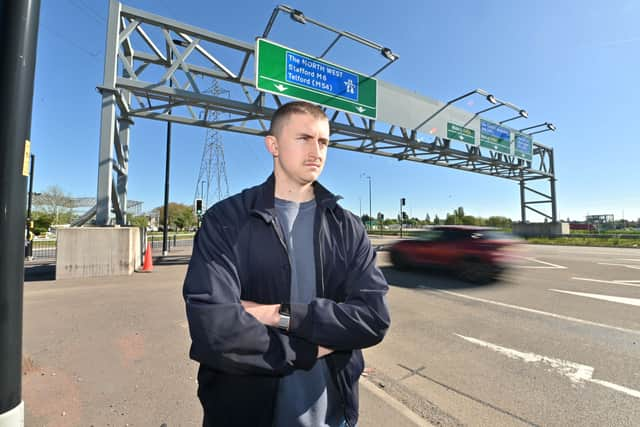

In truth, my thoughts are quite simple . If this is what it is like after £78m was spent on it, how bad were thing before?
I know rush hour is always going to be busy, especially considering junction 10 serves a densely populated and heavily industrialised part of the West Midlands and connects the motorway with the A454, but traffic was at a stand still for several minutes.
As part of our job as news reporters we regularly report on delays, break downs and crashes. We are regularly checking traffic trackers and updates, and the truth is if we wrote about every time ‘congestion’ was reported at junction 10 of the M6 we would have no time to do anything else.
From the driver’s seat, the scale of the problem is more tangible. The volume of vehicles is constant, the flow uneven. Lorries dominate the inside lanes, smaller cars edge between them, and every slip road introduces another wave of vehicles trying to merge into limited space.
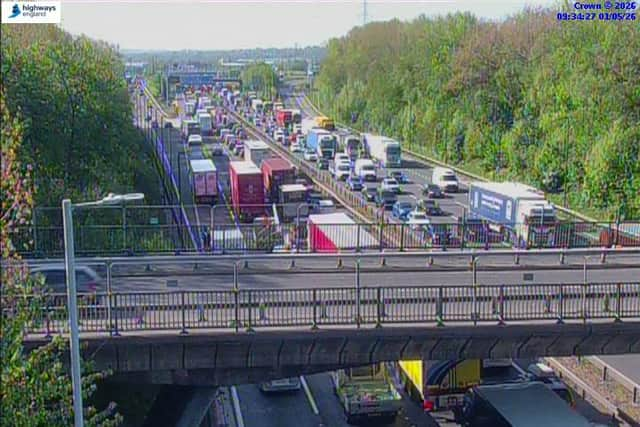
I would stress that, if done properly, the junction works perfectly fine. On the whole, lanes are well marked and signposted while traffic lights do help to reduce some of the chaos.
However, even with the redesigned layout, there are moments where it simply feels like too much traffic for the road to handle at once, especially if other drivers make erratic, incorrect decisions.
Now a junction should not be ‘marked down’ because the people that drive on it fail to observe the laws of the road, but as driving goes there is no denying that tackling junction 10 is one of the more tricky tasks, especially when it’s busy.
The £78 million upgrade by National Highways was meant to address exactly that - improving capacity, easing bottlenecks and making journeys more predictable. And to an extent, it has. There is a sense that the junction functions better than it once did, that the delays are less chaotic, more controlled.
But “better” does not necessarily mean “good.”
Junction 10 should work. If everything goes smoothly it is fantastic, and provides people travelling through the West Midlands with a free-flowing road network. But let’s not kid ourselves here, things do not always go smoothly on the roads, and I do not think there is enough margin for error with the four-lane system.
There might be a bigger talking point there about the quality of drivers on our roads, but one thing is for sure; if you are not totally switched on when you drive on junction 10 it will catch you out.
Comment Guidelines
Iconic Media encourages reader discussion on our stories. User feedback, insights and back-and-forth exchanges add a rich layer of context to reporting. Please review our Community Guidelines before commenting.