
Hundreds of birdwatchers flock to see rare African heron spotted for first time in the UK

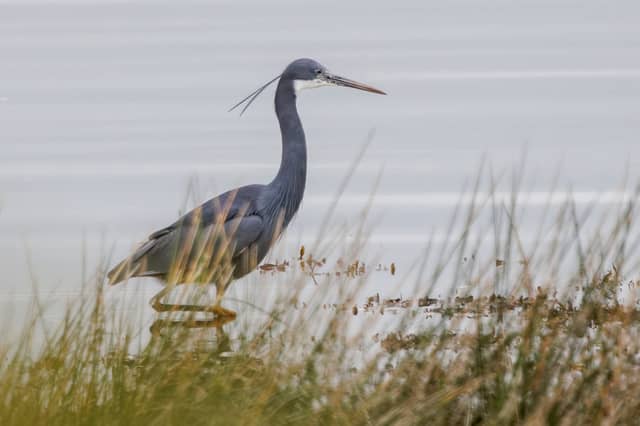

A birdwatching WhatsApp group was immediately alerted
Hundreds of birdwatchers have flocked to see a rare African species which has been spotted in the UK for the first time.
The western reef heron is more commonly found in southern Europe, Africa and parts of Asia.
But it was seen by ornithologist Simon Hugheston-Roberts at Y Foryd in Caernarfon, Wales, at 10am on Saturday (6 June).
After confirming the grey-blue bird, he immediately alerted a birdwatching WhatsApp group.
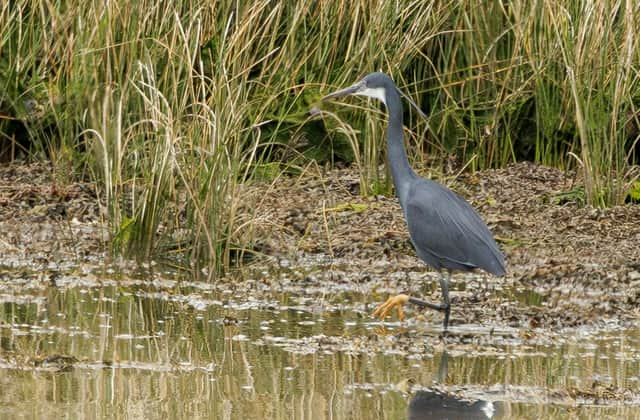
By the afternoon, about 300 ornithologists arrived in the town hoping to catch sight of the egretta gularis.
One of the receivers of this message on the birdwatching group, Mike Barth, said he "dropped everything" and rushed to the scene from Cheshire as soon as he heard the news.
The keen photographer, who has been taking photos of birds for around 20 years, said: "About 11am on Saturday morning I was alerted by the app to the initial reports of the Western Reef Heron - which if proven would be a first for Britain.
"Firsts don’t come around very often - so this was of the greatest interest to any birder in Britain, especially twitchers.
"So any plans I had needed to be dropped or rearranged whilst I quickly jumped in the car for my two hour drive from Macclesfield to Caernarfon, specifically Fforyd Bay.
"When I arrived there were only a handful of birders there as it was still relatively new news.
"I have no doubt many around the country were already making plans to come up on the Sunday or Saturday evening to stay overnight."
Mike said this particular species of bird is usually found in Africa and over to the Middle East, with a small number recorded in the Iberian Peninsula.
He believes the bird was blown off course to Wales due to the recent weather with fairly strong southerly winds.
Mike added: "It was a very satisfying trip, more often than not birds are found on work days and usually gone by the time the weekend comes around!
"So to get a mega rarity on a Saturday morning within two hours was very unusual in itself let alone a first for Britain."
Comment Guidelines
Iconic Media encourages reader discussion on our stories. User feedback, insights and back-and-forth exchanges add a rich layer of context to reporting. Please review our Community Guidelines before commenting.