
How Covid brought down the curtain on our theatres - but the show still went on
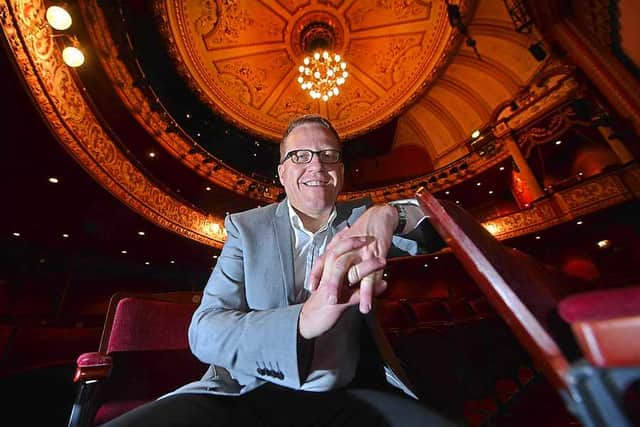
Adrian Jackson sounded a defiant tone. As theatres across the country were ordered to close their doors indefinitely, the boss of Wolverhampton Grand Theatre insisted that the show must go on.

"The Grand Theatre has been open throughout the reign of six monarchs and 28 prime ministers," he said. "It has also survived two world wars and with everyone’s fantastic support, the team and I will do everything we can to ensure it survives Covid-19."
Theatres, along with pubs, nightclubs and restaurants were ordered to close on March 16, 2020, a week before the full lockdown was put in place. And for an industry which is precarious at the best of time, and where long-term planning is everything, the impact would be felt more keenly than most.
For Shrewsbury's Theatre Severn, it was a logistical nightmare. More than 100 shows had to be postponed or cancelled, and staff had to contact 40,000 customers to break the news. Comedians Ed Byrne, Joel Dommett and Rhod Gilbert had been lined up to appear, as well as singers Lesley Garrett and Russell Watson.
"It is so disappointing not to share those much anticipated occasions with you, but we have been hugely grateful for the patience, understanding and good wishes we have received as we have all adjusted our plans together," said a spokesman for the theatre.

One of the biggest problems was the uncertainty - nobody knew how long the restrictions were going to last. While the first full lockdown, announced on March 23, was for three weeks only, it was no great surprise when the Government opted to extend it.
Theatres were officially allowed to reopen on July 4. But with a ban on live entertainment remaining in place, that was little consolation. Two days later, the Government announced a £1.57 billion package of grants and loans to support theatres, galleries, museums and other cultural venues. The Grand received £1.187 million, which enabled it to cover its running cots.
Speaking of his determination that the Grand would reopen, Mr Jackson said: "Whilst this still continues to be a worrying time, I am confident that The Grand will recover. Thanks to careful financial management the theatre has healthy reserves which will be used to safeguard the future."
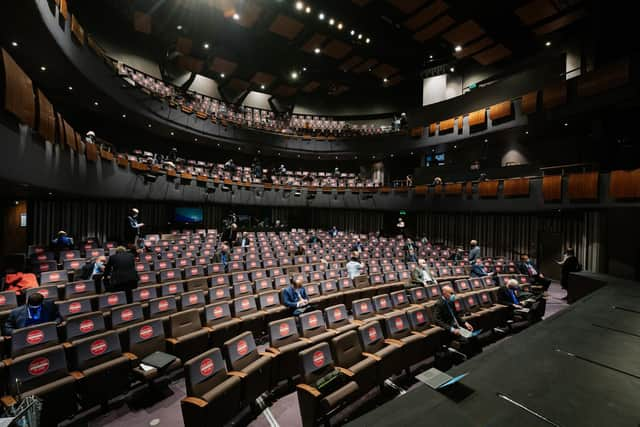
In August, theatres across the West Midlands lit up red to highlight their plight.
The Grand, which kept one light on throughout lockdown, as part of a superstition about the ghosts said to haunt the theatre, had hoped to reopen at Christmas, and tentatively prepared some socially distanced shows. But these ambitions were dashed when a second wave of the virus hit the UK, and it was not until May 19, 2021 that theatres were finally back in business.
For some theatres this was too late. Bromsgrove's Artrix Theatre was placed into administration within the first month of lockdown. While the furlough scheme had helped with wages, the centre was unable to cover the building's £10,000-a-month running costs, and was too small to qualify for much of the support on offer to larger venues.
"With no income since March 16, and no certainty of returning to normal ticket sales and catering income for at least six months, our assets do not cover our liabilities and we are therefore technically insolvent," said a statement from the theatre. The Artrix was eventually rescued by Bromsgrove Community Arts group, and reopened in October 2023 - three-and-a-half years after closing its doors.
Birmingham Hippodrome survived lockdown, but at a cost. In June 2020 it was reported that half of its 120-strong workforce was facing redundancy. In January 2021, weeks after hopes of a Christmas reopening had been dashed, Wolverhampton Grand also announced it would be making a wave of redundancies. A statement from the theatre said the business was by this time facing unprecedented and unsustainable financial pressures.
"In order to ensure the theatre remains financially viable, returns to full operation as and when possible, and is safeguarded for the future, the monthly fixed costs must be reduced," said the gloomy statement.
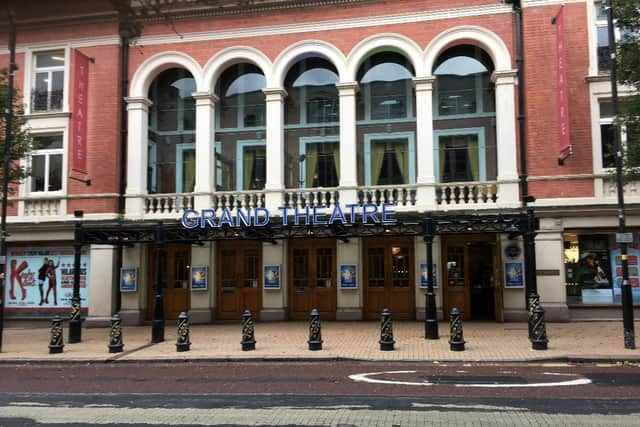
"With zero regular income, theatre reserves are no longer able to sustain the current levels of expenditure. Since the onset of this pandemic, every possible support has been given to theatre staff, however this horrific situation has continued way beyond any expectation and there is now no option but to commence the process of reducing the theatre workforce."
The show did go on. The Grand reopened, and has now seen seven monarchs and 31 prime ministers. Theatre Severn, the Hippodrome, and countless other venues have made a valiant fightback to ensure that live entertainment is still a vital part of cultural life across the West Midlands. But it has been a long, hard road to recovery. And like the light in the auditorium, the ghost of Covid lingers on.
Comment Guidelines
Iconic Media encourages reader discussion on our stories. User feedback, insights and back-and-forth exchanges add a rich layer of context to reporting. Please review our Community Guidelines before commenting.