
I was told I was about to get diabetes – so I decided to act and have become a changed man
I had mixed feelings as I stepped onto the scales, first the trepidation of seeing how much I weighed, then the relief that it was not a speak-your-weight machine.


Embarrassing or what? I was, after all, among a group of about 10 people. All of whom had been diagnosed as pre-diabetic and on a new course. I didn't want them to snigger.
In technical terms, you become pre-diabetic when the glucose in your blood binds to haemoglobin (the protein that carries oxygen in your red blood cells). This combination of glucose and haemoglobin is called haemoglobin A1c (HbA1c).
The HbA1c in your blood reflects the average level of glucose in your blood during the last 2-3 months. If not well controlled, your blood glucose levels will be high causing higher HbA1c levels, leading almost inevitably to full blown diabetes.
The simple terms, there is a number scale for your HbA1c range. From 20-41 is seen as normal, 42 to 48 is pre-diabetic and 48 and above is diabetic.
I had tripped over to number 42. Hence pre-diabetic. I was on a journey down a dangerous road.
I suppose its like many diagnoses you hear about, you think it won't happen to you. In my case the shock of being told I was on the way to contracting a much heard of, but little understood disease, proved to be a game changer.
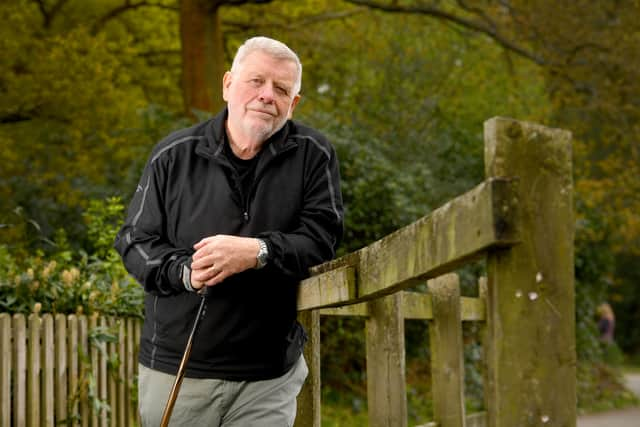
I knew I was overweight, seriously overweight, but when thinking of doing something about it, comforted myself with the thought of a Winston Churchill jibe, delivered when he was criticised for his drinking.
When being accused of being "disgustingly drunk", by a female politician, Churchill reportedly shot back: "My dear, you are ugly, and what’s more, you are disgustingly ugly. But tomorrow I shall be sober and you will still be disgustingly ugly."
The point being that one of them had the ability to change, ie Churchill. The same was true for me.
You can be too fat, but you can always lose weight. Trouble was, you neglect bothering to try.
The attitude was: tomorrow is another day; mañana; any excuse; another pint of your finest please landlord and don't hold back with the nuts and scratchings. You know the kind of thing.
It also get harder as you age and when the diagnosis dropped, I was on my way to a significant birthday. One with a zero in it and yes, I wish it was 60.
It took that blood test over another not serious matter to reveal the hidden but serious issue.
There are two types of diabetes, Type 1 is a lifelong condition where the body's immune system attacks and destroys the cells that produce insulin. Type 2, which the NHS says affects 90 per cent of people with diabetes, need not be a lifelong condition but comes about when the body does not produce enough insulin, or the body's cells do not react to insulin properly.
Symptoms can include frequent urination especially at night, feeling more tired than usual, cuts and wounds taking longer to heal and blurred vision.
Over time, it can cause other serious health problems like nerve damage, amputation, sight loss, kidney damage, and gum disease as well as increasing risk of both heart attack and stroke.
It can affect everyday life and most people will need medicine to control their diabetes for the rest of their life.
It affects so many people with one of the most notable sufferers being former Sandwell MP Tom Watson. His diagnosis and what he described as a life threatening condition led him to lose around eight stone and reverse the disease.

The result of my blood test led to me being contacted by a lifestyle coach from Living Well Taking Control (LWTC), after a referral from my GP.
LWTC is one of four active providers commissioned through NHS England to deliver the Healthier You Diabetes Prevention Programme throughout England.
It has been a national provider of the service since 2016, supporting patients to reduce their risk of developing type 2 diabetes through its free, non-medical, self-management lifestyle programme.
The obvious aim of this is to use prevention rather than costly cure and prevent the horrors that can come with full-blown diabetes.
The first LWTC session was an eye opener, and if anything can shock you out of a complacent torpor, it is having these facts delivered in a blunt, but professional manner. It's important to stress that this is not a weight waters-style exercise. Some of people there did not have a weight problem, but other issues making them susceptible to the disease.
The programme consists of a series of sessions of around an hour spread over a nine month period discussing issues of diet, exercise, mental wellbeing, the medical implications of the disease and a host of other related issues.
Part of the plan is regular checks on weight and waist size. It was not a pleasant sight seeing what registered on the scales and the terrifying tale of the tape. This meant a change of lifestyle and so the kitchen and the fridge had a food makeover.
Coach Rachel Downer, who covers the Black Country, Birmingham and Solihull, explained: "Part of my role as at LWTC is to help people work out what areas within their lifestyle need changing, and then to encourage and support them to keep going, even when obstacles get in the way.
"I always tell my groups that it's usually the small, yet consistent, changes that add up to a big result at the end."
So it was out with the chips, curries, bread, booze and pasta. In with fruit, veg, pulses grains and a measure of temperence with the booze. Although its fair to say overdrinking was more of a problem than overeating.
The hardest thing was cutting alcohol by around two-thirds. I am a social drinker and like the pub. But there you go. Yet another pleasure severely curtailed.
In addition, I was determined to exercise more. Not that I didn't exercise and already spent many hours a week walking. The trouble was I struggled with backache and shortage of breath after eating. So it became increasingly difficult.
I gradually started to feel better over the first couple of months and the weight was beginning to drop. The trouble was, Christmas was approaching. A fact not lost on group leader Rachel, who sensibly laid out ways to cope while everyone else was gorging themselves.
Her advice is to adopt the 80/20 method. Be sensible for 80 per cent of time, which allows for lapses 20 per cent of the time. Don't beat yourself up.
She said: "A lot of people try to be perfect and put a lot of pressure on themselves to change everything overnight, which usually only ends up with a relapse and feelings of guilt and then the cycle continues."
I managed to navigate Christmas, although my demeanour on a couple of occasions made Scrooge look like a sunshine kind of guy. But the truth is it wasn't so bad. You adapt.
And so it went on birthdays came and went, as did that significant one and I still managed and am still managing to stay on course.
To date, more than three stone has been shed and I am able to see part of the body that has been obscured for too long as my waist measurement shrinks.
Being of an age, I get free time at local leisure centre gym and the walks are increasing in length, although I still work part time. No sign of the back pain or breathlessness. A clue about previous problems.
Still a long way to go and some way off a target weight, but going in the right direction. One unexpected pleasure has been my discovery of previously sneered at herbal tea. Green, ginger, peppermint, you name it, I am a convert and it also cuts your caffeine intake and claims significant health benefits.
I will not give up alcohol or caffeine, but there will be less of it. The good news is that the latest blood test has shown my HbA1c level has dropped to 39 and I am no longer on the pre-diabetes scale.
The journey down the dangerous road has seen a U-turn. The challenge is keeping that reversal going.
Facts about diabetes
The Healthier You NHS Diabetes Prevention Programme identifies people at risk of developing type 2 diabetes and refers them onto a nine-month, evidence-based lifestyle change programme.
They receive personalised support to manage their weight, eat more healthily and be more physically active – which together have been proven to reduce a person’s risk of developing type 2 diabetes.
Research shows the Healthier You NHS Diabetes Prevention Programme has reduced new diagnoses of type 2 diabetes in England, saving thousands of people from the potentially serious consequences of the condition. It cuts the risk of developing type 2 diabetes by more than a third for people completing the programme.
Risk factors for type 2 diabetes include being overweight or obese, an unhealthy waist measurement, too much fat stored in or around your liver and pancreas, a sedentary lifestyle, high blood pressure, age, ethnicity, and family history.
Some risk factors cannot be changed which is why the NHS Diabetes Prevention Programme focuses on lifestyle interventions that are modifiable through evidence-based behaviour change techniques.
The Diabetes Prevention Programme is structured to support this approach with 13 sessions spread over 9 months and an emphasis on the science behind behaviour change.
Since 2020, over 15,500 individuals have completed the Face-to-face Diabetes Prevention programme and over 5,500 individuals have completed the Digital programme.
According to Diabetes UK, the number of people living with diabetes has topped five million for the first time, last year's analysis showed.
The group has called on the government to ensure that national and local health systems put diabetes at the heart of their plans ensuring they identify more people at risk of type 2 diabetes, reduce health inequalities, and target communities where diabetes prevalence is high.
The figures show that 4.3 million people are now living with a diagnosis of diabetes in the UK. Registration figures for 2021-22 are up by 148,951 from 2020-21, and more than 2.4 million people are at high risk of developing type 2 diabetes in the UK.
We know that approximately 90 per cent of diagnoses are of type 2 diabetes, and around eight per cent of diagnoses are type 1 diabetes, with the other forms of the condition making up the remaining two per cent.
The group estimates there are an additional 850,000 people living with diabetes who are yet to be diagnosed, bringing the overall UK-wide figure beyond five million.
Comment Guidelines
Iconic Media encourages reader discussion on our stories. User feedback, insights and back-and-forth exchanges add a rich layer of context to reporting. Please review our Community Guidelines before commenting.