
Former Heavyweight Champ boxer Frank Bruno talks mental health issues with Wolverhampton workforce
Former Heavyweight Champion of the World, Frank Bruno MBE has discussed some of his toughest personal battles at a mental health seminar at a Wolverhampton workplace.


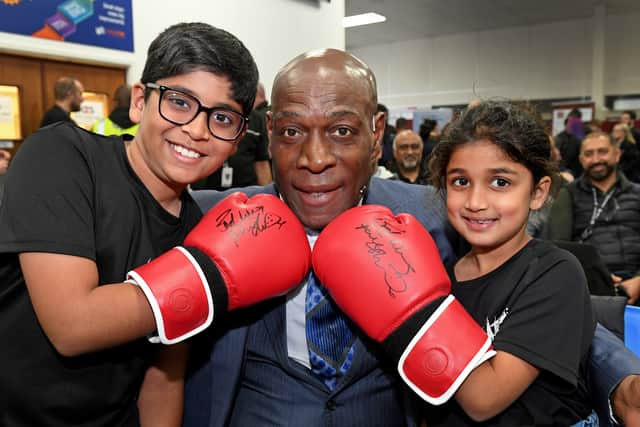
Frank Bruno was the star guest at an event at Collins Aerospace, organised to highlight mental health and also was organised to celebrate diversity and inclusion for Black History Month.
During a panel, and then a question-and-answer session, the British former boxer discussed his own battle with mental health issues, and how he feels there needs to be a change in how people are treated for their issues.
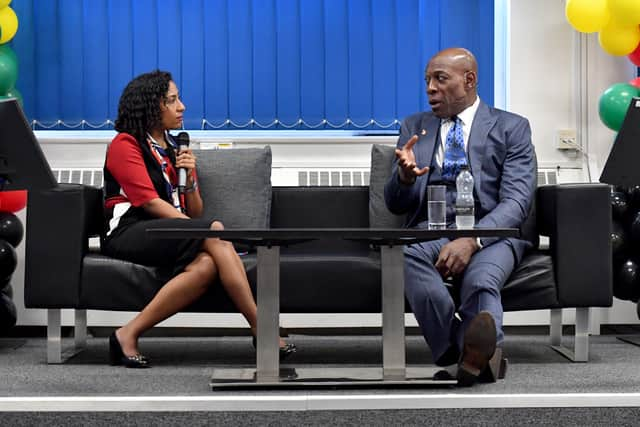
He said: "There needs to be a change in how mental health or bipolar is treated. All they do is give tablets and that does not help.
"They give you 28 tablets for the problem and then another 28 tablets for the side effects of the first 28 tablets, and that just does not help."
Discussing his life and how he put off addressing his mental health issues at first, Frank said: "My dad died when I was 14 and that was a trigger for me.
"I was sent to a boarding school, and that was almost like prison for me - but it was great for fitness, and we did a lot of sports to keep fit.
"Of course then I went on to become a professional boxer, where I had 45 fights as a professional, and they all stand out to me, even the ones that I lost.
"Retiring affected me because I had been boxing all my life. It messed me up, retiring.
"I tried to do some things after boxing to keep me busy like pantomime - that was great to help me get used to life after boxing and get used to doing other things.
"Pantomime was hard because of my dyslexia but it was good to learn and help expand my mind."
In September 2003, Bruno was sectioned and taken to Goodmayes Hospital, a mental health facility in Ilford.
He had been suffering from depression for several months beforehand, and he was later diagnosed as having bipolar disorder.
Addressing that period of his life, Bruno told the panel: "I lost the plot, I couldn't get a handle on things.
"I ignored it at first, even though I had bad mental health. I did not want to admit defeat to it.
"Men do not talk about their feelings or admit defeat when it comes to mental health.
"One of the ways to help fight the issue of mental health is that we can try to help by talking about it.
"One of the things I'm doing as well is using my experience because I have been there, and I can help because I can tell them that I have been there.
"When it comes to mental health, we have sat down with the Government to discuss my experience but I find that they do not want to listen to my ideas.
"What keeps me good is that I have a good workout at home everyday. It keeps me fit and it keeps the mind going.
"But men are stubborn and do not talk about them having a bad time. I also was the last one to admit that I had a problem.
"One of the main things was talking about my problems and how I was feeling.
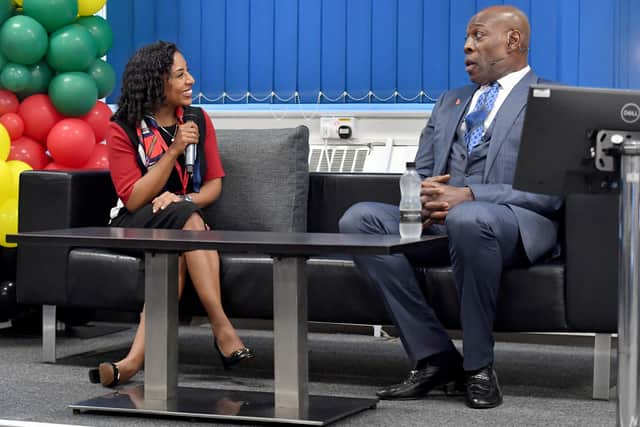
"This is what I always say and it is very powerful, but talk about problems and how you're feeling.
"Talking, exercising, keeping the mind busy, it all helps."
Also on the panel were Kim Patel, RTX Black Excellence Employee Network EMEA Liaison Officer; Sharn Hanspal of Actuation UK, embRACE Employee Resource Group chair; and Troy Grizzle, Actuation UK, Nacelles programme manager.
Comment Guidelines
Iconic Media encourages reader discussion on our stories. User feedback, insights and back-and-forth exchanges add a rich layer of context to reporting. Please review our Community Guidelines before commenting.