
Birmingham: Resident doctors begin strike action - what it means for your care and when it will end
Footage shows resident doctors on the picket line outside Queen Elizabeth Hospital in Birmingham.
Footage shows resident doctors on the picket line outside Queen Elizabeth Hospital in Birmingham on Tuesday 7 April, as resident doctors around the country begin a six-day strike.
The British Medical Association (BMA) is taking the action after talks between the union and the government broke down last month.
Dr Peter Fahey, Co-chair of the West Midlands Resident Doctor Committee, said: “We're out here on the picket line outside the QE in Birmingham because the government has yet again failed to deliver an offer that we could put to our members that would end the pay and jobs dispute. We are almost a fifth down in our pay since 2008 in real terms, and whilst we've had a good start to the journey to restore our pay the government has failed to deliver on continuing that journey, and has withdrawn an offer of training posts as well that was going to help address the jobs crisis.
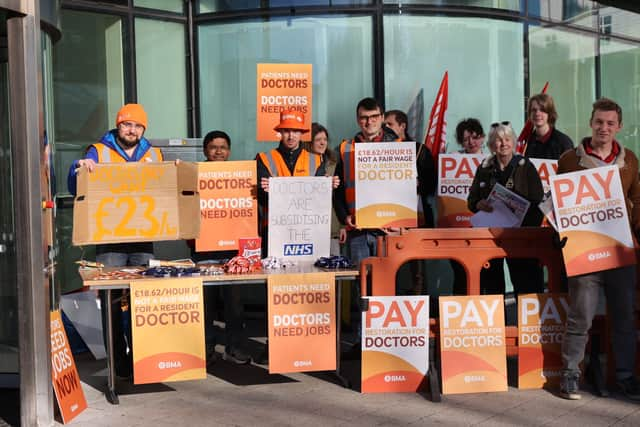

“My message would be to come back to the table and negotiate on an offer that we can actually put to members. Having an offer and then pulling it at the last minute and with reducing the amount on the table is not a good way to negotiate in good faith and we need to come back to the table and actually negotiate something we can put to members.”
Resident doctors who are members of the BMA began the strike action at 07:00 on Tuesday 7 April. The strike period will end at 07:00 on Monday 13 April.
During the strike, all other NHS staff (including consultants, GPs and other specialist doctors) will still be working. The NHS says it is working hard to minimise the impact on patients and make sure there are safe staffing levels in key services, but that there will be significant disruption.
The NHS says patients with appointments booked on strike days will be contacted if their appointment needs to be rescheduled due to industrial action. If you have not been contacted, you should attend the appointment as planned.
Health Secretary Wes Streeting told BBC Breakfast 95% of appointments were still in place and apologised to those affected by cancellations. He said the government had negotiated with the BMA "in good faith" and criticised the decision not to accept its latest offer - calling resident doctors "by a country mile the best winners of the entire public sector workforce when it comes to pay rises".
Anyone who needs urgent care should use NHS111 online or through the NHS App to be assessed and directed to the right care for them. If you do not have internet access, then the free, 24/7 111 phone line is also available.
When someone is seriously ill or injured and their life is at risk, you should seek emergency care in the normal way, by calling 999.
Comment Guidelines
Iconic Media encourages reader discussion on our stories. User feedback, insights and back-and-forth exchanges add a rich layer of context to reporting. Please review our Community Guidelines before commenting.