
'George Edalji - guilty or innocent?' - New research uncovers clues to unsolved mystery hanging over Cannock since 1888
New research suggests Sherlock Holmes creator got it wrong in celebrated case.
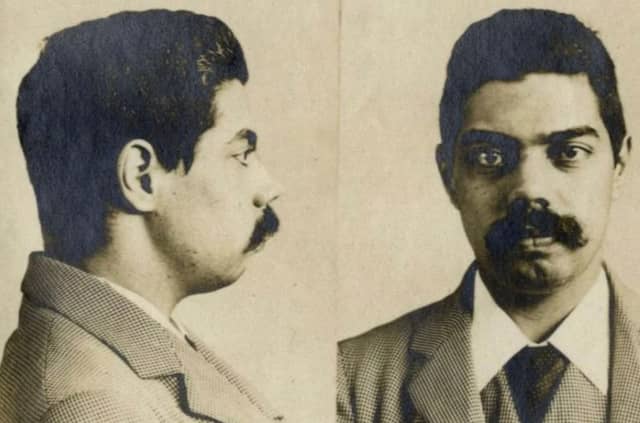

It is a historical crime conundrum which has hung over a village near Cannock and intrigued historians and authors.
The case was a cause celebre championed by the likes of Sir Arthur Conan Doyle, creator of Sherlock Holmes, as campaigners protested that there had been a miscarriage of justice.
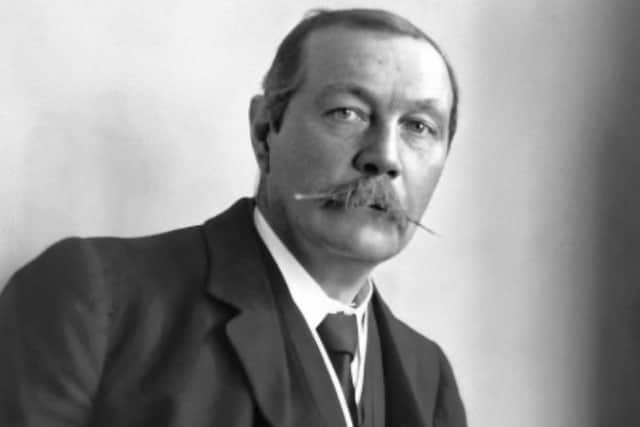
But now a book called Get Edalji presents compelling new research using modern techniques and uncovering important clues - including the inadvertent role the Express and Star may have played in triggering those events in late Victorian and Edwardian Britain.
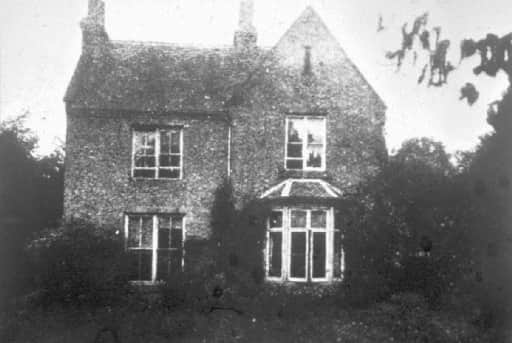
Edalji was the son of the vicar of St Mark's Church in Great Wyrley. While intelligent, he was what would today be considered a nerd with a disconcerting manner and no friends.
He was suspected by police of being behind a longrunning campaign of poison pen letters in the village, written under assumed names. Then animals began to be mutilated in a series of sickening attacks, described as the Great Wyrley Outrages.
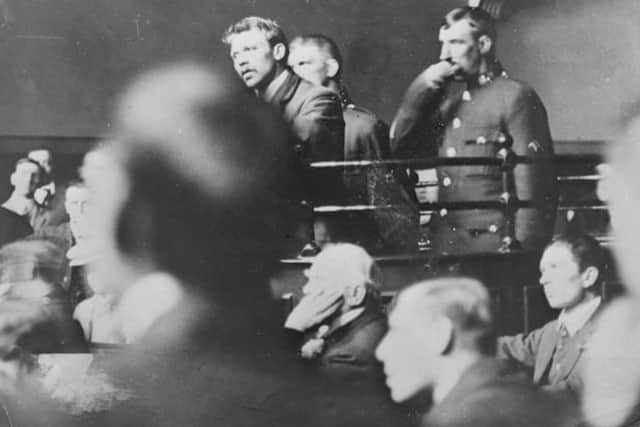
Edalji, a solicitor, was charged with an attack on a pony. Found guilty despite his denials, he received a seven year sentence, being released after three.
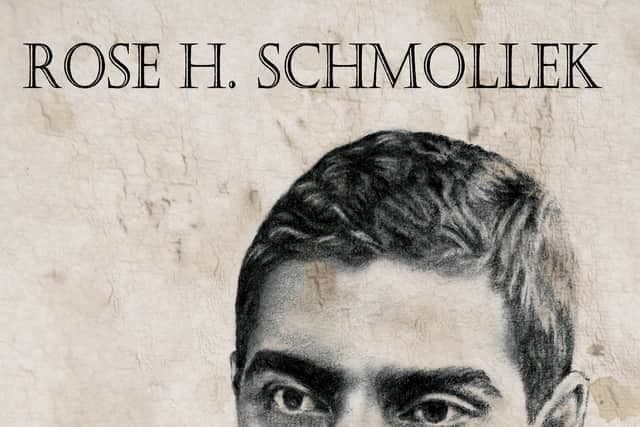
Petra Weber has written the book under the pseudonym Rose H. Schmollek. It's an anagram - we'll leave it to readers to do the elementary detective work to unravel of what - to reflect the international team of experts who have supported the project.
She said: "We researched the crime case of George Edalji, who was convicted in 1903 for maiming and writing threatening letters in Great Wyrley. This research was done in collaboration with forensic linguists, who did analyses suggesting that Sir Arthur Conan Doyle was mistaken in his case assessment.
"We have published our results in a crime case analysis titled Get Edalji.
"Since 1888, in an unusual and very intriguing way, the Express and Star archive has held the key to those complex and confusing events."
Petra, who is from Cologne in Germany, has been doing crime podcasts since 2008, combining her crime novels and short stories with reports on historical crime cases.
She came across the Edalji case when a listener suggested that she should do a show about it.
The strange affair began in 1888 with a series of poison pen and threatening letters in Great Wyrley. A teenage maid at the vicarage, Lizzie Foster, was blamed by the police and the Edalji family and she was taken to court. Even on her deathbed in 1905, she swore that she had nothing to do with it and asked her husband to clear her name. As it coincided with the high profile campaign to prove the innocence of Edalji, the only other suspect, her deathbed plea was drowned out.
The letters, hoaxes, and fake newspaper announcements were to continue over many years. They included things like false wedding and funeral announcements, and appeared in publications so geographically diverse that some may remain to be discovered to this day.
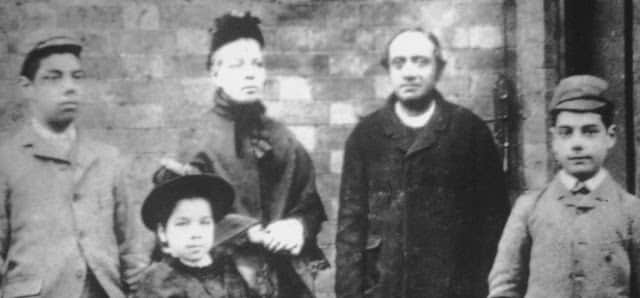
Police believed George Edalji was behind it all. While they never had any clinching proof, their suspicion was to tell against him when the animal maimings began.
As Petra read about the case, she began to suspect George was autistic, and consulted Clare Allely, Professor of Forensic Psychology at the University of Salford, who deals with cases in which autists come into conflict with the law.
"Conversations with her confirmed my assumption," said Petra.
"From that moment on, I found myself immersed in this story. I wanted to know if it was possible to uncover something today that had been hidden for so many years to fulfil the dying Elizabeth Foster's wish and grant her some posthumous justice."
It was a quest which was to take years. As she delved deeper, she discovered there was an amazing amount of material available, including original documents at the National Archives in Kew, London, while the British Newspaper Archive proved invaluable. In particular she was looking for as many letters as possible containing texts written by George Edalji, so they could be compared with the poison pen letters to detect any tell-tale similarities.
"I became increasingly convinced that all evidence pointed to George Edalji as the writer. However, I needed forensic confirmation and a solid foundation to proceed."
This came from forensic linguistics expert Dr Isabel Picornell whose analysis forms a star piece of new evidence in the book. It is a report of her findings after forensic comparison of Edalji's writings and the poison pen letters, rather like looking for literary fingerprints.The verdict? Put simply, he very likely wrote them.
"Forensic linguistic analyses, both manual and AI software-based, in combination with the clues and evidence from the events, lead to the assumption that George Edalji wrote letters over several decades," said Petra.
"He did not do this to scare people. He was just mirroring his literature-inspired fantasies and thus enforced demands that he could not communicate in any other way."
However, Petra says: "There is no clear evidence of any involvement in the animal mutilations. On the contrary, our research suggests that George Edalji had a much better relationship with animals than with people/women."
Edalji and his supporters were to gain a partial victory in fighting to clear his name. After a campaign including petitions to the Home Office he was granted a pardon for the pony "outrage," but was denied any compensation on the grounds that to some extent he had brought the troubles on himself through the letters.
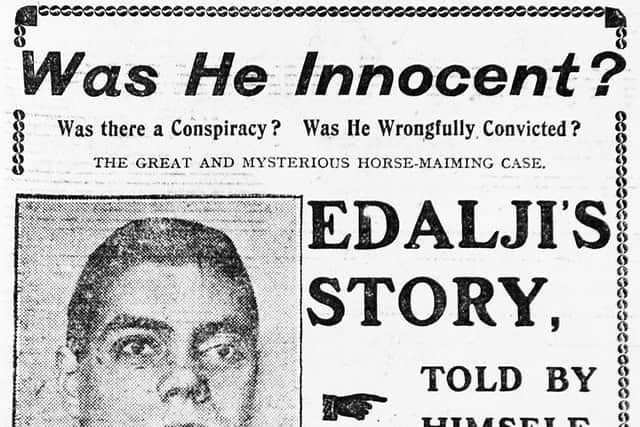
But what had inspired him, if that's the right word, to start writing the letters in the first place?
Petra says nobody had ever examined the newspapers of 1888 when things had all kicked off. She engaged a professional researcher to look through the Express and Star from August to winter of 1888 and look at them through the perspective of a young boy - George was 12 at that time.
It turns out that the Star serialised a story called "An Ocean Secret: Being a Strange Story of a Dead Man's Gold." It was written by James Skipp Borlase, best known as the author of Ned Kelly, who would write boys' adventure stories for the "penny dreadfuls." Petra believes that echoes of Borlase's style can be seen in the letters.
One aspect of the affair which attracted attention then, as now, was that George had an Indian father, Shapurji, and English mother, Charlotte, who hailed from Ketley in Shropshire. However Petra maintains that racial prejudice was not the reason why police blamed George.
The book finally provides vindication for the poor maid who unjustly took the rap for the earliest letters, being bound over for six months. On marriage she became Mrs Elizabeth Ann Smith, and lived in Heath Hayes.
The book is dedicated to her, and two other "victims," Enoch Albert Knowles, who was also accused of writing threatening and offensive letters and received a three year sentence, and Horace Edalji, whose off-message belief that his elder brother did indeed write the letters led to him being estranged from his family, a break sealed when he adopted his wife's surname, Magee.
"There may still be descendants from these families who would appreciate the rehabilitation of their relatives. I would be delighted to hear from them," said Petra.
As for George Edalji, he followed a career as a lawyer and died in 1953 in Welwyn Garden City, aged 77.
Get Edalji is available through the webpage georgeedalji.com and is downloadable for 9.95 euros.