
Will wild wolves make return to their original Midlands haunts?
Open landscapes of our region once rang out to the call of the wolf’s cry. Now a campaign for their reintroduction is growing.
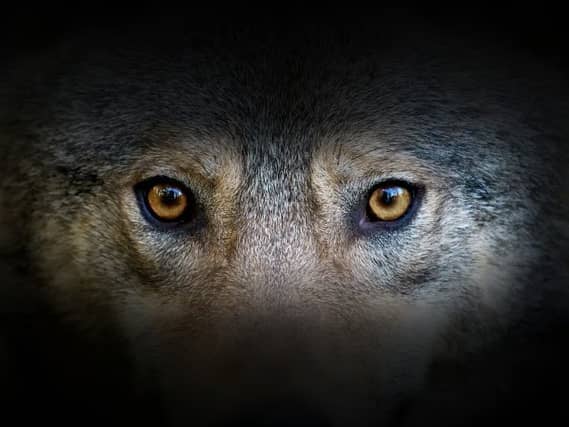


As the family trudged along the uneven, narrow path in fading daylight that streaked the skyline blood orange, a haunting howl surfaced from densely packed trees.
A mother tightened her grip on the child in her arms and looked nervously around. The party quickened their step.
Wolves had caught their scent. The deathly baying indicated they were coming closer.
This scene could – and would – have been played out time and time again in 13th century England.
The woodlands of Cannock Chase, the wild open landscapes of Shropshire, the forest that spread across what is now our Black Country…all rang out to the call of the wild, the wolf’s cry.
The beasts were once common, very common. The rat is now considered Britain’s premier wildlife villain, but back then it was the wolf.
The forests that bled from Shropshire’s border into Wales, in particular, teemed with packs.
In our region, wolves posed such a danger to travellers, King Edward I, monarch from 1272 to 1307, tasked Peter Corbet with wiping them out in Herefordshire, Worcestershire, Staffordshire and Shropshire.
He was the Wolf-finder General.
There are those who believe he failed, with sightings of the animals surfacing to this very day.
In February, 2010, claims of a wolf on Cannock Chase grabbed national media attention.
Walker Mark Sutton told the press: “I was walking my dog close to Broadhurst Green and I believe something that could be described as a wolf appeared.
“It was not a panther and it was too large to be a dog. It was walking through the bushes without a care in the world.”
Fellow eyewitness Peter Derbyshire said: “I was driving through the trees in the direction of Stafford when I saw something dark moving through the bushes on the right hand side of the car.
“It was definitely not a cat, it had more of a dog’s characteristics. It had a long nose and long, pointy ears.”
Just last year, Chris Howard believed he’d encountered a wolf in the Forest of Dean, Gloucestershire.
“I heard a crack in the woods and thought it might be a boar,” he said.
“I shone my torch and I saw a wolf with its nose down on the ground and then it looked at me. The hair around its neck was long, its eyes white.”
This is not a story of X Files mysteries – and it should be noted Cannock Chase has also been the setting for alleged close encounters with big cats, half pig/half human mutations and UFOs.
This is a story of the planned return of wild wolves to their original haunts.
It is, say supporters of the scheme, a prime species for “rewilding”.
Bison and beavers have already been re-introduced, so why shouldn’t wolves and lynx – both driven to extinction by mankind – be brought home?
It’s not a pie-in-the-sky, crackpot slice of conservation. Many, many hours and considerable money has been spent on making the dream a reality.
Encountering a ‘Warning – Wolves’ notice during days out at Sandwell Valley, Clun Forest or the Chase would certainly give family picnics an added rush of adrenaline.
As a journalist, I’d love to see a stray wolf run onto the pitch at Molineux, as urban foxes have done at many grounds.
The newspaper headlines would be simply glorious.
When the last English wolf was slain is not known, but they were certainly close to extinction by 1480, with perhaps a few remaining packs in the Derbyshire Peaks and Lancashire Forests.
Countless towns and village have been given the dubious honour of destroying the last of the English: Ludgvan, Cornwall; Wormhill, Derbyshire; Sittenham Wood, north Yorkshire; Barthomley, Cheshire…
Two communities claim to have seen off the last Welsh wolf, both during the early 16th century: Llanwrtyd, close to the Shropshire border, and Maentwrog, in Snowdonia National Park.
The animals survived much longer in the wilds of Scotland, although claims they still roamed the glens and highland woods as late as 1788 appear fanciful.
The smart money is on Sir Ewan Cameron of Lochiel killing the last one close to Killiecrankie in 1680 and that stuffed specimen was later sold at auction.
Deer stalker MacQueen of Pall a’ Chrocain boasted he slaughtered a wolf – a huge black beast that had fatally savaged two children – in Tarnaway Forest, Morayshire, in 1743. That has been dismissed as folklore.
It’s surprising the wolf lasted as long as it did in the face of a “seek and destroy” policy that stretched back to Roman times. Back in AD 950, Welsh king Hywell Dda received an annual tribute of 300 wolf skins.
Those brought before Norman courts of law were fined in wolf tongues. The more serious the crime, the more tongues were required. Only the rat has been persecuted with greater zeal.
It was King Edward I who really cranked-up the war on our native wolves, ordering their total eradication from his realm.
In Scotland in the late 16th century, packs posed such a threat in some areas that hostels – “spittals” – were built along highways for travellers’ protection.
“Wolf proof” coffins were also very popular after packs entered burial grounds and unearthed loved ones.
Those yearning for the beast’s return would do well to consider that.
It’s distressing enough to discover badgers have damaged Aunt Ethel’s grave. Discovering wolves had dined on her remains is the stuff of nightmares.
Nevertheless, the campaign is growing. Not surprisingly, sheep farmers have misgivings, grave misgivings.
George Monbiot, spokesperson for Rewilding Britain, said: “We could introduce wolves tomorrow.
“They would be perfectly happy foraging out of your dustbins.
“We live in a shadowland – a dim, flattened relic of what there once was and what there could be again.”
Maybe so, but in this dim, flattened England I can visit recycling centres without fighting off wolves.
I’m pretty sure the nation considers the prospect of wolves ripping their bin bags apart too high a price to pay.
Dr Martyn Gorman, vice chairman of the UK Mammal Society, first ignited interest in the re-introduction debate.
In 1999, he saw the return of wolves as an ideal way of ending the headache of the UK’s ever expanding deer population.
Three years later, wealthy western Highlands landowner Paul van Vlissingen put forward the economic argument.
A lot of tourists would pay a lot of money to see wild wolves.
In 2007, Richard Morley, of the Wolves and Human Foundation, announced the campaign was a howling success, but called for the concerns of sheep farmers to be considered.
Paul Lister, laird of Alladale Estate in the Caledonian Forest, has taken matters a step further.
He has prepared his estate for wolves, should rewilding be given the green light.
Wildwood Escot wildlife centre, in Devon, represents something of a halfway house. It has a wolf pack in semi-wild surroundings, their woodland home fenced and secure.
George Hyde, the expert in charge of the animals, acknowledges the species’ return may never happen, but information gained in studying the pros and cons may prove vitally important to wider conservation.
“It’s a bit like the space race,” he explained.
“No one really knew if it was possible to get to the moon, but the discoveries made during the research have proved invaluable.”
Those discoveries include Teflon and Velcro. I am no space boffin, but it appears an inordinate amount of money spent on an alternative to zippers and a way of preventing fried eggs sticking to pans.
“It’s the same with the re-introducing wolves and bears,” Mr Hyde added.
“OK, it may not be possible, but the knowledge gained in research is vital and of such importance.”
Comment Guidelines
Iconic Media encourages reader discussion on our stories. User feedback, insights and back-and-forth exchanges add a rich layer of context to reporting. Please review our Community Guidelines before commenting.