
Majestic red kites – and how you can watch them from your homes in the West Midlands
I watched the bird glide on thermals across a brooding gun-grey sky that threatened thunder, the distinctive forked tail twitched as it negotiated fledgling winds quickly growing in fury.
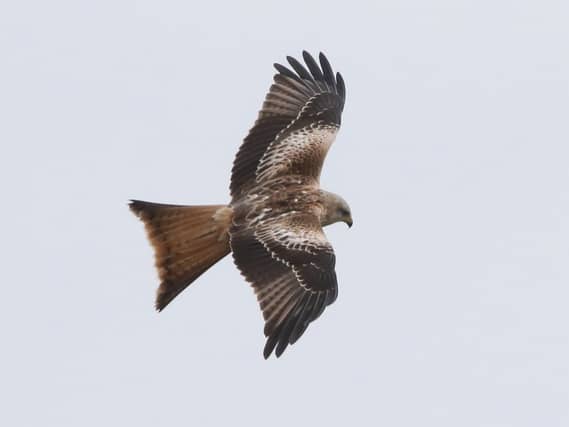


The long, bent wings beat lazily, the rakish body twisted and turned.
Then another, cloud high above the first. A near dot, yet the shape was unmistakeable. And another, soaring like some malevolent vulture in a Wild West movie.
Red kites, among the most spectacular of our birds of prey: a Lazarus species brought back from the very brink of extinction.
Yet this dramatic aerial display didn’t take place above remote moorland, it wasn’t played out in some dense, vast forest or close to a mountain range’s peaks.
I watched the kites circle from the comfort of my conservatory. And my village, which straddles the Shropshire-South Staffordshire border, is a mere nine miles from Wolverhampton’s diesel driven heartland.
In fact, two were recently seen above the city centre. That is the measure of the kite’s amazing return, one of British conservation’s great success story, partly made possible by millions spent on re-introduction programmes.
And nowhere is that success story more evident than in Shropshire, where kites have swept across the county from their last remaining 20th century stronghold – the oak woodlands of mid-Wales.
In the 1970s, when journalism restricted my birdwatching breaks, finding red kites required a trip to the Elan Valley and stop-off at the market town of Tregaron, Ceredigion. And there was no guarantee of a fruitful journey.
In the bus pass years of my retirement, I pondered morris dancing, but feared repeated thwacks to the head from pig bladders may further harm my already faltering memory.
I also feared repeated thwacks to the head may further harm my already faltering memory.
Instead, I have tightened my embrace with ornithological. And red kites, realising my driving skills and footwork are in terminal decline, have come to me. I no longer have to trudge through a sodden, sheep strewn landscape to meet them.
Last week was not an isolated encounter. In the past months and years, kites have frequently graced my picturesque parish.
Jeff Knott, RSPB operations director for Central England, underlined the extent of the phoenix from the ashes triumph: “In the 1980s, anyone who wanted to see a red kite had to make a dedicated pilgrimage to a handful of locations. Today, it is a daily sight for millions of people.
“In just a few decades, we have brought an endangered species to the UK, home to nearly 10 per cent of the world’s population. This could be the greatest species success story in British conservation history.”
They are here and here to stay. And if you, too, have been privy to the same performance that was played out above my back garden, please share pictures.
I need pictorial proof to stop pinching myself. I need to know this invasion is really happening.
And it’s happening at near breakneck speed, said West Midlands Bird Club chairman Roger Broadbent.
Kites didn’t raise young in Staffordshire until 2021. Now there are at least half-a-dozen nesting pairs.
“They are progressing eastwards to the point where they have nested close to Ingestre, seven miles from Stafford,” Roger said. Warwickshire and Worcestershire also have populations growing like topsy.
Roger added: “Along the traditional West Midland conurbation, in 2022 there were 91 records from 52 sites. The year before there were 42 from 21 sites. That highlights the expansion. They’re all over the West Midlands.
“They are fantastic birds to look at with the manoeuvrability, that tail acting like a rudder.”

Local conservationists have a vision which is now close to a reality. They see streets in Wolverhampton, Dudley, Shrewsbury and Telford where kites mingle alongside established feathered food thieves such as gulls, pigeons and crows.
That was how it was in the distant days when the large raptor was common. Shakespeare’s Coriolanus describes London as “they city of kites and crows”.
“It could well happen,” said Ray Davies, honorary member of West Midlands Bird Club. “It is a possibility because they are scavengers – they rarely take live prey and there is enough roadkill to sustain them.”
It’s a heady ambition for a bird that was once dead and buried, a goner.
Some sources claim that by the early 1930s, only two breeding pairs remained – both in mid-Wales.
By 1967, the Welsh population had swelled to 20, 50 in 1988, 80 in 1992. Suddenly, the kite’s crawl to safety became a sprint and there are now believed to be 6,000 breeding pairs in Britain.
It’s a journey kites have not made entirely under their own steam. Numbers have been bolstered by costly projects to bring them back to areas where they once flourished, the first in the Chilterns in 1989.
Shropshire has never been the setting for such a scientific helping hand, yet the county has become a stronghold. It is now firmly established as kite country.
After a Shropshire absence of 130 years, a single pair fledged two young in 2006. Once the species had a talons-hold on its new territory, there was no stopping the welcome invasion.
There are now so many kites, it has become difficult to produce accurate details of breeding success. Monitoring all nest sites is near impossible.
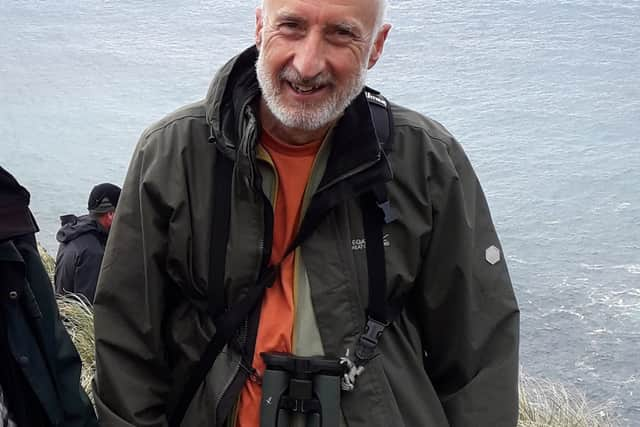
“Latest figures - for 2022 - show 67 breeding pairs,” said John Martin, Shropshire Ornithological Society bird recorder, “but I would think it’s now over 100.
“It is absolutely meteoric and there are plenty of parts of the county where there is room for a lot more. It’s a rare, good news story. The hills in the south west, there are kites all over the place.
“And it doesn’t matter how many times you see them, you still think, ‘wow – a kite’. There is still raptor persecution, and I don’t think Shropshire has a particularly good record when it comes to that.
“But kites haven’t really been a part of that. You get birds killed by poison put down for foxes and vermin, but gamekeepers and shooters don’t mind them. They don’t see them as a threat.”
Red kites certainly possess the all-important “wow” factor needed for a successful wildlife “save it” operation. The public love them and thousands of tourists gather at feeding stations, notably Gigrin Farm, Rhayader, where up to 600 can descend when the dinner gong sounds.
The question is how a bird that is so adaptable and happy to scavenge scraps, as widespread magpies and crows do, became such a rarity?
The speed of its recovery shows the ingredients needed for kites to thrive have always existed and possibly in more abundance over the last 50 years: an increase in traffic has seen a sharp rise in roadkill.
Everyone who has travelled the M40 knows kites don’t mind noisy highways heaving with vehicles.
The answer is persecution. Relentless persecution.
In medieval times, residents were happy to share their cobbled streets with kites. They saw them as nature’s street cleaners, removing food waste that would otherwise fester and spread disease.
The RSPB’s Duncan Orr-Ewing said: “This was a species that thrived on the poor sanitation of the time, and we know they were common even in central London.”
But attitudes changed as cities and towns grew and food became scarcer and more expensive. Henry VIII introduced the Vermin Law which placed a bounty on some pests and kites were among that rogues’ gallery.
Shakespeare added to the bad press by giving them a villainous image. They were treacherous: King Lear dubs his deceitful daughter a “detested kite”.
They were thieves: “When the kite builds, look to your lesser linen.”
Farmers also wrongly believed they took lambs.
They became wildlife public enemy number one. They were slaughtered, being declared extinct in England in 1871 and driven from Scotland eight years later.
By the time attitudes changed, red kites were just one bird away from the Last Rites. Incredibly, genetic testing has shown the majority of mid-Wales’ current, booming population stems from a single female.
That means by the early 1930s there was just one female capable of raising young. The end was a single gunshot away.
Luckily, the general public began to realise what it was about to lose in the mid 20th century, although reviving the Welsh population was a slow process.
It wasn’t until the beginning of the 1980s that a corner was truly turned. In 1989, attention turned to returning the red kite to other areas.
Initially, there were two sites – the Chilterns and on the Black Isle, near Inverness. Over a number of years, 90 young birds were released in each territory: the Chilterns’ population sourced from Spain, the Scottish one from Scandinavian.
Both projects were hugely successful – the Chilterns so much so that over a decade later 68 birds from the area were used to bring back red kites to West Yorkshire.
And, ironically, with red kite numbers now plummeting in Spain, Chilterns birds may be sent to that country.
Red kites have now been re-introduced to: Rockingham Forest, Northampton (1995), central Scotland (1996), Harewood Estate, Yorkshire (1999), Dumfries and Galloway (2001), Derwent Valley (2004), County Down (2008).
They have what it takes to thrive on this crowded island – and they’ve grasped the opportunity to prove it free from persecution.
Once threatened, now thriving, kites will, I’m sure, one day be an ever present in West Midlands towns and cities.
And one day, I’m sure, this paper will run with the headline: “Red kite nicked my kebab.”
Then I’ll really know the bird is truly back for good.