
Raw sewage released in open water in Staffordshire and the Black Country for 10,900 hours last year
Raw sewage was released into open water in Staffordshire and the Black Country thousands of times and for 10,900 hours last year, figures show.
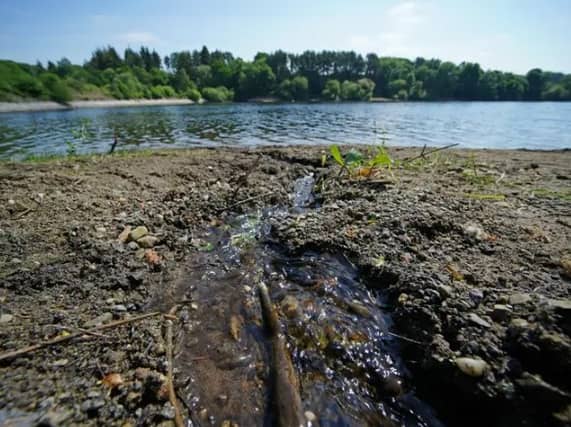


Storm overflows normally happen when the sewage system is at risk of being overwhelmed – such as after a heavy rain, or during higher levels of groundwater.
In such cases, water companies may need to release excess water and sewage into rivers and the sea, to prevent water backing up into the streets and people's homes.
This has an impact on the quality of natural water sources, with some charities alleging storm overflows are being misused and under-reported.
Figures from the Environment Agency show storm overflows were used 3,120 times within local authority boundaries in the Black Country and Staffordshire in 2022, discharging for a total of around 10,900 hours.
All of these spills were from Severn Trent Water's network.
The figures relate to local authority boundaries within Walsall, Wolverhampton, Sandwell, Dudley, Cannock, Stafford and South Staffordshire.
Of these areas, storm overflows were used the most times in South Staffordshire at 723, discharging for 3,437 hours.
However, the figures may not provide a full picture of the amount of water pollution in the area as sites may also be impacted by overspills from areas they share water sources with.
The Rivers Trust said it was particularly concerned by storm overflows being used during hot periods.
Tessa Wardley, director of communications and advocacy at the charity, said: "Discharging untreated sewage in dry weather is bad for both human health and river health – lower river flows mean more concentrated pollutants at a time when more people want to enjoy their rivers.
"Although a problem in their own right, these discharges are also the ‘canary in the coalmine’ pointing to greater problems in our sewerage and river systems. This could be blockages in the system, groundwater seeping into broken pipes, misconnections, or just poor management choices," she added.
She urged "robust, urgent action" on sewage and river management to help tackle the climate crisis and threats to biodiversity.
Severn Trent Water saw 44,765 overspills across its network in 2022, with 99 per cent of the company's facilities reporting overspill data last year.
In total there were more than 300,000 overspills across England in 2022 – a 19 per cent reduction on more than 370,000 in 2021, although this may have been the product of weather conditions rather than improved infrastructure.
Water minister Rebecca Pow said the amount of sewage pumped into rivers is "utterly unacceptable", but promised that the Government has a plan to tackle pollution.
She said: "Targets set by the Government to reduce storm overflows are very strict and are leading to the largest infrastructure programme in water company history – £56 billion over the next 25 years.
"Shortly, water companies will also publish action plans for every storm overflow in England, something the Environment Secretary has personally pressed for."
An Environment Agency spokesperson said: “We are conducting our largest ever criminal investigation into potential widespread non-compliance by water and sewerage companies at thousands of sewage treatment works. Our tough enforcement action has already led to over £150m in fines since 2015.
“We will always pursue and prosecute companies that are deliberately obstructive or misleading – and work constructively with those driving improvements.
“We are also improving how we regulate the sector – including expanding the number of officers focused solely on regulation, increasing compliance checks and recruiting more data specialists able to translate storm overflows monitoring data into stronger regulatory intelligence.”
Gareth Mead, river ranger manager at Severn Trent said: “We understand why people feel let down by water companies when it comes to rivers and we know what needs to be done to make it right, and we’re doing it.
"We’re delivering an industry-leading plan that includes bold commitments, such as by 2030 our operations will cause no harm to rivers.
"In the first year of this plan, we’ve reduced our impact by a third, but we know there’s more to do, which is why we’re continuing to invest hundreds of millions of pounds into making rivers the healthiest they can be.
"Environment Agency data shows that 86 per cent of the reasons for rivers not achieving good ecological status is down to other sectors such as agriculture and road run off, with 14 per cent attributed to Severn Trent. For Staffordshire, Severn Trent is responsible for 20 per cent of reasons, with 80 per cent other factors.”
Comment Guidelines
Iconic Media encourages reader discussion on our stories. User feedback, insights and back-and-forth exchanges add a rich layer of context to reporting. Please review our Community Guidelines before commenting.