
Easter messages: Bishops speak of troubled times and how resurrection of Jesus points to hope

At a time of international strife and cost of living issues, the region’s Bishops have spoken of hope for the future in their Easter messages.
The Bishops of Worcester and Lichfield have spoken about the current issues affecting the world, but also about the story of Jesus’s resurrection and hanging onto hope in their Easter messages to communities across the West Midlands.
The Bishop of Worcester, Rt Rev. Hugh Nelson, and The Bishop of Lichfield, Rt. Rev. Michael Ipgrave, have both penned their messages ahead of Easter, marking the period of time where Jesus was crucified, then resurrected on the third day.
In what is his first message as Bishop, Bishop Nelson spoke about the story of Jesus Christ, the flow of power and punishment and how, in a world full of violence and injustice, the Easter season can promise hope and mercy for all.
In what will be his last Easter message as Bishop before he retires in September, Bishop Ipgrave spoke about the power of waiting, how Jesus’s disciples hid because of their fear of what would happen next, freedom of belief and and people should be able to work and live with everyone.
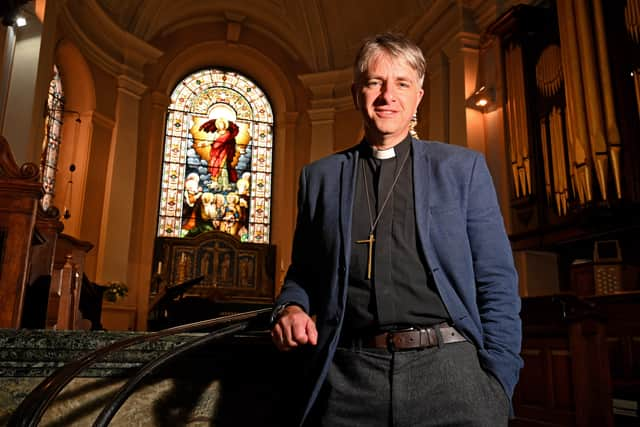

The Bishop of Worcester, Rt. Rev. Hugh Nelson
“Let’s be clear; people who have been crucified do not come back to life.
“The first followers of Jesus in the first century knew it and we know it now. When someone is crucified, that is definitely the end.
“But the heart of the Christian faith; the living, beating heart of what Christians believe, is that Jesus Christ, a human being like you and me, was crucified, died and then rose again.
“And that impossible truth, that Jesus rose from the dead, marks the moment when the usual pattern of things, life followed by death, was turned upside down.
“And from that reversal of what’s normal, flow other truths that turn the world upside down.
“For instance, it looks ‘normal’ that powerful people who are in charge get to have the final word – but all the power of the Roman Empire didn’t manage to keep Jesus dead.
“Or it’s normal to think that punishment is the right response to injustice and wrongdoing, but the risen Jesus didn’t seek out those who had failed him and nailed him to a cross. Instead, when he meets people, he forgives them and gives them back their dignity.
“Or it seems normal that suffering, sin and evil always have the loudest voice in our world, but Jesus’ resurrection promises that their power has been defeated and that there are more important voices at work. The voices of hope, generosity and courage, for instance.
“In a world in which violence, injustice and suffering seem so normal, the resurrection opens the door to a new normal and to an alternative pattern of life.
“Easter tells us that the horrors of war in Ukraine, unimaginable suffering in the Middle East and poverty in our own communities, are not normal and never will be.
“Easter cries out that homelessness and mental illness are not inevitable and never will be.
“Easter promises us that hope, forgiveness and mercy are available – that they are the normal that God longs to see.
“The risen Jesus says: ‘I have turned what you thought ‘normal’ upside down and started a revolution of hope. Join me and let’s build a new ‘normal’.’
“I pray that you will know the new ‘upside down normal’ in your own lives and in your communities and that, seeing the revolution of hope at work, you’ll join in.
“Happy Easter and God bless.”
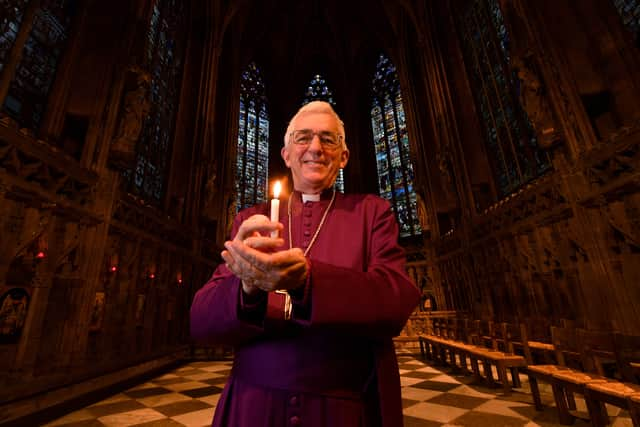
The Bishop of Lichfield, Rt. Rev. Michael Ipgrave
“It’s been a frustratingly long wait for the new life of Spring this year especially for most of us who cannot simply get away to a tropical beach.
“Snow has been falling in Lichfield, and also in Canterbury where I was recently with my brother and sister bishops from here, from across England and also from around the world at the joyous installation of our new Archbishop, Sarah, which just made the wait feel longer.
“It has been a long and patient wait for the start of the Archbishop’s ministry, but coming as it did just ahead of Easter, her arrival makes me reflect that the three day wait between Good Friday and Easter Sunday must have felt much, much longer to early followers of Jesus.
“They didn’t know what they were waiting for, they didn’t even know that they were waiting.
“They didn’t all know the good news that we now know from the Bible. How could they? It hadn’t been written down and almost everybody that we know Jesus revealed his identity as the Christ the Saviour to, he told in secret.
“We do know that early followers had the Old Testament prophecy about Jesus, foretelling his character and his role.
“What the scriptures written later recorded was the disciples recognising him as the Messiah and that he had to die and rise again.
“There was speculation, expectation and controversy about who Jesus was, what he had come to do and whether he was a wicked fraud or the real thing throughout his life.
“There were those who wanted God’s saviour to be a conquering hero who would sweep all before him. There was speculation that he had not really died, but had merely gone far away, two mediaeval myths found in both England and India.
“The story which two billion follow throughout the world, told in the catholic creeds shared across the churches, was hard fought for and has survived the myths and blips.
“Christian faith has influenced our common life and is our heritage. How do we now protect its authenticity, all too aware of the need to stand against distortions of what we have shared for centuries?
“For example, claiming that the heritage of centuries of Christianity allows us to dominate and exclude others in public is jarringly out of step with who we are.
“Were our Easter walks of witness or the beating of the bounds to be acts asserting that only Christian enjoyed such privileges, they would be acts of domination themselves; but that is not at all what Easter is about.
“The freedoms to practise in public the Christian faith come from our understanding of ourselves as a nation, informed by Christian faith, wrought over centuries.
“Our freedom of belief and conscience arises out of our understanding of the value of each individual to live their life and live it fully because it is of infinite value and they are infinitely loved by God.
“The freedom arises from our deep understanding of who we are, not from the application of an identity label.
“We express a generous faith in which we see that our freedoms guarantee the freedoms of others too.
“To do otherwise would place us in the position of asserting that some people are of greater value than others.
“That would be the opposite of what Christ died and rose again for. I wish you, as you reflect on that, the joy of the resurrection this Easter.”
Comment Guidelines
Iconic Media encourages reader discussion on our stories. User feedback, insights and back-and-forth exchanges add a rich layer of context to reporting. Please review our Community Guidelines before commenting.