
'The day I came face to face with Goering' - Stourbridge war veteran's role in the Nuremberg trials
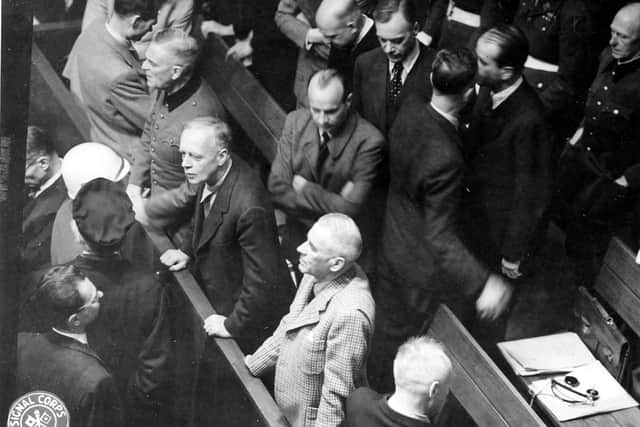
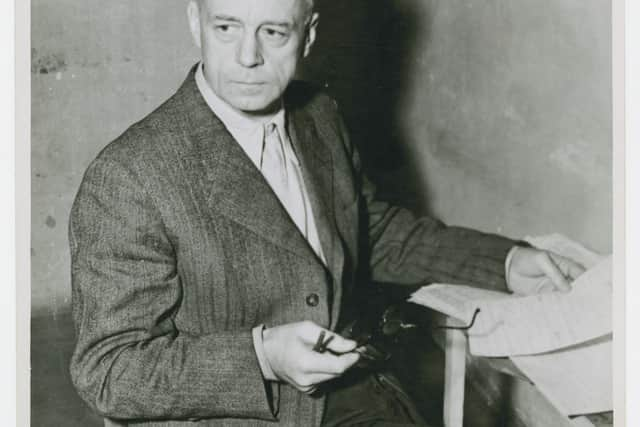
For years, Joachim von Ribbentrop had portrayed himself as the respectable face of Nazi Germany.


The suave diplomat, fluent in several languages, who travelled the world as Hitler's personal envoy.
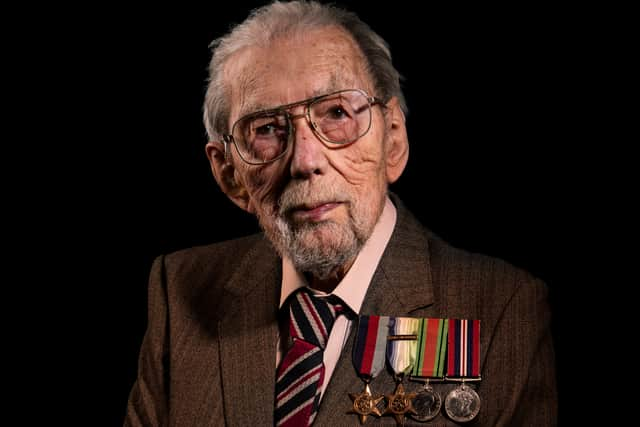
That's not how John Haddock remembers him. The 102-year-old war veteran from Stourbridge came face to face with the Nazi war veteran during the Nuremberg trials, and recalls how captivity and criminal charges appeared to have given the famously pompous Nazi foreign minister a reality check.
"He was pretty impassive, stony-faced," recalls John, one of the last living people to have witnessed the historic hearings in the aftermath of the Second World War.
"He was not very animated at all. Everything had to be said in German, and translated into English, so it was a long, drawn-out process."
It was the same with Karl Doenitz, Hitler's successor and the last president of Nazi Germany. He also saw Rudolf Hess, Hitler's dutiful deputy who was disowned by the regime following his bizarre peace mission to Scotland in 1941.
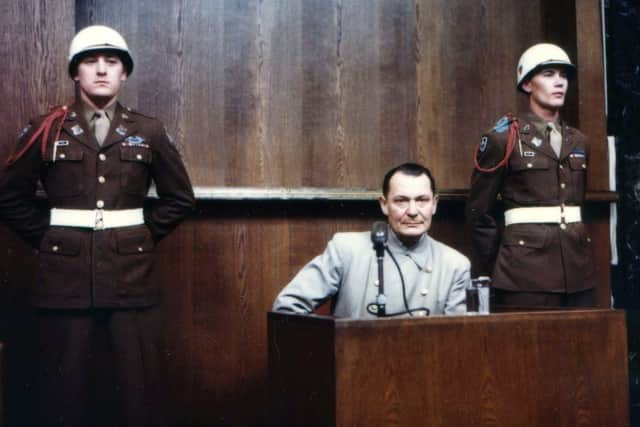
But it was Hermann Goering who proved the biggest draw - in more ways than one.
"Goering was the main one," he says. "He was an important man, he was second-in-command to Hitler.
"He was a big man, and he didn't move much. He just got fatter and fatter as the trial went on, he just sat there."
Ribbentrop and Goering, responsible for so many deaths during the war, would pay for their crimes with their own lives, the latter taking his own life while awaiting execution. Doenitz was sentenced to 10 years in prison, publishing his memoirs on his release in 1956, while Hess died at Spandau prison in 1987.
So how did John, a 23-year-old lad from Wednesbury, come to see history being made?
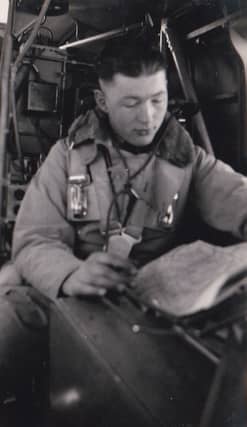
Fascinated by aircraft since childhood, he volunteered as a 19-year-old to join the RAF, where he eventually became a navigator and rose to the rank of Flying Officer. Like most men who served to the end of the war, there was quite a delay before demob.
"I was given quite an interesting job after the war finished," he says. "I became a messenger, I used to carry the official reports from the Nuremberg trials back to London.
"I had the chance of going to the Nuremberg courts, watching the top Nazis sitting in the dock being tried.
"It was quite an eerie experience in a way. We got read stories about them committing atrocities in the period before and during the war.
"It was a big court, and they were sat in a special room, protected by a glass window. We were sat behind the window, watching the whole court."
John's fascination with planes began when his father took him on a visit to Wolverhampton.
"The visit, as it happened, was to see an air display at an airfield," he recalls. "I believe it may have been Pendeford, but I'm not sure. It was they used to call a flying circus, one of those little companies of aeroplanes flying from one part of the country to another, performing stunts, and giving rides to the public in their modern, up-to-date biplanes. After that, I was always interested in aircraft."
John completed his training in Canada, before returning to Britain, where he was initially stationed on the east coast.
"We started our operational work flying Bristol Beaufighters, we would regularly fly over Holland, Germany, Denmark and Norway," he says.
"Then D-Day came along, and we were sent down to the south coast, to RAF Manston in Kent. Our job was to patrol up and down the Channel, before, during and after D-Day, looking for enemy ships.
"The Germans had what were called E-boats, they were very fast movers, and had torpedoes. Our job was to try to stop them harassing our fleet. We operated at night, which was a bit scary if they shot at us. You couldn't see much unless there was a bit of moon."
He describes sitting on his helmet to protect himself from enemy fire, dropping bombs on the boats below.
It wasn't just the enemy he had to worry about, either, with 'friendly fire' always a danger, particularly in the dark.
"I'm pretty sure that happened a couple of times, twice when we were dealing with both British and American ships. The Americans had big ships, and they used to be a bit trigger happy."
A sense of youthful bravado helped them through it.
"It was all very exciting really, most of the lads were my age, we were all about 18-22. But if something happened to someone, particularly if it was someone close to you, that brought it home. I remember once seeing one of my friends' plane go down, that was quite hard to watch. But we didn't dwell on it, we had to just get on with it."
After the invasion, John was sent up to Scotland, where he remained until VE Day. He recalls the end of hostilities as being something of an anti-climax.
"We all knew the war was coming to an end, and it was a case of 'what do we do now?'," he says.
Three days after VE Day, John and his squadron were given the task of returning Crown Prince Olav to Norway after five years in exile.
"There were the usual hazards of flying, but at least no one was shooting at us," he says.
After demob, John went to work for the newly formed MEB, initially in the commercial department, before training at Tipton Technical College as an electrical engineer. He has a son John, 67, and daughter Barbara, 62. Now partially sighted, he is able to lead an independent life thanks to support from the charity Blind Veterans UK.
He was told he would be awarded the Legion d’Honneur medal by the French Government on his 102nd birthday last autumn.
Comment Guidelines
Iconic Media encourages reader discussion on our stories. User feedback, insights and back-and-forth exchanges add a rich layer of context to reporting. Please review our Community Guidelines before commenting.