
'My husband put the Krays behind bars – this is how it happened'
"Ronnie and Reggie, get in the van."
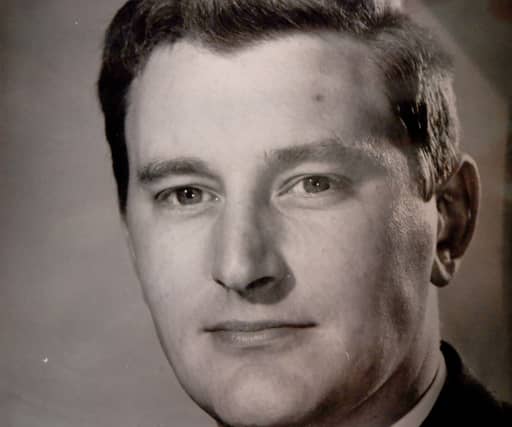


Those are the words that Alan Wright, the police officer who arrested the Kray twins, would find himself repeating for the remainder of his life, as people would inevitably ask him what he said to them.
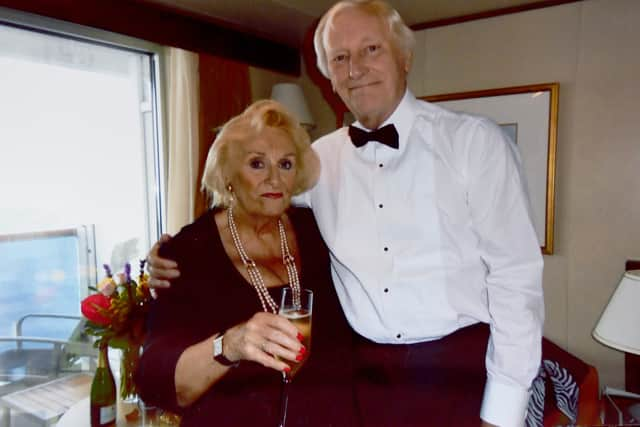
"They didn't say anything back to him, but they wouldn't, would they?" says his widow Patricia, at her idyllic home in a tranquil backwater of Wolverhampton.
Alan would go on to enjoy a successful and varied career, rising to the rank of chief superintendent, briefing then home secretary David Blunkett, and advising the emerging democracies of Eastern Europe on policing in a free society. But it was always the Krays that people wanted to talk about.
So what were they like?
It is not unknown for police officers to form a bond, or at least a degree of mutual respect for the men they put away, but there was never any such charity displayed towards the Krays. Far from the romantic media portrayal in the 1960s, Patricia says Alan never had anything but disdain for the men who kept much of the East End under a reign of terror for many years.
Alan, who was a keen golfer, died from a heart attack, aged 81, at South Staffordshire Golf Club in Tettenhall last year. To mark the first anniversary of his passing, Patricia is sponsoring a prize in his memory at the club's Vardon Bowl competition on August 31.
A detective sergeant at New Scotland Yard, Alan was actually the longest-serving detective on the case, being assigned to a hush-hush inquiry on its launch in 1967, and remaining on the case until their conviction in 1969.
Working on the investigation was something of a cloak-and-dagger existence.
They weren't based in Scotland Yard, but at Tintagel House, a somewhat nondescript office block on the banks of the River Thames.
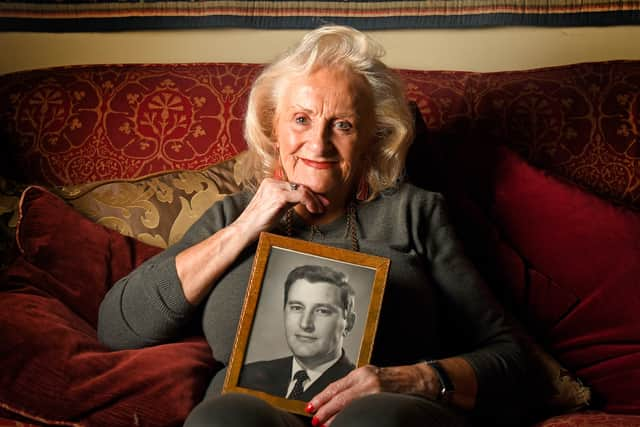
"They were there so the other officers wouldn't know what they were up to," says Patricia.
"They wanted a secret headquarters, to ensure that nothing could get back to the Krays, it was important that it kept as secret as possible."
It was not a job for the faint-hearted, and Patricia recalls one particular incident which could have gone badly wrong.
"Alan was one of the first officers to use earpieces, when they first came over from America in the 60s," she says.
"One day he was on undercover observation at Leicester Square station, with an earpiece in his ear to receive instructions. Who should he find standing next to him but Reggie Kray? He said it was very frightening, had he spotted the earpiece it could have been very nasty."
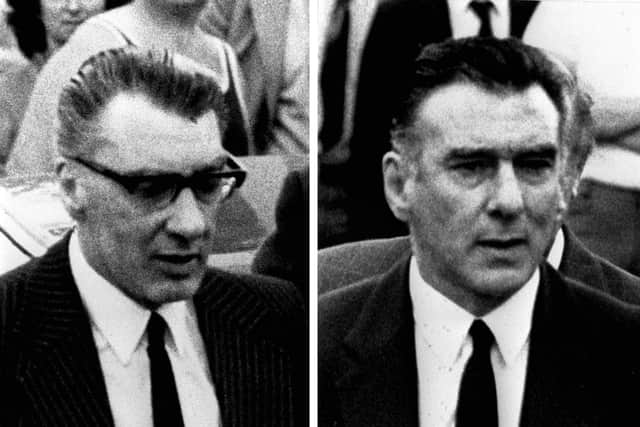
The Krays were often likened to Chicago crime boss Al Capone. But in an interview he gave before his death, Alan suggested that the Krays were less courageous than their reputation suggested.
"There is a comparison between the Krays and Capone to be found at the level of fear that each generated," Alan recalled.
"They were capable of instilling fear in those foolish enough to cross them, and they certainly made my hair stand on end on at least one observation where I thought I had been identified.
"However, that the Kray gang were somewhat less fearsome than their transatlantic counterparts is probably borne out by the story that when they were confronted by Americans with machine guns when they tried to assume protection of a London gaming club, the Krays simply turned tail and departed.
"In this respect, they may have been somewhat less fearsome than some recent UK gangs."
But while they may not have had the bravery of the American gang bosses of the 1930s, the Krays were keen to emulate their style.
"They were ostentatious. They were always to be seen by their minders. They were immaculately dressed and their self-conception was clearly that of gangsters on the American model. This was not surprising, since they were in personal contact with organised crime leaders in the US."
With just under seven years in the job, Alan was promoted to the rank of detective sergeant at Scotland Yard, and two weeks later as posted to the Kray inquiry. The investigation was headed by Det Chief Supt Ferguson Walker, who was by that time approaching retirement, and supported by Det Sgt Leslie Emment.
"Progress was slow, although, although the inquiries expanded through 1967," said Alan. "Although we believed we would eventually be able to successfully prosecute the Kray brothers and their associates, we had few witnesses to the murder cases. The murder of George Cornell in the Blind Beggar pub in the East End proved particularly difficult because of a lack of witnesses.
"The murders of Dartmoor inmate Frank Mitchell, whose escape had been engineered by the Krays, and Jack 'The Hat' McVitie had both occurred since the investigation team had been formed, and were proving equally intransigent. We were accumulating a large amount of information, but many of the key people were simply unwilling to provide firm evidence while the Krays were free."
Chief Supt Leonard 'Nipper' Read took charge of the operation, and the team was expanded to include a number of officers who had worked on the investigation into the rival Richardson gang.
The team saw the Krays' associates as the weak link. And so it proved, with the targeting of Canadian-born banker Alan Cooper proving their undoing.
Cooper, whose misdemeanours included an LSD factory, trading in stolen bearer bonds, and fencing the proceeds of a large Hatton Garden bullion robbery, saw his status eroded and his influence weakened by a string of arrests. The Krays tested him by contracting him to murder Soho nightclub owner George Caruana. Cooper hired his sidekick Paul Elvey to do the job, but Elvey was arrested boarding a flight in Glasgow with a briefcase full of explosives. A search of his home and car uncovered a crossbow, harpoon, and a briefcase containing a hypodermic syringe. Cooper and Elvey agreed to give evidence against the Krays, and in May 1968 Alan had his big moment when he arrested the twins, who were sentenced to life in prison.
"Thereafter, the floodgates opened," he said. "Witnesses to the Blind Beggar shooting, to the McVitie murder and Frank Mitchell killing were secured. Witness and jury protection became a big operation."
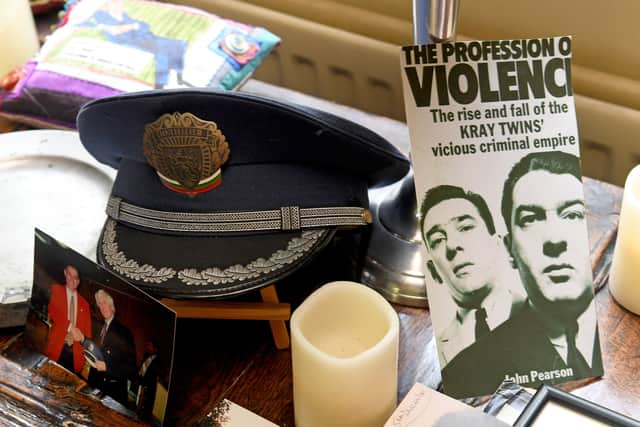
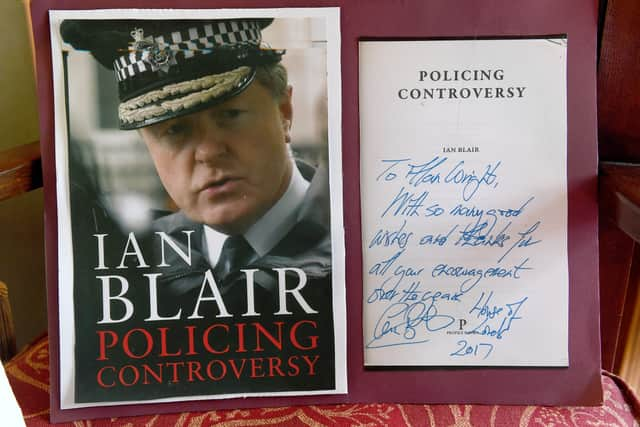
After the convictions, Alan rose through the ranks, eventually taking the role of chief superintendent. One of his proteges was a young, Shropshire-educated inspector called Ian Blair, who went on to become Commissioner of the Metropolitan Police and now sits in the House of Lords.
While still serving with the police, Alan embarked on a degree in politics and philosophy, graduating from Southampton University in 1980. After retiring from the force in 1985, he embarked on an academic career, completing a PhD on political communication, also at Southampton, in 1989 becoming a senior research fellow at the Henry Fielding Centre for Police Studies at Manchester University. The collapse of communism in Eastern Europe also saw him in demand as an expert on how to reform the police in countries such as Poland, Hungary and Bulgaria. He went on to become a senior lecturer at Staffordshire University, making his home in Wolverhampton, and becoming a stalwart of the South Staffordshire Golf Club in Tettenhall.