
Cheering crowds for Churchill visit 75 years ago
He came, he saw, and he gave the V-sign to the thousands of cheering Wolverhampton folk who turned out to greet him.
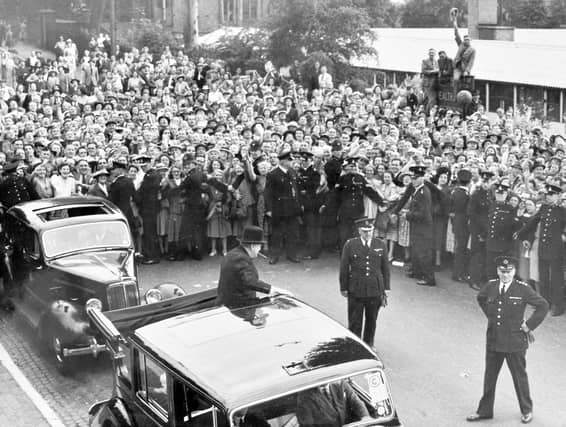

That political visit 75 years ago must rank as among the most notable in Wolverhampton's history with huge crowds welcoming Winston Churchill, the wartime leader.
The date was Saturday, July 23, 1949, and Churchill had chosen the town, as it was then, for what we would today call a keynote speech on party policy at a rally of Midlands Conservatives.
Churchill had flown in to Wolverhampton Municipal Airport at Pendeford from Biggin Hill in his own aircraft, a silver de Havilland Dove called Columba, which touched down 10 minutes late and taxied to the front of the aerodrome clubhouse. With a newly-lit cigar in his mouth, he waved from inside the aircraft.
As he drove in an open car to the town hall he stood up in the back and took off his hat to wave to the large crowds lining the route. At the top of the town hall steps he stopped to wave to the crowd and give them a V-sign – that is, as in V for victory.
During a 15-minute visit to the town hall he signed the distinguished visitors book and was presented by the mayor with an autographed copy of "The Book of the Century," published to mark the borough's centenary.
The crowds grew denser in North Street, and when he left to drive to the Victoria Hotel by way of North Street, Queen Square, and Lichfield Street for lunch with members of his secretariat, a tremendous cheer went up.
Just as he was entering the hotel a sudden rush by the crowd broke the police cordon. People patted Churchill on the back, shouting "Good old Winston." An enterprising photographer took a snap of some trademark accessories which he temporarily put aside while enjoying his lunch at the hotel – hat, gloves, light malacca cane, and cigar.
Then after lunch it was on to the "Molineux Grounds," as Wolves' home was called back then. By now Churchill had changed out of the grey suit and soft grey hat he had arrived in and was wearing more formal attire of black coat, striped trousers and black hat. When he and Lord Woolton, chairman of the Conservative Party, took to the specially-built platform shortly before 3.30pm the crowd cheered loud and long, and some rang bells, before all joined in singing Land of Hope and Glory.
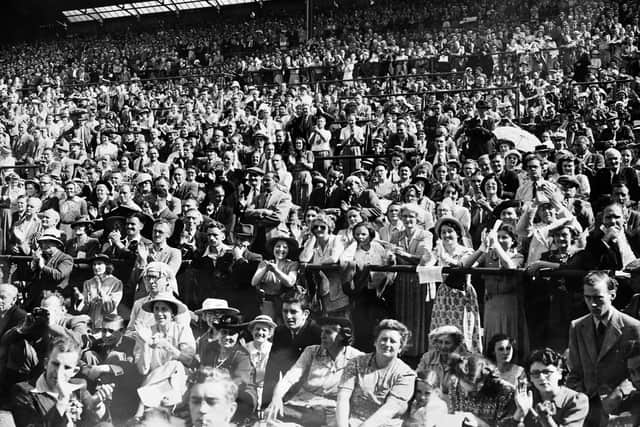
The weather was perfect, with the sun shining brilliantly from a cloudless sky. The attendance was variously put at "25,000" or "nearly 30,000." The only official figure was that 35,000 tickets were sold.
Churchill – he became Sir Winston Churchill in 1953 on his knighthood – was at the time the leader of the opposition, after the Tories had been ousted from office in a Labour landslide in 1945.
At the time of his Wolverhampton speech there was a feeling that a general election was coming in the autumn of 1949. In fact, the general election did not come until February 1950.
Comparisons with today's political situation are tenuous, but of interest from his wide-ranging speech, which contained a heavy dose of socialism-bashing, was a claim that nationalised British Railways was probably heading for a loss of over £20 million.
"Every major industry which the socialists have nationalised, without exception, has passed from the profitable or self-supporting side of our national balance sheet to the loss-making debit side," he said.
On European affairs, he said Britain was the inspirer and guide of Western European unity.
The main aim of all Conservative policy, Churchill told the crowd to thunderous applause, was "to restore the greatness of Britain."
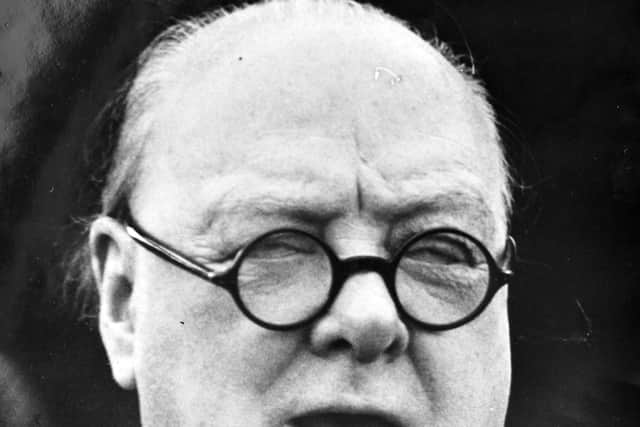
And of course not everybody was enthusiastic about his visit. Outside the Victoria Hotel members of the Labour Party handed out leaflets, and on walls along the Stafford Road, near Dunstall Park railway station, anti-Churchill slogans were chalked, one reading: "Churchill is a man who will cut our social progress."
After his speech Churchill left Molineux at about 5.30pm and returned to the airport to fly home.
Labour would cling on to office in the 1950 general election, before going down to election defeat the following year despite winning the most votes.
Winston was back.
Comment Guidelines
Iconic Media encourages reader discussion on our stories. User feedback, insights and back-and-forth exchanges add a rich layer of context to reporting. Please review our Community Guidelines before commenting.