
Black Country Origins: This is the woman who gave Wolverhampton its name
In this series, the Express & Star is taking a deep dive into the origins of some of our region’s place names.
Wolverhampton is one of the most recognisable names in the Black Country, with its origins stretching back more than 1,000 years.
Today, it is a name known around the world thanks to its football club, while generations of people have simply shortened it to “Wolves”.
But despite that famous nickname, the story of how Wolverhampton got its name has nothing to do with the animal. Instead, it can be traced back to an Anglo-Saxon noblewoman who first stepped foot on the land more than a millennium ago.
Lady Wulfrun, sometimes known as Wulfruna, was a wealthy landowner who lived during the 10th century.

In 985, King Æthelred II granted Wulfrun land at a place known as Heantun, an Anglo-Saxon settlement which already existed in the area.
Nine years later, in 994, Wulfrun gave land to establish or support a church at Heantun, which is closely associated with the site of the present-day St Peter's Collegiate Church in the centre of Wolverhampton.
Wulfrun became so closely linked with the settlement that her name was added to its existing name.
It became known as “Wulfrūnehēantūn” – essentially Wulfrun's Heantun – which gradually developed into Wolverhampton over the centuries.
So despite the city's modern nickname of “Wolves”, the “Wolver” in Wolverhampton has nothing to do with the animal.
Wulfrun herself appears in a small number of records from Anglo-Saxon England.
She is believed to be the same Wulfrun who was captured during a Viking raid on Tamworth in 943, although there is some uncertainty over parts of her life.
Her family was also important in Anglo-Saxon England. Her son Wulfric Spot was a major landowner, while another son, Ælfhelm, became ealdorman of Northumbria.
More than 1,000 years later, Wulfrun's connection with Wolverhampton can still be seen around the city.
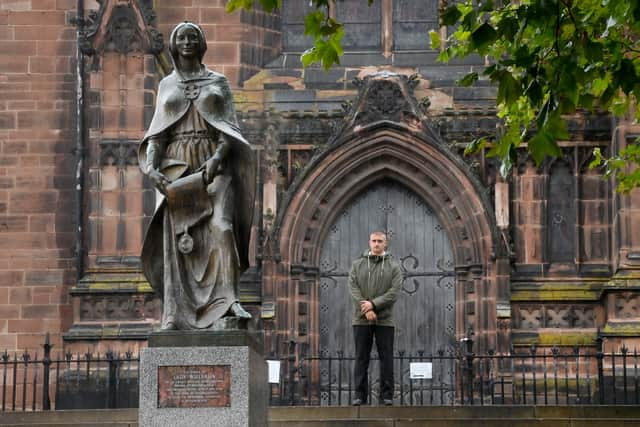
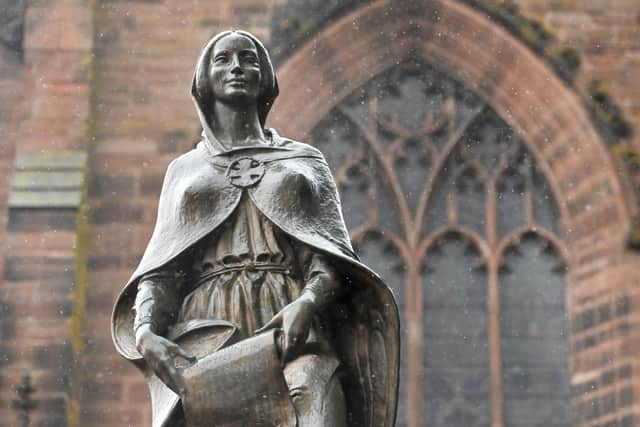
A statue of her stands outside St Peter's Church, showing her holding the charter connected with her gift of land.
The statue, created by Wolverhampton-born sculptor Sir Charles Wheeler, was erected in 1974 to mark the centenary of the Express & Star.
Her name also survives in places including Wulfruna Street and the Wulfrun Hall.
There have been other theories about the origins of Wolverhampton's name, including a suggested connection to the Mercian king Wulfhere.
However, the generally accepted explanation is that the city takes its name from Wulfrun and the earlier settlement of Heantun.
It means that every time someone says Wolverhampton, they are using a name with roots stretching back more than a millennium – and remembering the Anglo-Saxon woman who helped shape the early history of the city.
Comment Guidelines
Iconic Media encourages reader discussion on our stories. User feedback, insights and back-and-forth exchanges add a rich layer of context to reporting. Please review our Community Guidelines before commenting.