
Black Country origins: I visited the little spring that gave Sandwell its name
In a new series, the Express and Star will be taking a deep dive into the origins of some of our region’s place names
It is a name now associated with six towns, a proud Black Country identity and a borough of more than 300,000 people, but the story of Sandwell’s name begins not with industry, canals or Victorian terraces – but with a spring of water.
Tucked away in what is now Sandwell Valley Country Park are the remains of Sandwell Priory, a Benedictine monastery founded in the late 12th century.
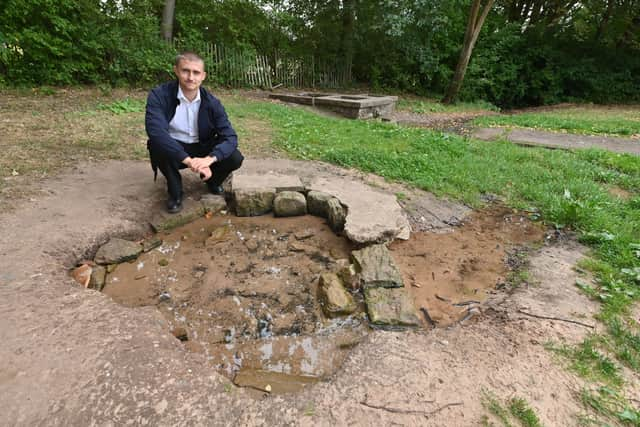

Historic England records that the priory was established on the site of a holy well known as “Sand Well”, a name recorded in the priory's foundation charter.
The simplest explanation for the name is remarkably literal.
“Sand” referred to the sandy ground, while “well” denoted a spring or source of water. A historical study of Staffordshire place names described Sandwell as the “sandy spring,” and that spring which gave the place its name still exists today.

There is, however, more to the story than a convenient description of the landscape.
Before the priory was established, the spring appears to have been an important enough feature to attract religious activity to the secluded spot.
The priory's foundation charter specifically mentions the holy well, providing a direct link between the medieval water source and the name that survives today.
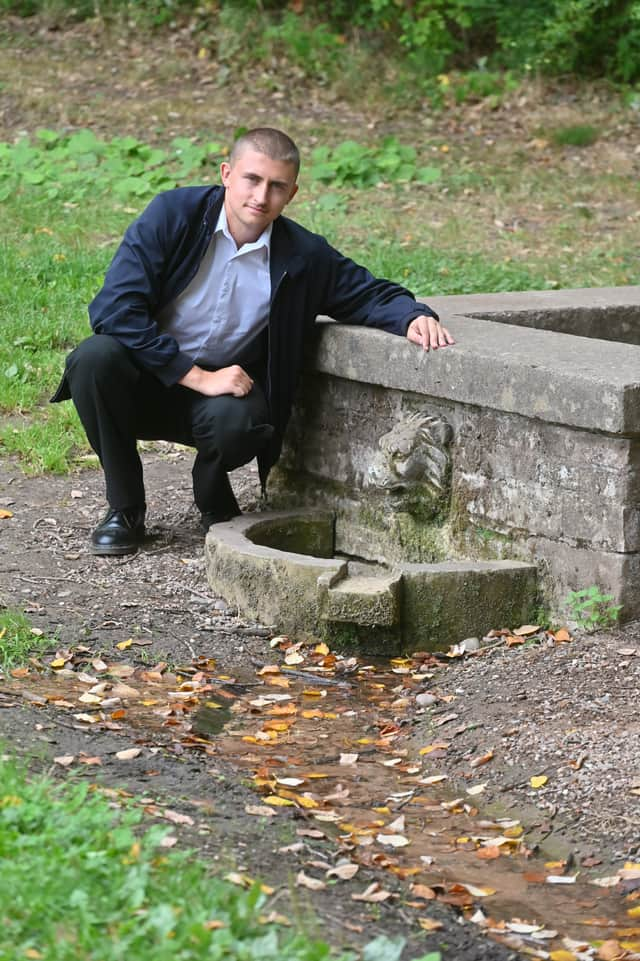
The monastery subsequently became known as Sandwell Priory, and although it was dissolved in 1525, the name survived.
Sandwell Hall was later built on the former priory estate, ensuring that “Sandwell” remained attached to the landscape for centuries.
Then, in 1974, the name took on an entirely new significance.
The newly created metropolitan borough brought together communities including Oldbury, Rowley Regis, Smethwick, Tipton, Wednesbury and West Bromwich.
Rather than taking the name of one of its larger towns, the new authority was named after the much older Sandwell Priory and estate.
That decision was not always universally accepted.
In 2002, Sandwell Council held a consultation on whether the borough should retain its name. Although a sizeable proportion of respondents favoured alternatives – particularly West Bromwich – the majority backed keeping Sandwell, and the name remained.
So when residents today say they live in Sandwell, they are using a name with roots stretching back to medieval England – one that began with a spring bubbling from sandy ground that still exists today.
Comment Guidelines
Iconic Media encourages reader discussion on our stories. User feedback, insights and back-and-forth exchanges add a rich layer of context to reporting. Please review our Community Guidelines before commenting.