
'Unsustainable' rising costs force hospice to make redundancies
A city hospice has been forced to make significant redundancies after rising costs which it said was unsustainable.
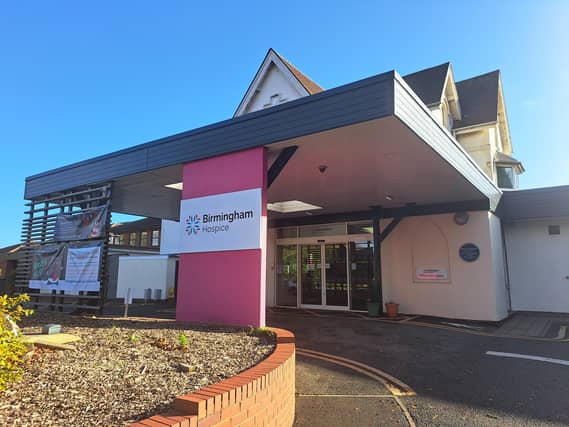


Birmingham Hospice has announced that due to the rising costs and an estimated £2.4 million deficit budget this year, the charity is being forced to reduce its number of inpatient beds and cut the equivalent of 45 full-time roles, around 14 per cent of its overall workforce.
It said that the last few years have seen big increases in its costs, including the price paid for energy, food and drugs, and the funding it receives from the NHS has not risen at the same rate.
As the gap between costs and income continues to rise significantly, senior leaders from Birmingham Hospice have called crisis talks with NHS commissioners to negotiate additional funding.
Simon Fuller, CEO of Birmingham Hospice, said: “The prospect of having to make highly skilled specialist end of life clinicians and support staff redundant is totally unpalatable.
"We are doing everything we can to support all our hospice colleagues through this difficult time.
“Birmingham Hospice has been working with Hospice UK and other hospices nationally to seek support to address the financial challenges across the sector.
"The problem has been discussed in Parliament; but the current administration has passed the problem to local commissioners who have not been able to provide additional funding.
"Reducing hospice services is bad for the people of Birmingham, the health care system, and those who will be affected by the proposed redundancies.
“There is a growing need for palliative and end of life care and the NHS is unable to meet the huge demands on its beds.
"Most people do not want to die in hospital and hospices provide outstanding services that support people to die in a place of their choosing.
“Amanda Pritchard, CEO of NHS England, outlined at the NHS ConfedExpo in June how better end of life care in the community could free up NHS bed spaces equivalent to building three new hospitals.
"If this is to be realised, then surely better funding of hospice services is a must.
"All we can hope is that, after the election, we will see a sensible discussion on the future of hospice care.”
Since Birmingham Hospice was formed in 2021 from the merger of Birmingham St Mary’s Hospice in Selly Park and John Taylor Hospice in Erdington, it has already made significant cost savings by merging management and support staff roles.
The hospice also made further efficiency savings earlier this year, which resulted in a small number of posts being made redundant.
Birmingham Hospice said it will continue to campaign for fair funding for hospices locally and nationally but, in the absence of any additional support, is not able to delay these difficult decisions any longer.
Lucy Watkins, income generation director at Birmingham Hospice, said: “I’d like to thank those in the community who have supported us over many years.
"We need your support now more than ever, and this year saw the launch of our Crisis Appeal which has once again seen people give what they can to help us.
“Our current situation is no reflection on the generous support we receive, and is entirely down to a lack of government funding for the hospice sector.
"While this shortfall cannot be covered by fundraising alone, we are hugely grateful for everyone’s support, whether that is through donating to us, taking part in one of our events, or visiting one of our shops.”