
Five big reasons the local elections in Birmingham are the most unpredictable yet

Councillors believe the upcoming Birmingham local elections are the most predictable to have ever been held in the city
Birmingham is now just weeks away from an all-out council election which is being regarded as one of the most important in the city’s history.
And numerous councillors across the political spectrum agree that this is also the most unpredictable election they have ever been involved in.
It comes at a critical moment for the city, which has suffered the impacts of an ongoing bins strike as well as the shockwaves of the council’s financial crisis.
Labour will be looking to keep control of the council in a fractured political battleground that could fully embrace five-party politics as well as independent candidates providing a sixth option.
A huge array of issues, from waste collection and potholes to Gaza, are also dominating the conversation on doorsteps across the city.
It means the future of Birmingham City Council, one of the largest local authorities in Europe and responsible for a huge array of services, looks very difficult to forecast.

One possibility is the council ending up in no overall control, which would require coalitions or compromise to push through policies.
Here’s a look at why the outcome of the election on May 7 is hard to predict in Birmingham – and what it could mean for the city.
1) Bins strike haunts Labour
“I think their actions have so far massively damaged their [Labour’s] chances of retaining the council in May,” Unite organiser Michael Agboh-Davison said back in January.
“If we get into the election period in May and [the bins strike] is still going on, I think the effect on Birmingham Labour will be apocalyptic.”
Mr Agboh-Davison’s comments came just days after the Birmingham bins strike dragged on into its second year, following months of unwanted headlines and tales about ‘cat-sized rats’.
It’s now around 470 days since the industrial action first started and residents in some areas remained frustrated over the state of their roads, the lack of recycling collections and the impact on the city’s reputation.
The bins strike dispute between the council and Unite the union was initially triggered over the loss of the Waste Recycling and Collection Officer role.
Striking workers have claimed they face a pay cut of £8,000 but the Labour-run council has disputed this figure and insisted that a fair offer had been made.
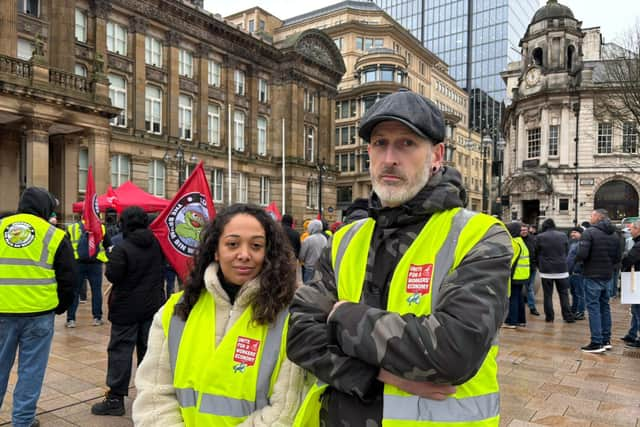
Unite has been attempting to put pressure on the council in the build-up to the election as this dispute rumbles on by holding protests; doorknocking residents and putting up signs calling for an end to the strike.
Labour candidates will be trying to convince voters they offer fresh ambition for the city after recent turbulence – but the bins strike may be an obstacle in their way.
According to a recent poll by ITV News Central and More in Common, almost six in ten people (59 per cent) said resolving the strike is one of their top priorities and more than half (51 per cent) said they oppose the way the council has handled the dispute.
The survey of 871 residents also found that more people said they side with Unite (28 per cent) than with the council (16 per cent).
The anger and exasperation over the strike has been clear in recent weeks as the election approaches.
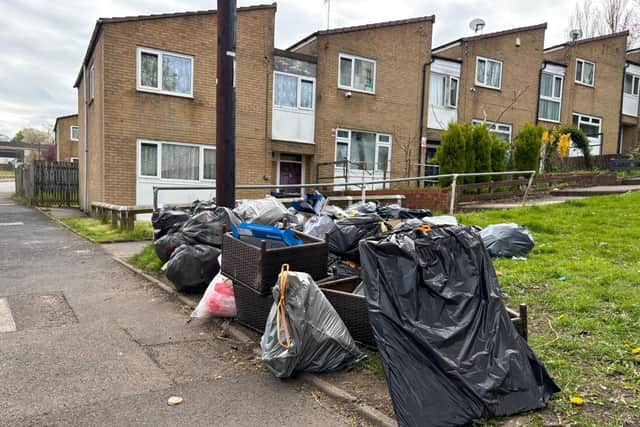
“It’s disgusting,” one Druids Heath resident said earlier this month, referring to a pile of bin bags metres away from his home.
“The council does not care.”
He went on to tell the Local Democracy Reporting Service [LDRS] that he had voted Labour before in the past but would not do so again on May 7.
“They’re [Labour] going to lose a lot of seats,” he said, making a bleak prediction for the party. “I am not going to vote for them – definitely not.”
“There’s rats – they’re bigger than the cats,” Selly Oak resident Catherine Zinetti also said back in March.
“Why should we have to pay petrol money to take the rubbish to the skip when we’re paying our council tax?
“We’re meant to be the second biggest city in England, it’s a disgrace – absolutely disgusting.”
She added that she cannot have her grandchildren visit due to the state of her street, adding: “That hurts me to the core.”
Birmingham Council leader John Cotton was recently quizzed about the bins strike – here’s what he had to say.
2) Tories and Lib Dems say they can ‘fix’ Birmingham
The Conservatives are currently the second largest party on Birmingham council and will be attempting to convince voters that they have the experience to ‘fix Birmingham’.
But the Tories have struggled in recent years and lost councillors in last year’s local elections.
Councillor Robert Alden, leader of the Conservatives at Birmingham Council, was asked back in March about his party’s chances amid frustration towards mainstream parties and the competition from Reform.
“Birmingham is a very different place to the counties which had elections last year,” he said. “The demographics of Birmingham are very different and the Local Conservatives have a strong record in the city.
“The worst thing that could possibly happen for Birmingham now is a group of people with no experience, who don’t understand the problems that have happened here, coming in because they simply don’t have the solutions.”
He also suggested that residents voting for “minor parties” could also end up in a “coalition of chaos” running the council.
“We’re clear we’re fighting to win 51 plus seats, that’s what we need to take control of the council,” Coun Alden added.
Birmingham’s Liberal Democrats have also argued that they can “rebuild” the city and are pitching themselves as a ‘positive alternative’ to Labour.
Speaking in Birmingham earlier this month, Lib Dem leader Sir Ed Davey slammed Labour’s ‘failure to do the basics right’ as well as Reform’s ‘divisive politics’.
Asked by the LDRS whether his party would be open to a coalition with either Labour or the Conservatives in Brum, he said: “Roger Harmer [the leader of the Birmingham Liberal Democrats] has basically said he doesn’t want to do a deal with Reform.
“Reform is completely opposite to our values and we won’t touch them.
“I’ll leave it to Roger to decide what happens after the votes are counted.
“But the best way to make sure we have a strong, new, fresh, non-Reform council in Birmingham is to vote Liberal Democrat.”
“I think the first step is to see what the electorate gives us,” Coun Roger Harmer said. “We’ll see what we’re given, work with that, and try to create a stable administration that can deliver.”
The role these two parties could play then in the future of the council, whether as part of a possible coalition or not, remains to be seen.
3) Greens ‘increasing ambition’
The Green Party has said it is ‘increasing ambition’ in Birmingham after enjoying a surge in membership under leader Zack Polanski.
They only have two councillors in Brum currently but the Greens will be among the opposition parties and candidates looking to make gains amid a rising tide of frustration among voters.
“We’ve seen a surge of support nationally and we’re seeing that reflected on the doorsteps in Birmingham,” Birmingham Green councillor Julien Pritchard told the LDRS.
“We have increased our ambitions and increased them again […] – and we’re confident we’ll see an increase in seats.
“If people want things to get better […] then voting Green is the best way to ensure you’ve got community champions and councillors that are going to be fighting to give hope back to Birmingham.”
4) Reform eyeing first council seats
Reform UK will be fighting to win their first council seats in Birmingham after the party’s success in last year’s local elections.
“Birmingham is well and truly broken,” party leader Nigel Farage said earlier this year, pointing to the city being ‘bust’ and rubbish ‘piling up in the streets’.
“Birmingham needs reform and I dare say on May 7, Birmingham is going to get Reform,” he said.
Reform is confident of making gains in several Birmingham areas and recent election forecasts suggest they could end up being one of the biggest parties on the council.
But they have also faced accusations of promoting ‘divisive’ politics by other parties, with Birmingham Labour leader John Cotton arguing that Reform does not have a “positive agenda for changing things in this city”.
Both the Liberal Democrats and Green Party have also suggested they will not go into a coalition with Reform.
Reform has previously insisted however that it wants to represent people of all backgrounds and faiths.
5) Independents hopeful of political ‘shake-up’
A vast array of independents in Birmingham are optimistic about gaining votes from disillusioned residents.
These include pro Palestine candidates, who are keen to highlight the frustrations of those who are deeply concerned by the Labour government’s response to the Israel-Gaza war.
According to the recent More in Common poll, more than a quarter of voters (27 per cent ) said conflict in the Middle East will affect how they vote.
But also in the mix are independent councillors who quit Labour amid financial turmoil as well as other community activists, who are optimistic they can provide a ‘fresh voice’ on the council.
“I think now is the perfect time for independents really because I think national politics is in the gutter,” independent candidate and campaigner James Cross told the LDRS.
“We’re very used to having the same people with the same policies, the same agenda.
“I do think now it’s time to shake it up a bit and have different voices with different thoughts, ideas and suggestions – rather than the same people over and over again.”
Birmingham specific issues such as the equal pay and Oracle debacles contributed to the council’s financial woes while Labour councillors have pointed the finger at funding cuts during the Tories’ time in government.
Labour council leader John Cotton has also said the council is no longer ‘bankrupt’ and that an extra £130 million is being invested in council services, focusing on “cleaner, safer streets”.
Comment Guidelines
Iconic Media encourages reader discussion on our stories. User feedback, insights and back-and-forth exchanges add a rich layer of context to reporting. Please review our Community Guidelines before commenting.