
Birmingham to play key role in pioneering brain tumour test that could cut diagnosis time to 24 hours


The new technology could dramatically reduce the time patients and their families spend waiting for answers
Patients with brain tumours could receive a diagnosis in less than a day thanks to a pioneering NHS testing programme being rolled out with the help of Birmingham experts.
The rapid genomic test, which can identify the type of brain tumour a patient has in up to 24 hours, is being expanded across England following a successful pilot in Birmingham and Nottingham.
The new technology could dramatically reduce the time patients and their families spend waiting for answers, with the current diagnosis process taking an average of 26 days.
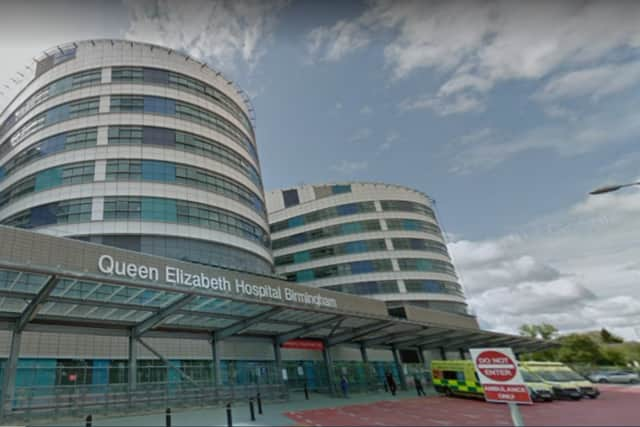
Experts from the University of Birmingham and Queen Elizabeth Hospital Birmingham will play a leading role in the two-year programme, which has received £2.1 million in funding from NHS England.
Brain tumours are notoriously difficult to diagnose and treat, with more than 100 different types ranging from slow-growing tumours to aggressive cancers.
Currently, patients undergo MRI and CT scans before a tumour sample is extracted and sent to a pathology laboratory for testing, with the process potentially taking weeks.
The new test could not only provide a diagnosis within 24 hours but also allow surgeons to identify the type of tumour while a patient is still undergoing an operation.
Dr Victoria Wykes, Associate Clinical Professor of Neurosurgery at the University of Birmingham and Honorary Consultant Neurosurgeon at Queen Elizabeth Hospital Birmingham, described the technology as a major breakthrough.
She said: "Achieving a rapid diagnosis of brain tumours represents an absolute game-changer for our patients.
"It will reduce the time that patients and their loved ones have to wait to understand what the life-changing diagnosis means and accelerate the speed of accessing treatment, therapies and clinical trials.
"The test can also allow surgeons to receive the diagnosis during operations to remove tumours, enabling them to tailor the surgery according to the tumour type while the patient is still in theatre."
The Birmingham team will lead work examining how the new test can be introduced into everyday NHS clinical practice, including evaluating its cost-effectiveness and providing genomic training.
The University of Birmingham and Queen Elizabeth Hospital already have the infrastructure needed to rapidly analyse tumour samples during surgery, thanks to their existing research into brain cancer.
Dr Wykes, who is also Clinical Lead of the new Network of Excellence for Rapid Diagnosis in Brain Tumours, said the city's expertise would be vital to the programme.
She added: "Partners across Birmingham’s Health and Life Sciences Quarter will come together to play a vital role in leading the clinical operational delivery of this new genetic test within the NHS, evaluating its use in clinical settings where it will hopefully have incredible results for patients in Birmingham and the Midlands."
For one Birmingham mother, the prospect of a faster diagnosis is particularly significant.
Shalina, 45, a mother of two, waited six weeks to receive a precise diagnosis after undergoing tests for a suspected brain tumour.
She said: "When I was undergoing tests for a suspected brain tumour, the wait was agonising. I waited six weeks to get a precise diagnosis for my tumour.
"With a young family, life had to go on, but living with the uncertainty was incredibly difficult.
"It was hard at times to carry on as normal as my husband and I decided not to tell anyone until the results had arrived, as we knew they would have so many questions that we would have been potentially unable to answer."
Shalina was eventually diagnosed with a low-grade tumour and has since undergone treatment.
She added: "I was fortunate that my results came back showing that the tumour was low-grade, I have since undergone treatment, and I’m doing well.
"For those people whose tumours are more advanced or harder to treat, any reduction in time to diagnose means that steps can be taken sooner to give them the very best chance of recovery.
"You cannot underestimate how important this is to families affected."
The NHS pilot will initially introduce the technology at five specialist centres, including University Hospitals Birmingham, Nottingham University Hospitals, Great Ormond Street Hospital, King's College Hospital and Newcastle Hospitals.
Further genomic laboratory sites in Bristol, Oxford, Leeds and Manchester will join during the second phase.
The programme is being delivered through a newly established Network of Excellence, with clinical leadership from the University of Birmingham and University Hospitals Birmingham, and scientific leadership from the University of Nottingham, where researchers developed the test, and Nottingham University Hospitals.
The aim is to establish whether the technology can be successfully introduced across the NHS, with a view to eventually making it available at all neuropathology centres in England.
Dr Wykes said: "Through the strength of our network, we will seek to validate the effectiveness of the tools for rapid genomic diagnosis of brain tumours, and determine how we make rapid diagnosis work in the real world.
"By the end of the programme, we will be able to make recommendations for the tools to be commissioned by the NHS, helping to unleash the full potential of this new test."
Comment Guidelines
Iconic Media encourages reader discussion on our stories. User feedback, insights and back-and-forth exchanges add a rich layer of context to reporting. Please review our Community Guidelines before commenting.