
A new theatre rises from the ashes - a look back at the West Midlands in the 1930s
Mark Andrews takes a look back through the decades to mark the Express & Star's 150th birthday. Today it is the 1930s.
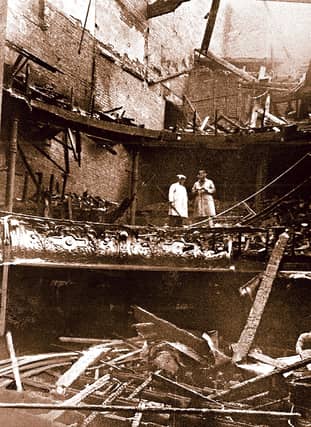


Just after 2am on November 1, 1936, Bob Kennedy did a final tour of the Dudley Opera House before locking up for the night. The theatre had just hosted its final performance of Pleasures of the Night.
All the guests and staff had gone, so Bob – son of the theatre’s owner Ben Kennedy – headed home for some much needed rest. A policeman walked past about 4.30am, and all appeared to be well. But an hour later, passer-by John Nicholls noticed smoke rising from the building, and summoned the fire brigade.
The firemen only had to come a short distance, from nearby Priory Street, but by the time they arrived the building was well alight. The seat of the fire seemed to be around the auditorium, and proved difficult for the fire crews to reach. The fire appeared to have started in the gallery, above the upper circle, and burning debris was crashing down onto the area below. The height at which the fire was taking place meant it was difficult for the firemen to get at the flames. Eventually a member of the Kennedy family arrived on the scene, and led a group of firemen to the roof of the Plaza cinema next door, which they also owned, allowing the hoses to be directed down towards the fire.
By 7.30am, the fire was well under control, but the theatre was damaged beyond repair. Bob Kennedy pledged to rebuild the theatre, even if it cost £50,000 to repair, and expressed his sadness that the theatre’s staff of 30 would lose their jobs. He said a whole season of booked productions would now have to be cancelled.
The Kennedys moved swiftly to replace the Opera House, submitting plans for approval the following May, and with construction work starting three months later.
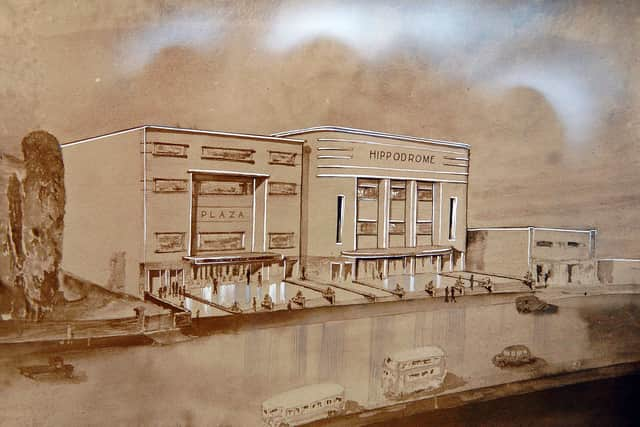
Within 16 months of the fire, the grandiose Dudley Hippodrome was ready to open its doors on December 19, 1938. With a capacity of 1,752, it was bigger than any other theatre in the region, and from its state-of-the-art air conditioning and heating, to its neon lighting, everything was ultra-modern and on a grand scale.Dudley Joel MP declared the theatre open, having been handed a golden key. Wimbledon champion Dorothy Round was also in the audience, along with deputy mayor Alderman J L Hillman, architect Archibald Hurley Robinson, and builder A J Crump. There was also a young man called John Bullas, who recalled: “Despite the fact that it was a bitterly cold night, the house was packed to capacity. “Those fortunate enough to obtain a ticket for this momentous occasion will always treasure the memory.”
Troubles
However, the opening of the new theatre would do little to mask the much darker troubles simmering away in the background.
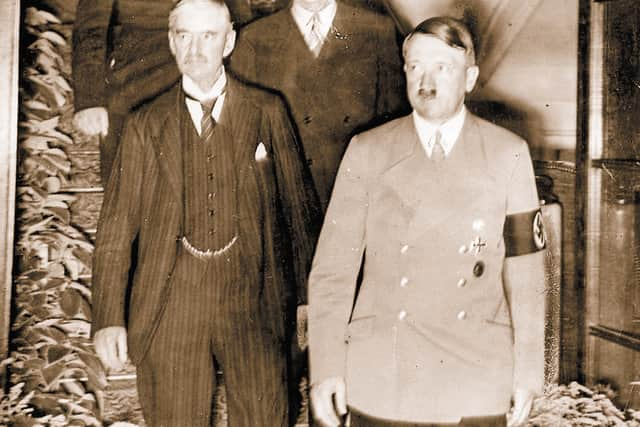
Tensions had been growing in Europe ever since Adolf Hitler’s National Socialist German Workers’ Party, commonly nicknamed the Nazis, took control of Germany in 1933. Prime Minister Neville Chamberlain, along with his French counterpart Edouard Daladier, attempted to contain Hitler’s aggression. In September 1938, the Birmingham-born PM returned from Munich to a hero’s reception, having averted war by striking a peace treaty which ceded the Czech Sudetenland to the Nazi regime. Hitler promised that the treaty had satisfied his ‘final territorial demand’, and that his regime could live peaceably in the future with the rest of Europe.
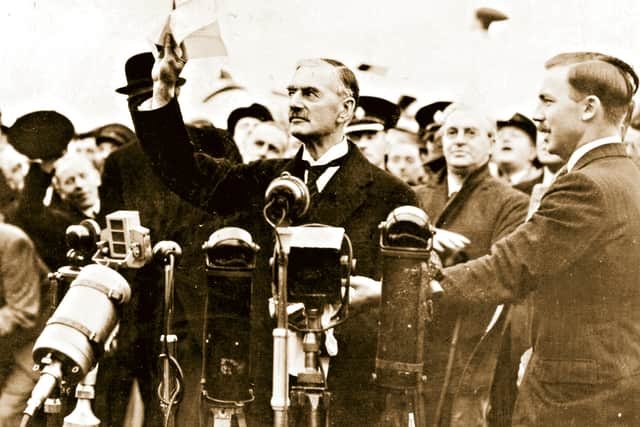
The fragile peace would not last even a year. Hitler stunned the world by striking a pact with Communist Soviet leader Joseph Stalin, which led to the pair invading Poland.
On September 1, 1939, Germany – supported by Slovakia – attacked Poland from the west, leading to an inevitable confrontation with Britain and France, which had both pledged their allegiance to Poland.
Chamberlain gave Hitler a deadline of 11am on September 3 to withdraw his troops, an ultimatum which Hitler ignored. Fifteen minutes later, in a sombre broadcast to the nation, Chamberlain delivered the sombre news that Britain was at war with Germany.
A new dawn for the Express & Star, and an unhappy deputy mayor
April, 1933, and the deputy mayor of Stafford was not happy.
"I have been a reader of this paper for well-nigh 50 years, and therefore I expect I shall be accused of belonging to the old school," he wrote.
"I am afraid that the news on the front and back pages will have the tendency to make people lose sight of many more important items of news, news of an educational character, interesting and cheerful, contained on the inside pages."
On April 3, 1933, the Express & Star saw the most radical shake-up in its history, and not everyone was pleased.
If the 1920s had seen Malcolm Graham battling to bring the Express & Star into the modern age, the 1930s would be his big chance to put his plans into practice.
In 1932, the 31-year-old was appointed general manager of Midland News Association, with his 60-year-old father and 61-year-old uncle gradually taking back seats. In April the following year, the dramatic revamp saw the Express & Star transformed along the lines of the newspapers Mr Graham had worked on in Canada: news on the front, sport on the back, and classified advertising relegated to the inside pages. The new-look paper also featured the day's radio programmes, a daily women's feature, a serial story and a children's picture.
The reaction was mixed. Alderman J H Tunnicliffe was not impressed, and there were those who thought that if The Times continued to carry adverts on its front page, why did a provincial newspaper think it knew better? But Wolves manager, Major F C Buckley took a more positive view: "From my point of view, and that of the man who wants to read the day's sporting news, printing this on the back outside page is an excellent arrangement."
The mayor of Walsall, Councillor W Dean, also saw the merit in the new format.
"I think it is a splendid evening paper because it gives all the local news and covers the current events of the world.
"News is never shown at its best inside a paper. I offer my congratulations to the proprietors on the big improvements which had been made."
The new era also brought in a new generation of journalists under dynamic news editor Brian Whiteaker, who was promoted to editor in 1937. These included Wilfred Byford-Jones, who Malcolm Graham observed writing a news report with one hand, while dictating another down the telephone. He used the pen name Quaestor for his foreign war dispatches, which he transmitted back by telegram. In January, 1934, Byford-Jones got wind about a mysterious employee at the Henry Meadows engine factory in Wolverhampton using a false name. Sure enough, he tracked the man down to a cafe – and stunned rival newspapers by securing an interview with Lawrence of Arabia, who was in town on undercover business.
As circulation soared, the newspaper began to outgrow its premises. To mark the paper's diamond jubilee, in 1934 the company commissioned a £14,000 rebuild of its Queen Street headquarters, creating the now-familiar Romanesque stone frontage. New offices opened in Shrewsbury, Dudley, Bilston and Walsall, the company built up a fleet of motorised vans, and also acquired a motorcycle and sidecar to speed up deliveries from Bloxwich to Walsall.
Hitler in the Rhineland? What about Wolves and Albion?
When Hitler's troops occupied the Rhineland in 1936, sub-editor Leslie Duckworth was summoned at dawn to get the news on the streets as quickly as possible. Sports editor George Gillott was less impressed, believing the paper should have focused more on the bread-and-butter matters: "Don't you think it's time you started the Wolves and Albion?" he interjected.
Little did he know the impact Hitler's aggressive foreign policy would have on both the newspaper and the region. On September 3, 1939, the normal Sunday calm was shattered by the sound of the presses rattling in Queen Street. Following Hitler's invasion of Poland, Prime Minister Neville Chamberlain set the German leader an ultimatum: withdraw immediately, or Britain would be at war with Germany. The British Prime Minister received no such reply. The Express & Star's last building project of the 1930s would be for the construction of an air-raid shelter.
Comment Guidelines
Iconic Media encourages reader discussion on our stories. User feedback, insights and back-and-forth exchanges add a rich layer of context to reporting. Please review our Community Guidelines before commenting.