
580 acres of Sandwell's green belt classed as ‘grey’ – but most can’t be used for homes
Around 580 acres of Sandwell’s green belt would be classed as new ‘grey’ belt under law changes
Around 580 acres of Sandwell’s green belt would be classed as new ‘grey’ belt under law changes but council planners say most of the land could not be built on.
Sandwell Council was forced by the Government to review its entire green belt to determine whether it would meet the new ‘grey’ belt definition for housing.
The new ‘grey’ belt would consist of “poor-quality or ugly” parts of the protected land, which have been previously developed, to be used for new homes – half of which would have to be affordable – as well as promises to make infrastructure improvements and provide public green space.
But while the protected land – equal to around a third of the borough’s Sandwell Valley Country Park – would fall under the new definition, most of it would be unsuitable for new homes, a senior planning officer recently told councillors.
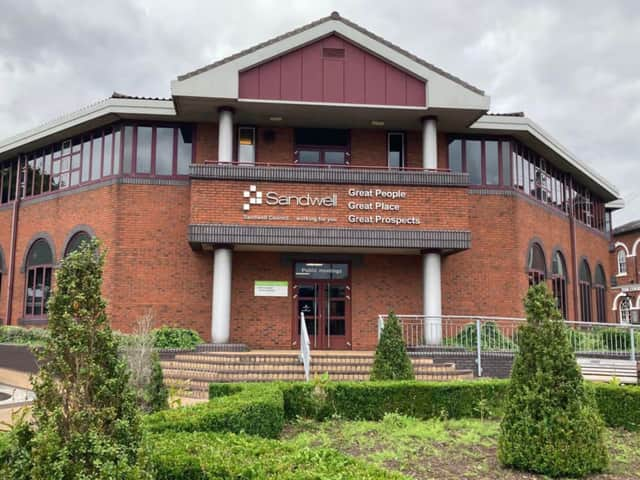

Andy Miller, the council’s strategic planning and transportation manager, said large parts of the green belt lie on a flood zone which meant they could not be built on, while other parts of the green belt include registered parks and gardens, Dartmouth Cricket Club, Sandwell Park Golf Club, as well as areas protected for nature conservation and even a sewage works.
The majority of the land is also owned by Sandwell Council.
Reform UK councillor Connor Marshall, who represents the Old Warley ward, asked whether protecting established green spaces in Sandwell would remain a priority.
Mr Miller said: “The short answer is yes. The degree to which that protection exists will very much depend on the streer that we, as officers, receive from the cabinet ultimately.
“Certainly there are very few green spaces proposed for development in the plan that is about to be adopted and I wouldn’t envision that changing in the new one.
“So there are sites that people will be aware of the sites that are in the plan that are green spaces and those sites will be carried forward into the new plan unless we get a political instruction not to.
“Evidence suggests they are required and when you look at those housing need figures they are huge and other authorities would expect us to look at our own green spaces before going to them and say build on yours.
“But certainly it is our intention that we keep it to an absolute minimum and the current plan bears that out. 97 per cent of the new homes are on brownfield sites and I don’t envisage the new plan being different from that.”
Under the law changes, around 28 per cent of Sandwell’s green belt – mainly to the northeast of the borough around Sandwell Valley – which had previously been built on could be redefined as ‘grey’ belt.
Sandwell’s green belt was established in 1975 and designed to limit the growth of large built-up areas and prevent large towns from merging into one.
Sandwell Council said just three per cent of the homes earmarked for the borough in the next 15 years would be built on green space.
Mr Miller had earlier told the economy, skills, transport and environment scrutiny board that more than half of the 26,000 homes needed in Sandwell could not be built even if ‘every piece of available land in the borough’ was used.
Sandwell Council could build just 45 per cent of the 26,000 new homes required by 2041 under government-calculated housing targets because it only has enough space for just 11,900 homes.
The council is currently working on its latest local plan which will set out where development will take place across the borough until 2044.
This is in spite of the fact the council is yet to adopt the local plan it started work on in 2022 after years of delays.
The council was forced into drawing up a new local plan because the existing one could not meet up to 80 per cent of the borough’s housing need.
Work began on the new local plan in January and is expected to replace its much-delayed predecessor in 2029.
Comment Guidelines
Iconic Media encourages reader discussion on our stories. User feedback, insights and back-and-forth exchanges add a rich layer of context to reporting. Please review our Community Guidelines before commenting.