
We visited the HS2 works in Birmingham to see the 'Viaduct Slide' - and we couldn't believe our eyes
The HS2 works in Birmingham are well underway as they prepare for phase two of the 'viaduct slide'.
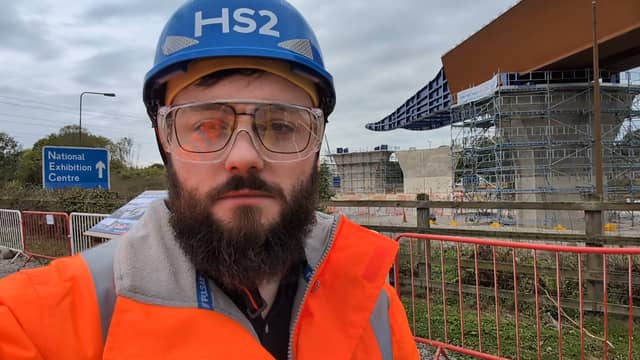


While many people may have heard of DJ Casper's 'Cha Cha Slide', we doubt so many would have heard of HS2's 'Viaduct Slide'.
While sharing a similar-sounding name, the Viaduct Slide is not, in fact, a catchy dance move, but rather a multi-organisational and multi-million-pound, first-of-its-kind operation.
Get the latest headlines delivered straight to your inbox with the Express & Star’s free newsletter
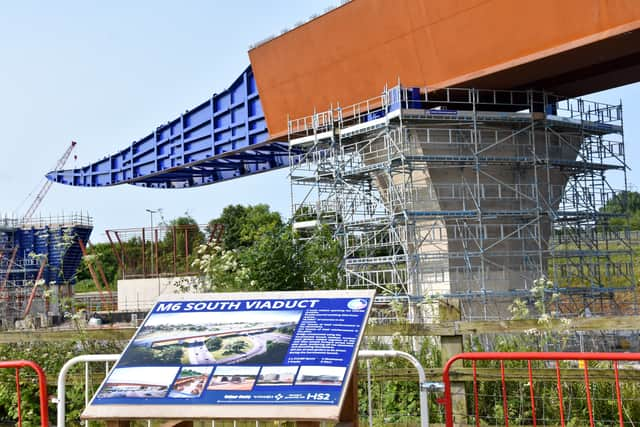
The slide sees a metal deck weighing more than 3,000 tonnes slide inch by inch over the M42 and M6 motorway, Near Coleshill, Birmingham, creating a platform for the future HS2 trains to travel over on their journeys to the North and South of England, all with the help of 'frying-pan technology'.
This isn't the first time that the slide has taken place, with the first phase of the project in June seeing the HS2 'east deck' slide 119m over the M6 at the Junction 4 slip road, just adjacent to the motorway.
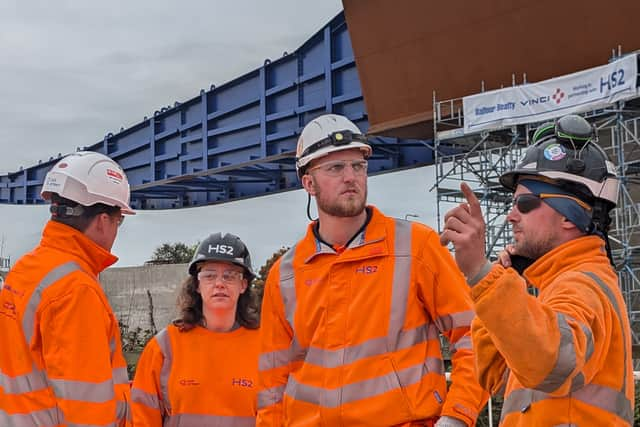
So, in anticipation of the mammoth-sized operation, we visited the works to find out how the 'Viaduct Slide' works.
Talking about the project, Balfour Bitti Vinci (BBV) lead engineer, Russell Luckhurst, said: "The move uses a series of strand jacks, which are used for heavy lifting, and it generally moves around six to eight metres per hour.
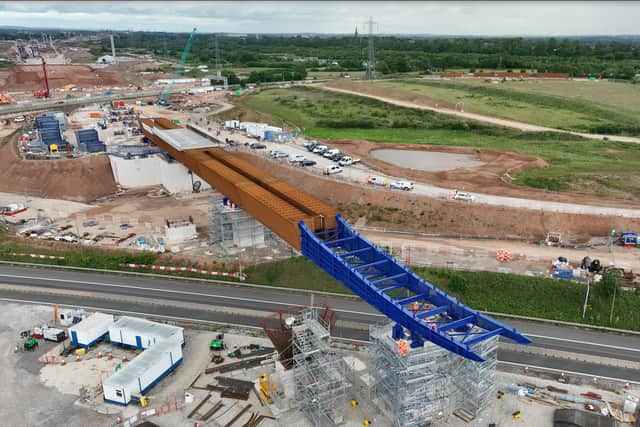
"It's a fairly unique technique; we did the same thing back in June. Moving a viaduct of this size over a highway like the M42 or the M6 is something that's very rarely done in the UK."
On our journey around the busy worksite, we managed to talk to the three main groups involved in this portion of the project: HS2, BBV and the steel construction group, Victor Buyk.
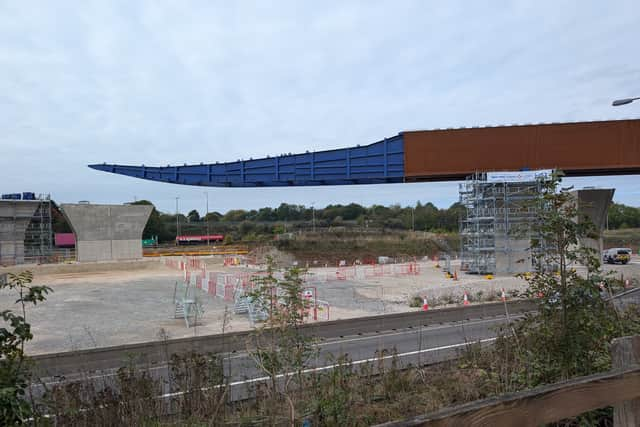
Project manager for Victor Buyck, Carlotta Dammekens, said that they combined both ancient building techniques and modern technology to come up with the 'viaduct slide' idea.
She said: "We have used this technique a few times before, but it has only ever been in Europe. I believe this is among the few times that we have ever done this in the UK.
"It's actually called an incremental launch technique. It's not actually a new idea; the ancient Egyptians did a similar thing with logs. It's more the mechanics that have evolved.
"It's really mixing old techniques with new technology."
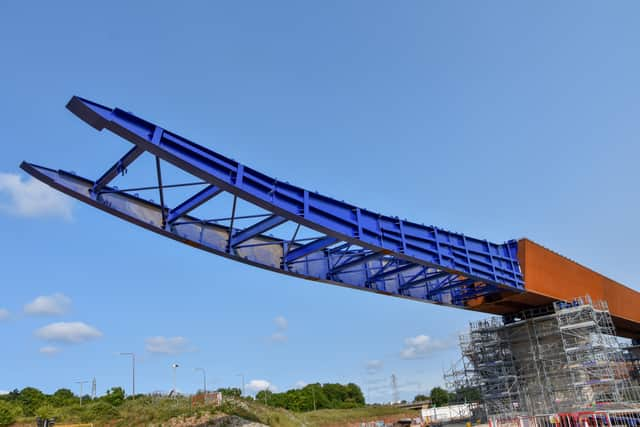
We were told that the slide uses Teflon pads, the same material that is found on household non-stick frying pans, to reduce surface friction, and slowly slide the viaduct safely over the M6, and onto the opposing side.
Looking over the site, it was amazing to see the sheer size of the structure being moved. Inch by inch, thousands of tonnes of metal were being shifted seemingly effortlessly.
The mixing of old techniques with new technology created a system that can erect tonnes of viaduct over a motorway in only months.
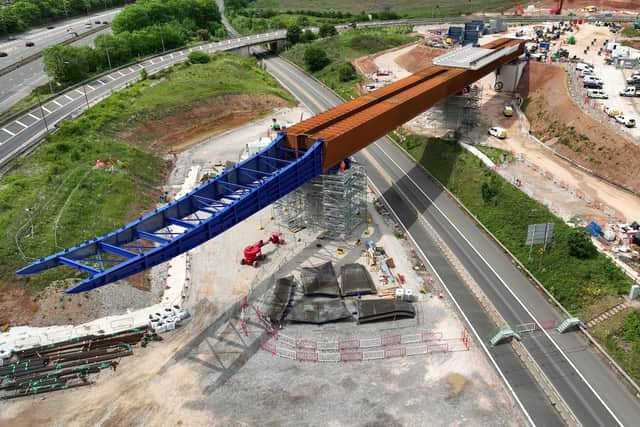
Ahead of this weekend's closure of the M6 to make way for the project, National Highways urged drivers to leave extra time for travel, or to seek alternative routes if possible.
The latest closure between the M6 Junction 4 and Junction 4A will come into effect at 3am on Saturday, and will be in place until 10pm on Sunday.
Comment Guidelines
Iconic Media encourages reader discussion on our stories. User feedback, insights and back-and-forth exchanges add a rich layer of context to reporting. Please review our Community Guidelines before commenting.